Building Wildfire Resilience into Transportation Infrastructure
Proactive planning can protect bridges, critical infrastructure, and roads from wildfire damage
Large-scale wildfires like the January 2025 Palisades Fire in Los Angeles County and recent Spokane Complex Fires that have forced repeated evacuations in Spokane County, Washington, can no longer be considered isolated events. The combination of more frequent extreme weather events and drier conditions has made wildfires of this scale more frequent and severe, creating a recurring threat to transportation infrastructure across North America.
As housing development continues to expand, wildland-urban interfaces (WUI), where housing and other development meet or intermingle with undeveloped natural areas, are growing. As of 2020, the WUI covered 9.4% of the land area of the contiguous United States and contained more than 44 million homes, or 32% of the nation's housing, according to U.S. Forest Service research. As development expands further into fire-prone areas, public infrastructure must serve as both an everyday connection between communities and a lifeline during an emergency.
For restoration contractors, these infrastructure challenges can directly impact disaster response and recovery. Road closures, damaged bridges, and utility disruptions can delay access to affected properties, complicate equipment mobilization, and extend recovery timelines. Understanding these vulnerabilities can help restorers look beyond their own response plans and consider the larger systems that support community recovery.
For transportation and local government agencies, this changes the conversation around resilience. Historically, infrastructure investment has often focused on restoring services after a wildfire or other natural disaster. That response is necessary, but simply returning an asset to its previous condition can leave the same vulnerabilities in place for the next event.
As wildfire risk grows, agencies have an opportunity to shift from reactive recovery toward proactive resilience by incorporating wildfire risk into routine planning, rehabilitation, and maintenance.
Wildfire risk is infrastructure risk
Roads, bridges, drainage systems, utilities, and communications assets are not secondary to wildfire planning. When a wildfire compromises a critical road, bridge, or utility corridor, the impact extends far beyond the damaged asset. It can disrupt evacuation, emergency response, essential services, and ultimately a community’s ability to recover.
The need to reevaluate infrastructure risk is greater than ever. From 2000 to 2019, roughly 256,000 miles (412,155 kilometers) of roads were exposed to large wildfires, and wildfire road exposure increased 58% across the two decades studied, according to research published in Nature Sustainability and co-authored by the U.S. Geological Survey. The same study found a 70% increase in exposure to electric transmission lines. Wildfire resilience is therefore an increasingly important consideration for transportation agencies.
Looking for quick answers on restoration, remediation and cleaning topics?
Try Ask R&R, our new smart AI search tool.
Ask R&R →
The greatest vulnerability may not always be the asset most visibly at risk. It could be a route with no redundancy, a bridge that provides the only access to a community, or a corridor shared by power, communications, and emergency vehicles. Agencies need to consider the role an asset plays across the transportation network, not only its age or physical condition.
Understanding how wildfire damages infrastructure helps agencies target the right interventions. Assets face three distinct types of exposure, and each call for a different response.
- Radiant heat can degrade materials the fire never physically touches, which is why clearance, screening, and separation matter well beyond the immediate flame front.
- Direct flame impingement is what most people picture, though it is often the least common of the three.
- Ember and firebrand attack is the most frequently underestimated: wind-driven embers travel well ahead of a fire front and collect in joints, gaps, culvert inlets, deck seams, cable trays, and the voids behind retaining structures, igniting assets that were never in the fire's direct path.
Duration matters as much as peak temperature. A wildfire front may pass a given point in minutes, but accumulated vegetation, debris, and combustible structural members can sustain burning for hours. That distinction should shape how agencies evaluate protective measures, because a material or assembly that performs well under brief exposure can behave very differently under prolonged heat.
Material selection carries its own consequences. Untreated timber members do not simply sustain damage; they add fuel to the event. Concrete is not automatically immune, as sustained heating can cause spalling and loss of strength. Structural steel loses significant capacity at temperatures well below those of an open flame. Polymer culverts, conduit, signage, and guardrail hardware often fail early, and are rarely inventoried as fire-vulnerable, even though their failure can close a route as effectively as a damaged bridge.
Risk can also remain long after the flames are contained. Intense heat can render soils water repellent, reducing infiltration and increasing runoff across a burn scar. Combined with the loss of stabilizing vegetation, this leaves roads and bridges vulnerable to erosion, rockfall, flash flooding, debris flows, and blocked drainage systems during subsequent storms. Elevated risk commonly persists for several years after a fire, and the U.S. Geological Survey publishes post-fire debris-flow hazard assessments that agencies can use to prioritize drainage and slope work during that window. Resilience planning must account for how infrastructure will perform both during a wildfire and in the conditions that follow.
The cost of reactive recovery
The consequences of infrastructure failure extend far beyond the direct cost of repairing or replacing an asset.
During the 2018 Camp Fire in Butte County, Northern California, 40,000 people were evacuated. Routes that normally took 25 minutes experienced delays of several hours, if they were passable at all, due to heavy traffic, road closures, debris, and direct exposure to fire, according to the National Institute of Standards and Technology. Transportation continuity during a wildfire is therefore not simply an operational concern. Infrastructure that remains passable during an evacuation buys people time, and time is the variable that most directly affects whether they get out safely.
A resilience mindset asks a different question: Rather than waiting for a wildfire to expose vulnerabilities, what can agencies do during planning, design, rehabilitation, and maintenance to strengthen infrastructure before the next event?
Every bridge rehabilitation, retaining wall replacement, tunnel improvement, or roadway reconstruction project presents an opportunity to do exactly that. Building resilience into planned capital improvements can be more cost-effective than responding to emergency repairs, extended road closures, and accelerated asset deterioration after a disaster.
Building resilience into infrastructure planning
Proactive resilience does not require agencies to create an entirely separate capital program. The most practical path is to use planned work as an opportunity to reduce risk.
When an asset is scheduled for maintenance or rehabilitation, agencies can evaluate measures such as vegetation management, fire-resistant or protective systems for heat- and ember-exposed components, drainage and culvert upgrades, slope stabilization, rockfall protection, and redundant access or communications. The right intervention will vary by corridor, but consideration of wildfire resilience should become routine.
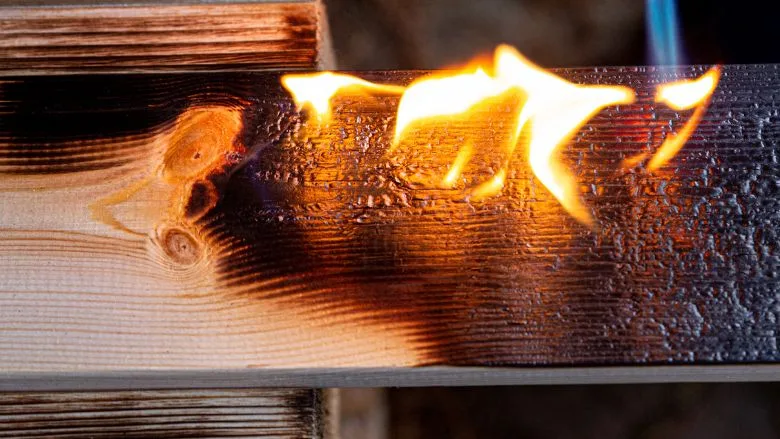
For vulnerable components such as timber bridge members, timber lagging in soldier-pile retaining walls, or other exposed combustible structures, agencies can incorporate fire-protective coatings or other protective systems when those assets are already scheduled for maintenance or rehabilitation. This allows wildfire resilience improvements to become part of an existing maintenance mobilization rather than requiring a separate project.
Agencies should evaluate these measures based on wildfire exposure, surrounding fuel loading, asset condition, importance to evacuation and emergency response, and the consequences of damage or closure. They should also consider durability, inspectability, repairability, substrate compatibility, and life-cycle maintenance requirements.
Any protective system should be supported by independent third-party testing relevant to the intended application and anticipated wildfire exposure. The objective is to determine whether the overall system meaningfully reduces the vulnerability of the specific asset while remaining practical within the agency’s normal inspection and maintenance program.
Just as agencies routinely account for earthquakes, floods, hurricanes, and corrosion, wildfire exposure should increasingly become part of how transportation assets are designed, rehabilitated, and maintained. That includes greater emphasis on resilient materials, proactive protection of existing infrastructure, and performance-based specifications that consider how assets perform during extreme heat and wildfire events, not only under normal operating conditions.
These measures require additional upfront investment. Over an asset's service life, that investment often costs less than the alternative. After the Grizzly Creek Fire in Glenwood Canyon, Colorado, the Federal Highway Administration reported that a roughly $2.7 million rockfall mitigation investment had an estimated benefit-cost ratio of 2.41 over one year and 6.01 over five years. That work addressed rockfall hazards left behind in the fire's burn scar, a reminder that post-fire conditions, rather than the fire itself, often drive the largest and longest-running infrastructure costs.
Wildfire resilience should also become more fully integrated into transportation design standards, asset management programs, and lifecycle cost analyses. When agencies evaluate rehabilitation alternatives, the discussion should consider long-term durability, service life, public safety, system reliability, and the economic impacts of infrastructure disruptions alongside initial construction costs.
Recent highway rehabilitation work in fire-affected corridors across the West has shown what is possible when owners, engineers, contractors, material suppliers, and inspectors work together with a shared objective of improving infrastructure resilience. These partnerships can help the industry advance new ideas, validate emerging technologies, and develop practical solutions that can be implemented efficiently in the field.
Specifying for the right exposure
ASTM E84, E119, E162, and E662 each provide useful fire-performance information, but they should not be interpreted as interchangeable or as complete simulations of wildfire exposure. ASTM E84 evaluates comparative surface-burning characteristics, principally flame spread and smoke development. ASTM E119 evaluates the fire resistance of complete assemblies under a standardized time-temperature exposure and can provide valuable information about performance during sustained fire exposure. ASTM E162 evaluates surface flammability using a radiant heat source, while ASTM E662 measures the specific optical density of smoke generated by a material under controlled conditions.
For transportation infrastructure, the important question is whether the test method represents the actual wildfire exposure the asset may experience. Wildfire can involve multiple and overlapping mechanisms, including wind-driven embers and firebrands, radiant and convective heat, direct flame impingement, burning vegetation or debris adjacent to or beneath a structure, and localized burning that may continue after the primary fire front has passed. For this reason, agencies should avoid relying on a single laboratory test as evidence of overall wildfire resistance.
There are standards and protocols that address certain exterior wildfire exposures more directly. These include ASTM E108 for exterior fire exposure of roof coverings, ASTM E2632 for under-deck fire exposure, ASTM E2707 for direct-flame exposure of exterior wall assemblies, ASTM E2886 for ember and flame penetration through exterior vents, and ASTM E2957 for wildfire exposure to eaves, soffits and other projections. California's Chapter 7A test protocols also provide useful models for evaluating exterior wildfire exposures, including direct flame, under-deck fire and burning-brand scenarios.
For transportation assets such as timber bridges and trestles, timber lagging retaining walls and similar structures, however, there is not necessarily a single standardized test that reproduces the complete field exposure. A stronger qualification approach is to combine applicable standardized testing with representative assembly testing that reflects the actual substrate, protective-system thickness, joints, fasteners, geometry and expected environmental conditions. Testing should address the credible exposure mechanisms for the specific asset—including direct flame, radiant heat, embers or firebrands and appropriate exposure duration—and evaluate the condition of the underlying substrate following exposure.
The key principle is that passing a building-material fire test should not automatically be interpreted as demonstrating wildfire resistance. ASTM E84, E119, E162, and E662 can provide valuable pieces of technical evidence, but agencies should ultimately ask whether the test method, exposure and assembly are representative of the infrastructure they are trying to protect. For wildfire resilience, matching the test protocol to the actual exposure and asset is just as important as the test result itself.
The future of wildfire resilience is proactive
Ultimately, communities cannot control where the next wildfire starts, but transportation agencies can control whether today’s infrastructure decisions leave them better prepared for it. Over the next five to ten years, wildfire resilience should become a standard consideration in transportation asset management rather than something evaluated only after a catastrophic event.
Success will not be measured solely by how quickly infrastructure recovers after the next wildfire. It will also be measured by how well we prepared for it.
Looking for a reprint of this article?
From high-res PDFs to custom plaques, order your copy today!