Containment and Environmental Control: Why Removal Alone is Not Enough
Part Three of a Four-Part Series on Cleaning Science in Restoration
Part Two of this series broke down the tools and mechanisms of physical removal: how surfactant chemistry breaks the bond between contaminant and substrate, how mechanical action dislodges what chemistry alone cannot release, and how extraction carries the loosened material out of the environment. Every tool in that article produces a measurable result on the surface it touches. The science of removal does not end at the surface. It extends to the environment surrounding the work.
This is the part of restoration science that rarely gets explained, even though it determines whether the work produces a restored environment or simply moves the problem from one space to another.
Every Removal Activity Is Also a Release Event
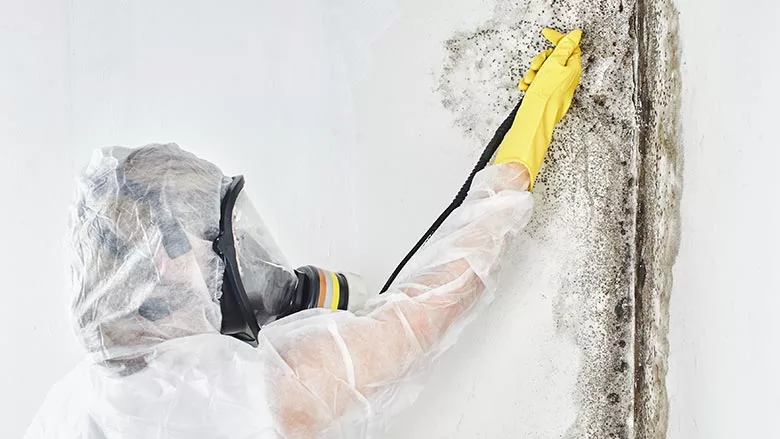
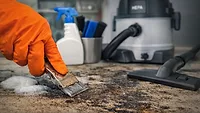
Every remediation activity that involves physical contact with contamination releases some of that material into the air. When a technician cuts moldy drywall, the blade disrupts the substrate and thus, the fungal colony embedded in it, sending spores and hyphal fragments into the air column above the work. When a HEPA vacuum passes over a contaminated surface, it captures the vast majority of particulates, but the disturbance of the pass itself lifts material that the vacuum's seal and suction do not completely capture. When soot is dry-cleaned from a ceiling with a chemical sponge, fine carbon debris becomes airborne at the point of contact. When saturated materials are torn out during water damage demolition, microbial fragments that were trapped in the wet substrate aerosolize as the material is handled, bagged, and transported.
Containment exists because airborne contamination requires a physical boundary and a pressure relationship that directs it away from clean spaces, which makes containment a functional component of the removal system rather than a standalone safety measure.
Containment Is Removal Infrastructure
Containment tends to get categorized alongside personal protective equipment and safety signage, but that categorization is a mistake because it can obscure what role containment plays. PPE protects the worker, and signage communicates the hazard, but containment protects the building itself by preventing every space adjacent to the work area from receiving the contamination.
The mechanism behind containment is pressure differential, and physics are straightforward. Air moves from areas of higher pressure to areas of lower pressure. In an uncontrolled environment, the air in a building moves according to whatever pressure relationships happen to exist: HVAC supply and return, open windows, stack effect in multi-story structures, and the mechanical disruption caused by the work itself.
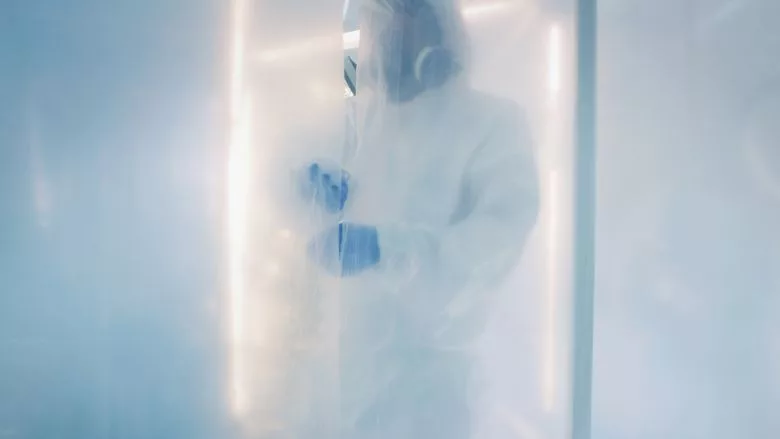
Containment overrides those forces by creating a deliberate pressure relationship. Polyethylene sheeting seals the work area from surrounding spaces, creating a physical barrier. A HEPA-filtered air scrubber, exhausted to the building exterior, pulls air out of the contained space faster than it enters. This creates negative pressure inside the containment relative to the surrounding areas. Because air moves from higher pressure to lower pressure, air flows into the containment through whatever gaps exist in the barrier, rather than out of it. The contaminated air generated by the work stays inside the containment, passes through HEPA filtration, and exits the building.
Looking for quick answers on restoration, remediation and cleaning topics?
Try Ask R&R, our new smart AI search tool.
Ask R&R →
The EPA Mold Remediation Guide provides a visual diagnostic for this: the polyethylene sheeting should billow inward on all surfaces. If it billows inward, air is flowing into the containment, which means the pressure differential is working. If the sheeting flutters or billows outward, air is flowing out of the containment and into the adjacent space, which means contaminated air is escaping. The EPA guidance is clear: if containment is lost, remediation should stop until the problem is corrected. The reason is that every cubic foot of contaminated air that escapes the work area becomes contamination in a space that was clean before the work started.
The Distribution System Nobody Shuts Down
The HVAC system in a building is a distribution network. That is its entire function: to move air from one location to every other connected location in the structure. During normal operation, this is how heating, cooling, and ventilation reach occupied spaces. During remediation, this same system becomes the most efficient contamination pathway in the building.
HVAC isolation means physically sealing the supply and return registers within the containment so that the air handling system cannot draw from or deliver to the work area. Turning the system off stops active circulation but does not seal the ductwork. Pressure changes within the containment, stack effect, and even the air scrubber itself can push or pull air through open registers into ductwork that connects to every other room in the structure. The registers must be sealed, not just switched off.
This matters because ductwork contamination is one of the most common sources of post-remediation complaints. The remediation was successful in the room where it happened and created a new problem in every room connected to the same air handler. That outcome is entirely preventable with register isolation.
The Pathways That Are Not Ductwork
HVAC is the most obvious distribution pathway, but it is not the only one. Contamination migrates through every unsealed connection between the work area and the rest of the structure. Gaps around plumbing penetrations, electrical conduit, recessed lighting, and the seams between wall assemblies and floor systems all provide routes for airborne material to travel from a contained space into adjacent ones. In wood-framed residential construction, the wall cavity itself is often open to the attic, the crawlspace, or the adjacent room's wall cavity. A containment barrier that seals the face of the wall but not the top plate allows contaminated air to move vertically through the framing and emerge in a space the technician never entered.
Environmental control means accounting for every pathway between contaminated air and clean space.
Foot traffic is another pathway that gets overlooked. A technician who walks from the contained work area into an adjacent hallway carries particulate on their clothing, boots, and equipment. In mold remediation, this is how spores end up in spaces that were never part of the original scope. The contamination didn’t spread through the air; it walked out the door on the person doing the work. Decontamination procedures at the containment boundary exist for this reason: they prevent the technician from becoming the transport vehicle.
These pathways matter because a containment that addresses only the obvious routes and misses the secondary ones produces a result that looks correct on the air sampling report but fails in the occupant's experience. Environmental control means accounting for every pathway between contaminated air and clean space, not just the ones that are visible at eye level.
What Containment Failure Actually Costs
When environmental control fails, the result is not a minor inefficiency; it is an expansion of the original scope. A mold remediation that releases spores into adjacent spaces because containment was not established before disturbance, or because it was breached during the work, now requires assessment and potentially remediation of those additional spaces. The original scope was one room. The callback scope is three rooms. The cost is not just the additional labor and material; it’s the loss of confidence from the occupant, the adjuster, and the referral source, all of whom now question whether the original work was performed competently.
In fire restoration, containment failure means soot particulate migrates into spaces that were not fire-affected. Submicron carbon particles settle on surfaces, embed in soft goods, and enter HVAC ductwork. The homeowner returns to a space where the fire-damaged room smells clean but the bedroom across the hall has a persistent odor that was not there before the restoration began.
In water damage, containment failure during demolition of microbially amplified materials means the health complaint arrives weeks after the certificate of completion. The drying was successful. The rebuild looks good. But the occupant develops respiratory symptoms because microbial fragments from the demolition entered spaces that were never dried, never cleaned, and never tested, because they were never part of the water loss.
Every one of these scenarios traces back to the same failure: removal without environmental control. The contamination was successfully dislodged from the surface it was on. It was not successfully kept from reaching the surfaces it should never have touched.
The Standard
Part One of this series established that disinfection changes what is alive but does not change what is present. Part Two established that physical removal is the system that changes what is present, through chemistry that breaks the bond, mechanical action that dislodges, and extraction that carries the material out. This article establishes the third principle: removal only works if the environment is controlled, because containment defines where the contamination can go, negative air determines the direction it travels, HVAC isolation prevents the building's own systems from distributing it, and pathway management catches what the primary barriers miss.
Without these controls, every tool in Part Two's table becomes a relocation device, because the contamination leaves the surface it was on, enters the air, and lands somewhere else in the structure where the technician never worked but the building absorbed the consequence.
Part Four will address verification: how to measure what remains after the work is done, what those measurements tell you, and how to use that data to defend the scope that produced the result.
Sources
U.S. Environmental Protection Agency. Mold Remediation in Schools and Commercial Buildings. EPA 402-K-01-001.
U.S. Environmental Protection Agency. Mold Course: Chapters 3 and 6.
Centers for Disease Control and Prevention. Guideline for Disinfection and Sterilization in Healthcare Facilities. Updated 2019.
Looking for a reprint of this article?
From high-res PDFs to custom plaques, order your copy today!