Restoration logo
search
cart
facebook twitter linkedin youtube
  • Sign In
  • Create Account
  • Sign Out
  • My Account
Restoration logo
  • NEWS
  • PRODUCTS
    • New Products & Technologies
    • Submit Your Product
    • Interactive Product Spotlights
  • EDUCATION
    • KnowHow.
    • Podcasts
    • Trade Shows & Expos
    • Training & Certification
    • Webinars
    • Whitepapers
  • TOPICS
    • Water Damage
    • Fire & Smoke Damage
    • Mold
    • Contamination
    • Odor
    • Contents
    • Architecture
    • Catastrophe
    • Cleaning
  • BUSINESS
    • Managing Your Business
    • Insurance/Legal Matters
  • BUYER'S GUIDE
  • VIDEOS
    • Ask the Expert
    • TradeTalks
    • Video Channel
  • THE EXPERIENCE
    • Convention & Trade Show
    • R&R Special Issue
  • EMAG
    • eMagazine
    • Archive Issues
    • Contact
    • Advertise
  • SIGN UP
Fire and Smoke Damage RestorationRestoration Training/Education

Weekly Hands-on How-To powered by KnowHow

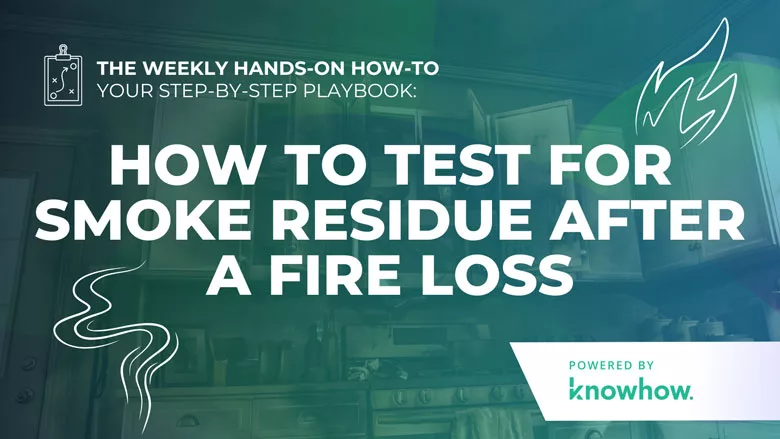
How to Test for Smoke Residue After a Fire Loss

Unseen damage can linger after a fire loss, discover how proper testing for smoke residue ensures comprehensive mitigation efforts
By The KnowHow Team
Weekly Hands-On How-To: How to Test for Smoke Residue After a Fire Loss

Image provided by KnowHow.

April 3, 2025
✕
 Image in modal.

Fire leaves behind obvious destruction—but smoke is a different story. Even when walls look clean, smoke residue can linger in hidden spaces, seeping into attics, HVAC systems, and wall cavities. And if you can still smell smoke, it’s still there. The challenge isn’t just finding it—it’s proving it, especially when insurance companies require hard evidence before approving mitigation work.

That’s where proper testing comes in. Smoke particles settle in unexpected places—on cold surfaces, inside vents, and even on plastic materials that hold static charge. Without clear documentation, remediation efforts can stall, leaving behind lingering odors and unseen damage.

In this how-to, powered by KnowHow, we’ll walk you through the essential steps of smoke residue testing, from identifying high-risk areas to properly collecting and documenting samples. Let’s get started and make sure no contamination goes unnoticed!

Translate, share and assign this process with KnowHow


Step 1: Identify Areas Where Smoke Residue is Likely to Exist

Smoke doesn’t always settle where you expect it. Even if there are no visible signs of residue, smoke particles can travel far from the source, seeping into wall cavities, basements, attics, and closets. Inspecting these areas methodically is crucial for detecting hidden contamination.

Residue tends to settle on cold surfaces, metallic surfaces, flat horizontal areas, and materials that hold static charge, such as plastic bags. The HVAC system is also a common culprit—smoke deposits can accumulate in ductwork and on air filters, continually recirculating odor throughout the property. A thorough inspection of these high-risk areas will ensure nothing is overlooked.


Step 2: Understand the Need for Proper Testing

Determining the extent of smoke contamination isn’t as simple as relying on sight or smell. While soot levels and odors can be subjectively evaluated based on experience, that won’t be sufficient for insurers or clients who require clear, documented proof of contamination.

Testing provides measurable evidence that smoke residue exists and needs to be mitigated, ensuring proper remediation efforts are justified and covered. Without proper documentation, lingering damage could go unaddressed, leading to ongoing odor issues and potential secondary damage.


Step 3: Collect Swipe Samples

To confirm the presence of smoke residue, use a white or light-colored dry sponge or cloth to swipe high-risk surfaces identified in Step 1. The color of the residue collected can indicate whether smoke-related particulate matter is present:

  • Black discoloration suggests fire-related soot or smoke deposits.
  • White or light gray discoloration is more likely to be normal household dust.

If chemical exposure from the fire is a concern, samples can also be collected for laboratory analysis. While this process won’t cover lab testing, it is an option for cases where chemical residue is suspected.


Step 4: Take Photographs

Before discarding or sealing samples, photograph both the swipe sample and the surface from which it was taken. These images serve as crucial documentation for insurance claims, remediation planning, and quality assurance.

A clear, well-lit photo of the swipe sample provides visible evidence of contamination, while a photo of the sampled surface ensures accurate record-keeping for reference during mitigation.


Step 5: Document the Sample Source

Proper documentation ensures that all collected samples are traceable and verifiable. Secure each swipe sample onto an index card or labeled holder, recording the following details:

  • Location of the sample collection site.
  • Date and time of collection.
  • Inspector’s name or initials for accountability.

Once labeled, place the sample and documentation into a sealed plastic bag for storage. This step helps maintain sample integrity and provides organized, well-documented proof of smoke residue.


Ensure Every Trace of Smoke is Accounted For with KnowHow

Proper testing isn’t just about confirming what you suspect; it’s also about gathering the evidence to back it up. Clear, documented proof not only justifies mitigation work but also ensures no contamination is overlooked, protecting the health of occupants and the integrity of the property.

But even the most experienced restoration pros can run into uncertainties or miss a step — and that’s why top restorers are using KnowHow. With instant access to on-the-job answers and company-specific SOPs, your team has the right guidance on-site, every time. From smoke residue testing to fire damage mitigation guidance, KnowHow keeps your crews aligned and your documentation airtight.

Take the guesswork out of every step. Visit tryknowhow.com today to see how KnowHow helps you work smarter and stay compliant.

KEYWORDS: contamination testing KnowHow library smoke odor remediation

Share This Story

Looking for a reprint of this article?
From high-res PDFs to custom plaques, order your copy today!
Recommended Content

JOIN TODAY
To unlock your recommendations.

Already have an account? Sign In

  • mold remediation

    Fighting Mold and Bacteria Damage

    Successful mold remediation can be multidisciplinary,...
    Contamination Restoration & Remediation​
    By: Josh Woolen
  • certifications and licenses for restoration professionals

    Certifications and Licenses Every Restoration Company Needs

    Restoration companies need to make sure they have the...
    Restoration Training/Education
    By: Sharon Elzarat
  • a wall covered in moss and fungus

    Zero Tolerance for Toxic Molds: Essential Steps for Successful Remediation

    Understanding the importance of zero tolerance for toxic...
    Mold Remediation
    By: Michael A. Pinto CSP, SMS, CMP, RTPE, FLS, ERS and Kendra Seymour
You must login or register in order to post a comment.

Report Abusive Comment

Manage My Account
  • eNewsletter
  • Online Registration
  • Subscription Customer Service
  • Manage My Preferences

More Videos

Popular Stories

Ask the Expert - Margin vs. Markup: The Costly Confusion in Restoration

Why Understanding Markup, Margin and Overhead is Critical for Restoration Success

mold spores

Mold and Mental Health: The Dual Crisis Facing Indoor Environmental Remediation Teams

calculating profits

How Poor Documentation and Manual Billing Quietly Erode Restoration Profits

2025 Technician Award winner - Congratulations, Kaylin Glaspie!

Events

January 20, 2026

INTRCONNECT

Dive into the latest trends, innovations, and best practices shaping the future of property insurance and restoration.

April 27, 2026

RIA Convention & Expo

This event empowers professionals through world-class education, powerful networking, and access to cutting-edge tools and services.

View All Submit An Event

Poll

Technology Innovations

Which emerging technology do you believe will have the biggest impact on restoration work in the next 5 years?
View Results Poll Archive

Products

The Cleaning, Restoration, Inspection, and Safety Glossary

The Cleaning, Restoration, Inspection, and Safety Glossary

The Cleaning, Restoration, Inspection, and Safety Glossary.

See More Products
Prepare for CATASTROPHE with R&R!

Related Articles

  • Delia-Smoke Odor

    Using New Technology to Find Chemical Smoke Residue

    See More
  • Weekly Hands-On How-To: How to Test for Mold with Swab Test Kit

    How to Test for Mold with a Swab Test Kit

    See More
  • firemen on a roof with smoke

    3 Options for Smoke Odor Removal after a Structure Fire

    See More

Related Products

See More Products
  • After-The-Smoke-Clears.gif

    After The Smoke Clears...

  • fires out.jpg

    Fire’s Out, Now What? Vol. I & II

See More Products

Related Directories

  • LearnToRestore.com

    LearnToRestore.com is the leading IICRC-approved school with certification courses in water, fire, smoke, odor, contents processing, and more. Learn and earn your certification in person or online with our live-stream classes. Our expert-led training prepares you with essential skills to excel in the restoration industry!
  • A.P. Buck Inc.

    For 35+ years A.P. Buck Inc. has manufactured the most advanced and innovative instruments for air sampling. We supply air sampling pumps and calibrators for industrial hygiene, indoor air quality, occupational health, environmental, health physics and safety disciplines.
×

Stay ahead of the curve with our eNewsletters.

Get the latest industry updates tailored your way.

JOIN TODAY!
  • RESOURCES
    • Advertise
    • Contact Us
    • Directories
    • Store
    • Want More
    • Submit a Press Release
  • SIGN UP TODAY
    • Create Account
    • eNewsletters
    • Customer Service
    • Manage Preferences
  • SERVICES
    • Reprints
    • Marketing Services
    • Market Research
    • List Rental
    • Survey/Respondent Access
  • STAY CONNECTED
    • LinkedIn
    • Facebook
    • Instagram
    • YouTube
    • X (Twitter)
  • PRIVACY
    • PRIVACY POLICY
    • TERMS & CONDITIONS
    • DO NOT SELL MY PERSONAL INFORMATION
    • PRIVACY REQUEST
    • ACCESSIBILITY

Copyright ©2025. All Rights Reserved BNP Media.

Design, CMS, Hosting & Web Development :: ePublishing