When we created our company we knew we wanted to base it on values of ethics and integrity. We were aware that a person who has worked hard to develop a high standard of integrity will likely carry these concepts into their professional and personal lifestyle.
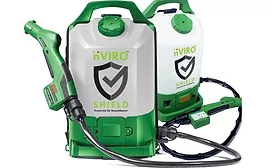
The electrostatic process that nVIRO Shield® delivers works in combination with regular cleaning regimens, and adds a protective environment that kills the germs which make us sick.
We spend most of our days indoors. As such, we would like to have control over what we breathe. A predictable mixture of volatile organic compounds (VOCs) and formaldehyde pervade our breathing space due to societal use of household products, building materials, and fuel mixtures.
We are into the 13th episode of Dan and Art's series on team building! This week, they're talking about structure and synergy in your company, and within your team.
A good fleet maintenance plan may help lower the costs that are often associated with operation and fuel, while continuing to boost worker productivity.
As we begin, it is important to remember that cleaning structures for chemically sensitized individuals involves the removal or control of chemical source material as well as the removal of chemical residues; including residue that has adhered to dust.
As will be explained in greater detail, cleaning and restoration professionals are increasingly being faced with the challenge of responding to situations where chemically sensitive individuals are involved.
In our industry, we face jobsite odor problems almost daily, and no matter how much experience we gain, how much training we get, or how many of these educational articles we read, controlling odors can still be a challenge. So, here’s a quick summary of the various odor control tools at your disposal and some tips and tricks I’ve picked up along the way to help you decide what tools to use and when to use them.