When the Mold Is Gone, Is the Building Really Safe to Reoccupy?
Why containment, moisture control, and post-remediation verification matter beyond removing visible mold
Need to Know
- Removing visible mold does not mean remediation is complete. Restoration contractors must identify and correct the underlying moisture source and determine whether contamination extends into concealed or adjoining areas.
- Containment and environmental controls are critical during remediation to prevent disturbed spores and debris from spreading into unaffected spaces or through building systems.
- Air sampling alone cannot provide a universal “all-clear.” Post-remediation verification provides evidence that remediation goals were met.
Within a matter of days this August, mold concerns disrupted elementary schools across the United States.
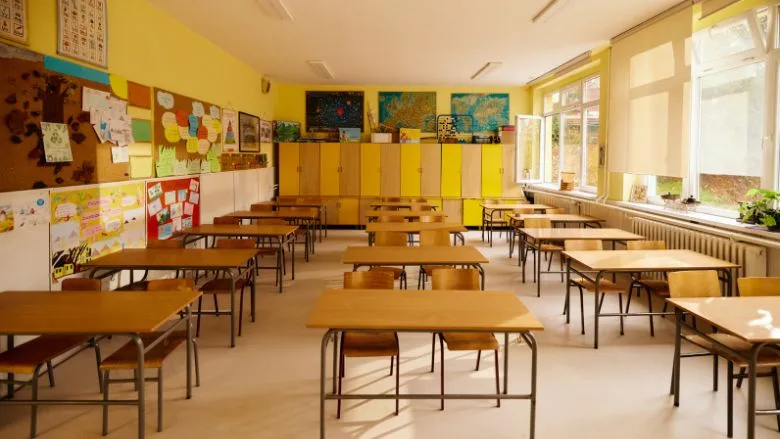
At John H. Kinzie Elementary School in Chicago, for example, about 600 students began the school year in temporary learning spaces after suspected mold was found in parts of the building. In Ohio, Waterford Elementary School closed after three teachers reported signs of mold in classrooms, sending more than 400 students to alternate locations while testing and mold remediation moved forward. In Richmond, Virginia, Barack Obama Elementary remained closed after additional mold was discovered even after earlier remediation efforts and air-quality testing.
The Richmond case is especially instructive. School officials initially reported improvement after identifying a moisture source and conducting remediation. But additional visible mold later appeared on equipment and other surfaces, prompting more cleaning, more testing and a delayed reopening.
That sequence raises a question restoration professionals hear constantly after a mold problem: If the visible mold is gone, is the building safe to return to?
The answer is not found in appearance alone.
Visible mold is evidence, not a boundary
One of the most persistent misconceptions about mold remediation is that the problem begins and ends where the discoloration is visible.
It does not.
Visible growth tells us mold found enough moisture and organic material to colonize a surface. What it does not tell us is whether that visible area represents the full extent of the problem.
Looking for quick answers on restoration, remediation and cleaning topics?
Try Ask R&R, our new smart AI search tool.
Ask R&R →
The U.S. Environmental Protection Agency’s guidance for mold remediation in schools and commercial buildings warns that mold can grow on concealed surfaces, including the back side of drywall, above ceiling tiles, under carpeting, inside pipe chases and in components of air-handling systems. The EPA also notes that discovering hidden mold should cause the remediation plan to be reevaluated.
That matters because the visible patch may be the easiest part of the problem to find.
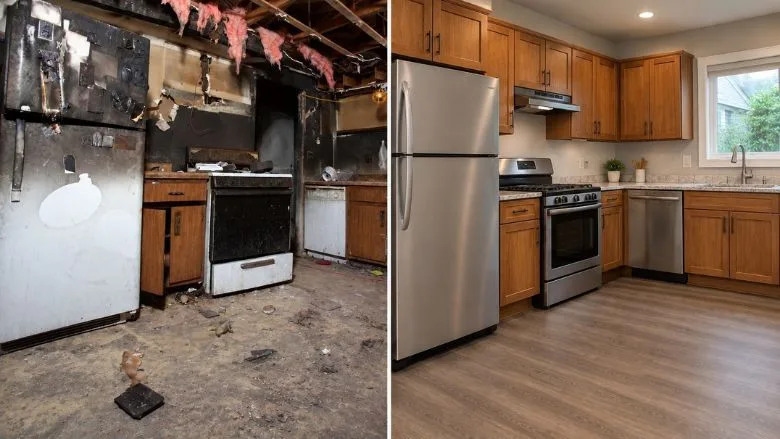
A stained ceiling tile can be replaced. A spotted wall can be opened. A moldy piece of furniture can be removed. But unless the investigation asks why the mold grew there and what else that moisture affected, cleaning the obvious growth can create a false sense of completion.
The moisture source is the first real question
Mold remediation is not simply a cleaning project. It is an investigation into conditions.
Why did the material become wet? How long was it wet? Did moisture migrate into an adjoining wall assembly? Is condensation occurring? Is indoor humidity elevated? Is an HVAC component involved? Is there a roof, plumbing or building-envelope problem that is still active?
EPA guidance makes moisture control central to remediation. Its recommendations state that the water or moisture problem must be completely fixed and that the site should be revisited after remediation for signs of renewed water damage or mold growth. The agency’s prevention guidance goes even further, calling moisture control the key to controlling mold indoors. (EPA mold-prevention guidance)
If the moisture condition remains, the building has not been returned to a stable condition. The stain may be gone today, but the environment that allowed the mold to grow may still exist tomorrow.
Containment is not just plastic on a doorway
Once remediation begins, another question becomes critical: Where does the contamination go when work disturbs it?
Cutting, removing and cleaning mold-affected materials can release particles into the surrounding environment. That’s why containment, airflow management, HEPA filtration and pathway control matter.
R&R recently addressed this directly in “Containment and Environmental Control: Why Removal Alone is Not Enough”, explaining how removal without environmental control can move contamination from one location to another. The magazine’s coverage of negative-pressure containment for biological contaminants makes the same larger point: contractors have to control how contaminated air and particulate move while remediation is underway.
A beautifully cleaned work area means less if spores and debris have been carried into adjacent spaces, moved through unprotected pathways or distributed by building systems during the work.
The visible result can look impressive while the process itself has created a new problem somewhere else.
A negative air sample is not a universal all-clear
Testing has an important role in mold assessment and post-remediation decisions, but it also has limits.
This is particularly important in schools, where parents, staff and administrators understandably want a simple answer: Did the building pass?
The National Institute for Occupational Safety and Health’s mold testing and remediation guidance cautions that negative mold sampling results may not represent actual exposures. NIOSH says thorough visual inspections and detecting musty odors can be more reliable for identifying dampness and mold problems than short-term air sampling alone.
For schools specifically, NIOSH has also developed a Dampness and Mold Assessment Tool for School Buildings to help identify areas of dampness and prioritize remediation.
R&R has made a similar point in its own coverage. In “3 Mold Analysis Tools Restoration Contractors Need After Hurricanes and Floods”, laboratory analysis is presented as part of a broader strategy that includes source identification, moisture control and appropriate remediation, rather than as a stand-alone answer.
Sampling can provide valuable information about conditions at a particular place and time. It should not be treated as a substitute for investigating the building.
What does “safe to return” really mean?
“Safe to return” is a powerful phrase. In a school mold situation, it is also the question every family wants answered.
But restoration professionals should be careful with what those words imply.
There is no single universal mold reading that transforms a building from unsafe to safe. EPA guidance says determining whether remediation is finished ultimately requires professional judgment. It identifies several conditions that should be considered together: the moisture problem has been fixed, visible mold and mold-damaged materials are no longer present, moldy odors are absent, sampling results are appropriate when sampling is used, follow-up inspection shows no new moisture or mold growth, and occupants can reoccupy the space without health complaints or physical symptoms.
In other words, completion is not one measurement. It is a body of evidence.
That is why post-remediation verification deserves more attention. The current ANSI/IICRC S520 Standard for Professional Mold Remediation includes post-remediation verification and the role of the indoor environmental professional among the major components of professional mold remediation. R&R covered publication of the revised standard in “New ANSI/IICRC S520 Standard for Professional Mold Remediation Published”. The current standard itself applies to residential, commercial and institutional buildings. (ANSI/IICRC S520-2024 information)
R&R has addressed verification in other contamination work as well. The larger principle is useful for mold remediation: verification moves the conversation from “the work looks finished” to “the result has been evaluated.”
The contractor’s job is bigger than removing what people can see
A school district wants classrooms reopened. A building owner wants employees back. A property manager wants tenants reassured. Families want certainty. Contractors want to complete the project.
Those are legitimate concerns, but a deadline cannot define the scope of contamination.
The better approach is to document the moisture source, determine the reasonable extent of affected materials, establish containment appropriate to the project, control air and pathways during removal, clean and remove affected materials using appropriate methods, evaluate HVAC involvement when warranted, document conditions and verify the result against the project’s criteria.
The objective is not to promise that a building contains no mold spores. Mold exists naturally in indoor and outdoor environments. The objective is to correct the conditions that allowed abnormal indoor growth, remove affected materials as required, prevent cross-contamination and provide evidence that the remediation goals have been met.
Schools make the consequences impossible to ignore
The recent school mold closures in Chicago, Ohio and Virginia are reminders that mold remediation is rarely just about a wall, ceiling tile or classroom.
It is about trust.
When a school closes, families may face transportation changes, relocated classes and childcare problems. School administrators also face questions they may not be equipped to answer. Every new discovery can undermine confidence in the process.
That is why communication should be treated as part of the remediation response.
What was found? What moisture condition contributed to it? What areas were evaluated? What was removed or cleaned? How was contamination controlled during the work? What criteria are being used to determine completion? Will there be follow-up inspection or testing?
Those questions are more useful than simply asking whether the mold was cleaned.
Visible mold is the beginning of the investigation
A successful mold remediation project should not end with a photograph of a clean wall.
It should end with a defensible explanation of what caused the problem, how far the problem extended, how the work prevented contamination from spreading, what was done to correct the conditions and how the completed work was evaluated.
That is the standard restoration professionals should bring to every project, whether the building is a single-family home, an office, a military facility or an elementary school.
Visible mold tells us where to start looking. It does not tell us when we are finished.
Looking for a reprint of this article?
From high-res PDFs to custom plaques, order your copy today!