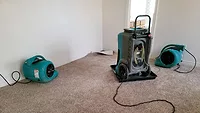
Your Contract Is More Valuable Than Your Restoration Equipment
Learn why clear billing terms and consistent documentation make or break restorers getting paid on large-loss projects
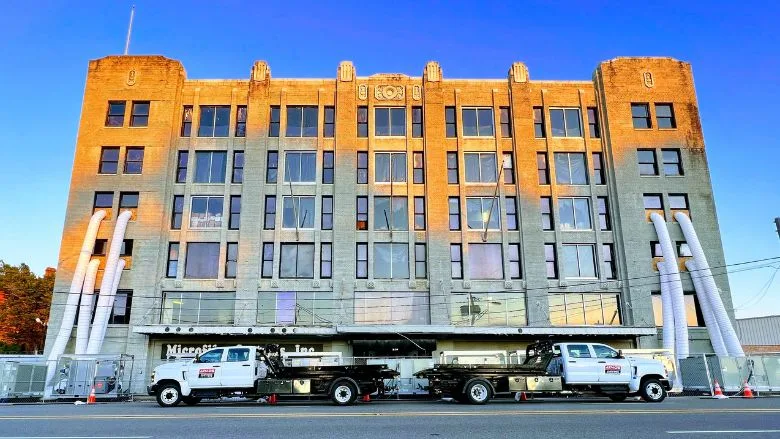
You can fix almost anything over the course of a project. One thing you can't is what you signed before it started.
I've been involved in the industry in several capacities for the last 15 years. I’ve owned a restoration company, worked as an industrial hygienist on large losses, and done appraiser work. For the last 5 years, I've provided contractor support through equipment rental for large losses, which on paper sounds like I drop off dehus and send an invoice.
That can be the case, but that is not usually how it goes. Many of my clients call me for the equipment and then keep me on the phone (or on-site) for everything else — What should I set? Where does it go? What is this reading telling me? How do I document it? What is the consultant going to ask about when this is over? — and I'm glad to do it. It's the part of the work that I enjoy, the part that my past has prepared me for, and it's why my clients use me for more than a rental rate.
A job is a moving thing. Almost anything that goes wrong on one can be corrected while it's still running. Set the wrong equipment, we'll change it. Missed readings, we'll start taking them and explain the gap. Scope grew, we'll document why.
There's exactly one thing I can't help with after the project starts. It's more common than it should be, and it's the most important thing that decides how long it takes and how much you get paid. Your contract must be right before anybody signs it. Once that's done, I have no control over it, and neither do you.
I realize that a column about contract language isn't what anybody hoped for when they picked up this magazine. Stay with me; it's worth more than your equipment.
The Expensive Lesson
For a lot of contractors, the first time they deal with this is on their first large loss, which is the worst possible time to learn it. Get your contract and invoice methodology in place before you get that call.
Looking for quick answers on restoration, remediation and cleaning topics?
Try Ask R&R, our new smart AI search tool.
Ask R&R →
The project goes great, the client is happy, the building dries, and the team meets every goal. Then the invoice goes to review and the questions start, and the contractor discovers that his agreement doesn't actually support the way he billed the job. Getting paid stops being a matter of proving he did the work and turns into a series of concessions to make the problem go away. I've seen projects slowed down for months or years over this, not weeks. This length of time can cripple you from a cash flow perspective, and the number that finally gets paid is rarely the number that was earned.
None of that comes from a project performance failure. It comes from a paperwork decision nobody took the time to make intentionally.
What a Reviewer Actually Wants
When you rent equipment or bring in a partner who sets and monitors it, you end up in one of three camps when it comes to billing the work.
- You can take the rental invoice, mark it up, and turn it in as a cost.
- You can schedule the equipment under your own price list the same way you'd schedule your own units.
- You can mix the two, scheduling what lines up with your price list and billing the rest as a marked-up cost. Usually because your price list is outdated or doesn't have a line item that fits.
None of those three is wrong. I want to be clear about that because people get defensive on this topic. The problem is almost never the method. The problem starts when the method doesn't match the paperwork or flow logically.
Here's what it looks like when that third option is forced at the end of a project due to a flawed contract. A reviewer opens a project and sees a desiccant scheduled at a daily rate. Then he sees the cable, the ducting, and the setup labor come through as a sub invoice with a markup on it. Naturally that raises a question. Why would this contractor own the desiccant but not the cable and duct that it requires? There can be a perfectly good answer, but now you're explaining it to someone who has already started wondering, and nobody has ever been talked out of a suspicion they came up with themselves.
Owned First, Rent the Balance, Keep it Coherent
There's always a mix of equipment on a large project. That's normal. Everyone will use their own equipment first and rent the balance, as it should be.
Where it gets you in trouble is when the mix doesn't pass a common-sense test. Your own LGRs alongside rented scrubbers is a non-issue; nobody questions that. A scheduled desiccant sitting next to a marked-up invoice for its own required components is a flag, and it should be. Nobody buys a desiccant and rents the cable and duct. It doesn't come across as your own fleet; it comes across like somebody billing whichever way paid better on each line. A reviewer is usually looking for a way to cut costs, and if they think this is what you are doing, they will start delaying payment and pressing for the subcontractor invoice. This happens all the time, so look at your job the way a reviewer will.
Get it into the Contract
Pick your methodology and make sure the contract supports it before it's signed. This is one thing that is often impossible to fix mid-project.
If you're going to schedule equipment, confirm the rates you're scheduling at are actually sufficient to cover what you're paying for the rented portion. If they aren't, update your prices, or don't schedule it. That also means don't schedule the supporting components. Instead, turn it in with a markup and stop trying to force it into a price list that isn't correct yet.
Any of these approaches gets paid. Signing first and deciding later does not. That's usually where the delays and invoice cuts come in.
Your Readings are what Validate the Equipment
One more thing while we're here (this should go without saying, and yet…): take daily readings on the building assemblies, the equipment, and the ambient conditions. All three, every day. If you can't, bring in a party that can do this for you. There are many options available. Assembly readings show the material is drying. Ambient readings show the environment you created. Equipment readings show the units were running and doing work.
That last one is what most people skip, and it's the one that defends your equipment days. We often monitor equipment for contractors. If you need this, let us know up front. A scheduled desiccant or LGR with no inlet and outlet readings behind it is just a line item. The same equipment with a daily log showing what it pulled is justified.
Your contract determines how and what you get paid. Your readings prove you should be. Get both right, and review becomes a formality instead of a negotiation.
Looking for a reprint of this article?
From high-res PDFs to custom plaques, order your copy today!