Why Your Restoration Equipment Maintenance should be Non-Negotiable
A consistent system for cleaning and maintaining dehumidifiers and other drying equipment protects your team, tools and bottom line.
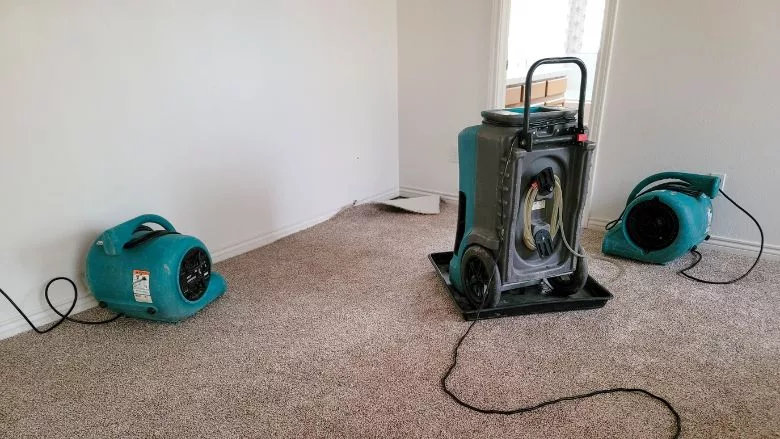
All restoration companies know that they need to maintain their dehumidifiers, air movers and air filtration devices, but the consistency of maintenance often suffers and then you’re setting a dehumidifier (dehu) that looks like you dragged it behind the truck on the way to the job. Oh, there is always a reason. We were busy. You're pretty sure you’re not going to get paid for it, so you don’t do it. Regardless of the reason why your equipment maintenance may be inconsistent, the root cause is usually a lack of a system, a habit, a plan for maintenance. Interestingly, a lot of these are the same reasons people use for not brushing their teeth. Maybe not the getting paid one but the rest of them could fit. I haven’t done any research on this but now that I think of it, I wonder if most people that have poorly maintained drying equipment have bad breath.
Sorry, we are supposed to be talking about drying equipment, so let's discuss getting paid first because that's obviously very important. Then we will discuss a system for making sure all equipment is properly maintained and then finally what maintenance each piece of equipment needs.
I have had resistance to the maintenance issue presented to me like this: ‘I don’t get paid to decontaminate the equipment every time, so what do I do?’ Dude, this is your equipment. You paid for it! It must be maintained. So, while we will make every attempt to get paid, that should not determine whether or not you maintain the equipment you have. Refer back to the teeth brushing discussion for more details.
You are probably already being paid for some of the maintenance. For dehumidifiers and air filtration devices, the replacement of pre-filters is often included in the line-item pricing we use for rental. Of course, HEPA filters are not. That will require a separate line item.
The cleaning of dehumidifiers, air filtration devices and air movers is also not included in most line item pricing, but cleaning is necessary after use on both contaminated and uncontaminated water losses, but obviously the needs are a little different. There are specific line items used for equipment decontamination and there are usually different levels of pricing for equipment cleaning or decontamination in the pricing system you are using. Use the line-item charge matches they need.
This can be supported by pictures of the equipment to show the level of decontamination needed. You already take pictures of your equipment on the job site (I’m making assumptions but feel like I’m on pretty solid ground here) so use those to support the need for cleaning. That’s the best communication. If you cut the drywall and removed hardwood, or your equipment was running in a crawl space, those pictures will provide the best support that you put clean, well-maintained equipment into a dirty environment and you need to be compensated.
In the case that charges for decontamination get pushback (you and I both know there will be pushback at least some of the time) as cost of doing business (don’t get me started on this one) or that cleaning is included in the rental charge, reach out to your pricing software company to get clarification as to whether or not decontamination charges are indeed included in rental fees. (They aren’t.)
Looking for quick answers on restoration, remediation and cleaning topics?
Try Ask R&R, our new smart AI search tool.
Ask R&R →
If you are in need of additional information on how to get paid for water restoration services like equipment maintenance, feel free to reach out to us and we can provide additional assistance. You know that’s what we do right? We teach people how to do restoration right and get paid. My family has been running our restoration company for 55 years. I bet we have heard the argument before, and I can tell you what we do about it. In any case, maintain your equipment consistently and negotiate like a boss to get paid for it.
The real reason why equipment maintenance isn’t consistent in a company is that there isn’t a system for it and nobody wants to do it. You need to have a simple but effective system for ensuring each piece of equipment is serviced after use. For example, my tooth brushing system is that every morning my toothbrush is next to the sink. It is still there every evening. Boom, a system, and my dentist says my teeth look great. This tooth brushing analogy is feeling really solid.
You need to have a simple but effective system for ensuring each piece of equipment is serviced after use.
An effective system should provide a way to be sure your equipment maintenance is always completed. The way that our company has solved the problem of inconsistency is simply the way the equipment is warehoused. You can come up with another solution but hear me out. As techs bring equipment in from a project it is placed in a dedicated area closest to the bay doors where the trucks unload. The maintenance area is right next to that, so each piece of equipment is serviced before being restocked in our working inventory, which is just on the other side of the maintenance area. Techs can quickly unload (write that down, the dirty equipment is placed closest to the doors because it is easiest) and reload equipment from our inventory that is ready for use. Equipment maintenance is assigned to techs from any department when their schedule has time before or after other projects. Simple, but effective.
If a piece of equipment needs repairs, the only person that will know is the tech that finds it not working properly in the field. You want to get my mood going the wrong direction? Go out on the job and find a piece of equipment wasn’t working and just put it back in the warehouse! Now it is going out on the next project not working right. You are costing the rest of us time, money and creating a lot of unneeded frustration and blood pressure. And you got butter on your teeth!
Managing repair is an area where there needs to be a system. Tag and remove. Simple. Tag and remove. At the point the need for repair is identified, the unit should be … wait for it… tagged and removed (the name is in the action). The tag should explain what the symptoms are or what needs repair, if you know, who put the repair tag on, and the date. Our techs use blue tape (because it’s always on the truck, keep it simple) to tag equipment for repair and they write the needed info on the tape. Then there is a section of the warehouse for equipment needing repairs where the tagged unit is placed for repairs, removed from the inventory. Tag and remove. It is really easy.
There is general maintenance that each piece of equipment needs. All equipment should be cleaned with a general-purpose cleaner after each use. This includes the case of the equipment and unwinding the cord and cleaning it. As you are doing that, check the ground plug. If it is missing, repair or (let’s all say it together) tag and remove it from service. Talking to you, dragon breath!
Air movers really just need a good cleaning for their every job maintenance. Periodically this will require taking the safety grill off to access the inside of the air mover. While this may not be necessary after each use, the inside of the air mover should be inspected. If there is visible dust (we are not waiting for stalagmites to form, just a layer of dust), remove the grill and clean the inside. Air movers move all the air in the building through them several times an hour. If they are covered with dust or bronchitis or whatever other contaminants, we are just spreading it from one project to the next. Nobody wants that. For common repairs keep extra switches and daisy chain components in stock so you can keep these units running.
In addition to cleaning dehumidifiers, they need their pre-filters changed after each project. When selecting filters be sure to buy the same level of filtration as the manufacturer specifies. Not a specific brand but the right type. For common repairs keep bulk vinyl tubing and tubing connectors, condensate pumps, cord ends and replacement circuit boards in stock. It is important to stick with just one or two dehumidifiers so that parts are easy to stock and repairs are repetitive.
Your equipment is a massive investment and a valuable asset.
Since air filtration units are designed to remove contaminants, they are considered contaminated until they are serviced after each project so that changes our maintenance process a little bit. That means that you need to wear the appropriate PPE until they have been decontaminated. At a minimum, the exterior of the unit should always be decontaminated on site at the project if it was used in a contaminated environment so that they are not cross-contaminating your vehicles and warehouse. I think it makes sense to pull the pre-filters, then HEPA vacuum and wipe inside and out at the project since you are suited. You can use a general-purpose cleaner, or a disinfectant cleaner may also be used if preferred. The pre-filters should be replaced between jobs and may need to be replaced multiple times during a project depending on the environment you are working in and the length of the job.
The HEPA filter should be replaced as recommended by the manufacturer. Some units have a light that will indicate HEPA replacement time. Others may recommend replacement after each project. For common repairs keep pre-filters, HEPA filters, cord ends and switches in stock.
Yes, I know equipment maintenance is not the most exciting discussion in restoration, but your equipment is a massive investment and a valuable asset. Drying equipment spends more time at our customers’ properties than it does anywhere else. Hopefully. It should represent you well, both in the way that it looks and how it performs. And we are all very well aware that restoration is an emergency service industry. We depend on equipment working properly when we need it, 24 hours a day. We can’t afford to be sitting on a pile of dirty, unmaintained equipment when the next big job comes in. With a simple system and a little bit of planning, you and your equipment will be ready to make money at the next project night or day. For extra points go back and read the whole article replacing the word equipment with teeth.
Ready to invest in your team with a training provider that will help you to move the financial needle? We help contractor teams do restoration work right and know how to get paid for it more profitably.
Looking for a reprint of this article?
From high-res PDFs to custom plaques, order your copy today!