Can I vs. Should I? The Human Side of Restorability
Emotional intelligence and homeowner advocacy matter the most when restorers are deciding what contents should be restored
One of the biggest questions in contents restoration is, "Can I restore this?" It's a question we ask on every loss. We evaluate the damage, consider the cleaning methods, and determine whether an item can be brought back to its pre-loss condition. We look at soot, smoke, water damage, odors, contamination, and whether we have the right knowledge, equipment, and processes to save it.
But after nearly three decades in this industry, I've come to believe we're asking only half the question.
The better question—the one nobody really talks about—is, "Should I?"
That question has very little to do with chemistry, cleaning methods, or restoration science. It has everything to do with people.
Because while we're evaluating the contents, the homeowners are trying to process one of the most emotional experiences of their lives. They're grieving the loss of their home as they knew it. They're overwhelmed, exhausted, frightened, and wondering whether life will ever feel normal again.
Somewhere between our technical expertise and their emotional reality is where the real work of restoration begins.
That's the human side of restorability.
Looking for quick answers on restoration, remediation and cleaning topics?
Try Ask R&R, our new smart AI search tool.
Ask R&R →
Restoration Isn't Just About Property
As restoration professionals, we naturally look at an item and evaluate its condition. Can the soot be removed? Can the odor be eliminated? Can the fabric be cleaned? Can the finish be restored?
The homeowner isn't looking at those same items through our eyes.
They're looking at the dining room table where every Thanksgiving dinner was served. They're looking at Dad's recliner where he sat every evening after work. They're looking at the stuffed animal their daughter has slept with every night since she was three years old.
To us, those are contents.
To them, they're memories.
That's why restorability is never just a technical decision. It's also an emotional one. If we only evaluate whether an item can be cleaned, we're missing the other half the picture. Our responsibility is to understand not only what we can restore, but what that restoration actually means to the person who owns it.
The First Walkthrough Is an Art Form
One of the greatest skills a restoration professional can develop isn't operating an ultrasonic machine or understanding deodorization chemistry. It's learning how to read people.
Long before I begin talking about pack-outs or cleaning procedures, I watched the homeowner. What room do they keep walking back into? What belongings do they keep picking up? What story did they tell more than once?
Sometimes they'll tell you exactly what's important.
"My grandmother made that quilt."
"Those photo albums are everything."
"My son won that trophy his senior year."
Other times, they never actually say it.
You'll notice them standing silently in front of a china cabinet. You'll watch them pick up the same picture frame three different times. You'll hear their voice change when they talk about a particular room. Those moments tell you everything you need to know.
Before you ever touch a single item, take the time to understand what matters most to them. It will completely change the conversations you have for the rest of the project.
Not Everything That Can Be Saved Should Be Saved...But Sometimes It Can Be Saved Differently
This may sound strange coming from someone who has spent decades teaching contents restoration.
I believe in restoration. I believe in cleaning. I believe in saving as much as reasonably possible.
But I also believe there are times when we have to stop asking, "Can I restore it?" and start asking, "What would restoration actually look like for this homeowner?"
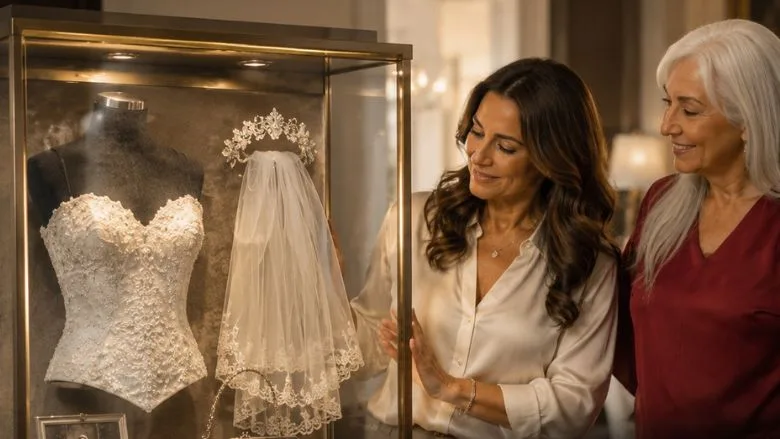
I remember one homeowner whose house had suffered a devastating fire. Among her belongings was her wedding dress. Unfortunately, the lower portion of the dress had literally burned away. The bodice was still intact, along with part of the skirt, but much of the dress simply no longer existed.
From a technical standpoint, the answer was easy.
The wedding dress wasn't restorable.
At least not in the traditional sense.
She was absolutely devastated. She knew it would never look like it had on her wedding day, but she couldn't bear the thought of throwing it away. To her, replacing it wasn't the answer. It wasn't about having a wedding dress. It was about preserving her wedding dress.
Instead of simply documenting it as a total loss and moving on, I approached the insurance adjuster with a different idea. I explained how much the dress meant to her and asked if the insurance company would consider paying for an alterations specialist instead of simply replacing it.
The adjuster agreed.
Together, we transformed what remained of the dress into something completely different. The damaged skirt was carefully removed, the remaining bodice was professionally cleaned and deodorized, and salvageable pieces of the original skirt were used to create a beautiful headpiece and a vintage-style keepsake purse. Everything was then placed in a beautiful keepsake box.
No, it wasn't the same wedding dress she wore years before.
But it was still her wedding dress. She still had something she could hold, display, and someday pass down.
Technically, I couldn't restore the dress. But together, we restored what it represented. And sometimes that's the restoration that matters most.
Managing Expectations Without Dismissing Emotions
One of the biggest mistakes I see contractors make is trying to correct unrealistic expectations before they acknowledge completely valid emotions. Those aren't the same thing. Sometimes homeowners ask for something that simply isn't possible. Other times, they don't want something restored even though we know it can be restored.
I remember another homeowner whose fire had heavily damaged one room while smoke affected the remainder of the home. Her master bedroom hadn't burned, but it had experienced smoke contamination. The bed was made with beautiful bedding, mattress protectors were in place, and from a restoration standpoint it was actually a straightforward job.
The mattress could absolutely be decontaminated. The pillows could be cleaned. The bedding could be professionally restored. There wasn't any doubt in my mind that we could successfully restore every one of those items.
When I explained that to her, she quietly looked at me and said, "I can't lay my head on that pillow ever again. I can't sleep on that mattress. I just can't." That sentence has stayed with me all these years. She wasn't questioning our ability to clean those items. She simply couldn't separate them from the trauma she had experienced. Every night she climbed into that bed, she would relive the fire.
So, I went to the adjuster and explained exactly that. His first question was the one we all would expect. "Can you restore them?" My answer was simple. "Yes, I can." Then I followed it with something even more important. "But she's not there emotionally. She simply cannot separate those items from what happened in her home."
Once he understood the emotional side of the situation, he agreed to replace the mattress, pillows, and bedding. Nothing about the science changed. Nothing about the restoration process changed. The only thing that changed was that someone took the time to explain the human side of the claim. That's advocacy.
Becoming the Homeowner's Advocate
I think one of the most overlooked roles we play in restoration is becoming the homeowner's advocate. Adjusters are doing their job. They're looking at coverage, policy language, and whether something can reasonably be restored. We're looking at something different. We're standing in their home. We're hearing their stories. We're watching their tears. We're seeing their hesitation when someone reaches for a family heirloom or opens the door to a child's bedroom. We have information the adjuster simply doesn't have.
Our responsibility isn't to argue. It's to provide context. If an item has extraordinary sentimental value, explain why. If replacing an item won't actually make the homeowner feel whole, explain that too. If the emotional impact of restoring something outweighs the technical success of restoring it, have that conversation.
Advocacy isn't about trying to spend the insurance company's money. It's about helping everyone involved make the best decision for the homeowner.
Sometimes that means restoring an item. Sometimes that means replacing it. Sometimes, as with that wedding dress, it means finding an entirely different solution that nobody had considered until someone took the time to ask a different question.
Emotional Intelligence Is a Competitive Advantage
Here's something I don't think we talk about nearly enough in this industry. Most restoration companies have access to excellent equipment. Most can buy the same chemistry. Most can learn the same technical cleaning procedures. Those things don't make you unforgettable. People remember how you treated them.
I've seen average technicians create customers for life simply because they genuinely cared. I've also seen incredibly talented restoration professionals lose trust because they became so focused on the contents that they forgot about the person standing beside them. Technical skills can be taught. Compassion can't. Your emotional intelligence may become the single greatest competitive advantage your company has.
Never Forget Why We Do This
One of my favorite Maya Angelou quotes says: "People will forget what you said, people will forget what you did, but people will never forget how you made them feel." I think that's especially true in restoration.
Months from now, homeowners probably won't remember the name of the cleaning agent you used or what kind of ultrasonic machine you ran. They won't remember the chemistry behind deodorization or every conversation you had during the pack-out. But they'll remember whether you listened. They'll remember whether you slowed down long enough to understand what mattered most. They'll remember whether you treated their belongings with the same care you would give your own belongings. And maybe most importantly, they'll remember whether they believed you fought for them.
As restoration professionals, we'll always ask ourselves, "Can I restore this?"
That's an important question. But before we answer it, let's remember to ask the second one.
Should I?
Because sometimes the greatest restoration we provide isn't restoring the contents at all.
Sometimes it's restoring a little hope. Sometimes it's restoring trust. Sometimes it's restoring dignity. And sometimes it's simply helping someone feel seen during one of the worst days of their life.
In the end, that's the kind of restoration people never forget.
Looking for a reprint of this article?
From high-res PDFs to custom plaques, order your copy today!