Where AI Costs Restorers, and How You Can Get Paid More by Using it Right
Restorers should use standards-based AI, human oversight, and verified citations to strengthen claims
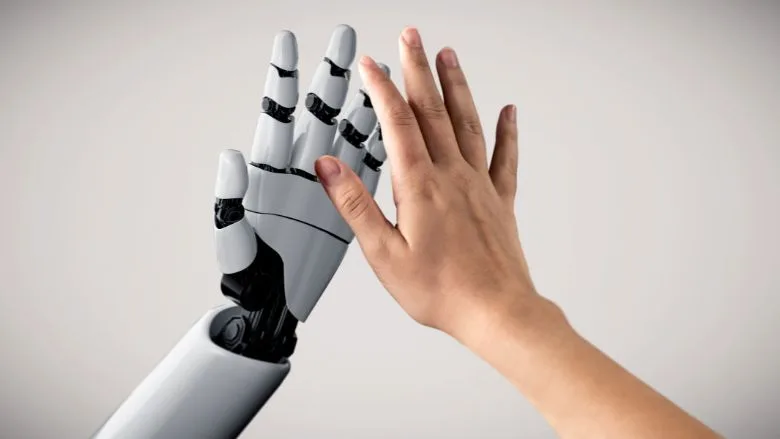
The bottom line: AI is being sold to restoration contractors as a fix for getting paid faster, fuller, and with less effort. Some of that promise is real. But a generic AI used carelessly doesn't just fail to help; it can give your adjuster a reason to pay you less. The contractors who benefit are the ones who understand where AI breaks down, use tools grounded in real standards, and keep a human in the loop. AI is a powerful assistant and a terrible authority, and the difference between the two is everything.
AI can Hurt Your Claims
Here's a scene playing out in restoration offices right now. An estimator is staring down a contested line, i.e. a drying day the adjuster won't pay. But the estimator needs to move on to another project. So, they paste the dispute into a chatbot and ask it to justify the work. Out comes a clean, confident paragraph citing a specific section of the ANSI/IICRC S500. It looks authoritative. They send it.
The problem: The section it cited doesn't say what the AI claimed. Or the section number is wrong. Or it doesn't exist at all. And the person on the other side, a trained adjuster whose job is to find reasons to pay less, will catch it in about ten seconds. Now you haven't just lost that line item. You told the carrier your justifications can't be trusted, on this claim and any that follow.
That's the danger nobody mentions in the AI sales pitch. AI doesn't usually fail by going silent or throwing an error. It fails by being confidently, fluently wrong, which is exactly what fools a busy estimator into hitting send.
Stanford’s 2026 AI Index reports hallucination rates ranging from 22% to 94% across 26 leading models under a new accuracy benchmark, showing huge variability by task and model1.
On the AA‑Omniscience knowledge benchmark, OpenAI’s GPT‑5.5 in early 2026 hit 57% accuracy but also an 86% hallucination rate. This means that when ChatGPT didn’t know an answer, it fabricated one about 86% of the time2.
Where AI Fails in Claims Work
If you're going to use AI on anything you submit to a carrier, you need to know exactly how it breaks. There are a handful of failure modes, and they're consistent:
Looking for quick answers on restoration, remediation and cleaning topics?
Try Ask R&R, our new smart AI search tool.
Ask R&R →
- It invents citations. General-purpose AI models are built to produce plausible text, not accurate references. Ask one for a standard or a code citation and it will often generate something that sounds right. A real-looking section number, an authoritative-sounding quote (that is partly or entirely fabricated.) This is the single most dangerous failure in claims work, because a citation is the one thing an adjuster will check.
- It's confidently wrong, with no warning. A human expert who isn't sure will hedge. AI usually doesn't. It delivers a guess in the same self-assured tone it uses for a fact. There's no built-in signal telling you, "I'm not certain about this part," so the burden of catching the error falls entirely on you.
- It doesn't understand your standards. A generic model has read a lot of the internet, but it hasn't internalized the ANSI/IICRC S500, S520, and S700 the way your best estimator has. Its pattern-matches what restoration text usually looks like. That's fine for a rough draft and dangerous for a final answer.
- It can't see your job. The AI doesn't typically have your moisture logs, your photos, your scope, or the specifics of this loss. In cases where it does, it’s important to remember that AI is not designed to interpret restoration field documentation. It can misinterpret information when it’s sorting through anything that is not clear text from a .PDF or .DOC file. Those details matter, and it fills the gaps with generic assumptions that may not fit what happened on site.
- It goes stale. Standards get revised. Codes vary by jurisdiction and change over time. A model's general knowledge has a cutoff and no awareness of your local code, so its "answer" can be outdated or simply wrong for where you operate. General AI can pull from all existing information on the internet, which greatly reduces the accuracy of results.
Why this Matters more in Restoration than Almost Anywhere Else
In a lot of industries, an AI mistake is low-stakes. In claims work, it's the opposite. Your AI-written justification doesn't go to a friendly reader. It goes to an adjuster who is, structurally, on the other side of your money. Ultimately this is someone whose job includes finding reasons the carrier shouldn't pay, and they are also using technology to win the monetary argument.
This changes the math entirely. A wrong citation isn't a harmless error you can quietly correct. It's ammunition you handed to the other side. It gives the adjuster a concrete reason to discount not just that line, but your credibility on the whole file. The very asymmetry that makes collecting hard (a resourced, practiced carrier versus a stretched contractor) is exactly why a sloppy AI rebuttal is so costly. You're not writing for yourself. You're writing to a skeptic who's looking for the crack.
So "AI can sometimes be wrong" is not a minor caveat in this industry. It's the whole risk. Keep in mind, carriers are also using AI to review and dispute line items. Agentic systems on the insurer side are already reviewing contractor estimates and documentation; if your AI‑generated language is sloppy or inconsistent, it can be flagged and leveraged to deny coverage or cut scope3.
Where AI Genuinely Helps (When You use it Right)
None of this means AI is useless for restoration. If it’s used correctly, it's a real advantage, just not as the authority on your claim. Where it earns its place:
- Speed on the first draft. Turning your rough notes into clear, organized language fast is something AI does well. A draft you then verify and refine beats a blank page every time.
- Catching what you'd have missed. AI is good at flagging line items, documentation, or considerations you might overlook when you're moving fast. It won't decide for you, but it's a useful second set of eyes.
- Organizing the mess. Pulling scattered documentation, notes, and scope into a structured format is tedious for a person and easy for a machine.
- Buying back time. Every hour AI shaves off drafting and organizing is an hour your experienced people get back, provided the output still passes through their judgment.
The pattern in all of these is the same: AI does the labor, while a human keeps the judgment. That's the version that works.
The Dividing Line: Grounded and Checked, or Generic and Trusted
What separates AI that fails you from AI that helps you? Two things.
- It must be grounded in the actual standards. There's a meaningful difference between a general chatbot guessing at restoration text and a tool built specifically for claims. One that cites real, verifiable sections of the ANSI/IICRC S500, S520, S700, applicable codes, and manufacturer specs, and shows you the source so you can check it. If you can't verify the citation, you can't trust it. A black box has no business in front of an adjuster.
- A human has to stay in the loop. The goal of AI in collections is to make your expert faster, not to replace your expert's judgment. Drafts get reviewed. Citations get verified. A person decides what goes to the carrier. The moment you take the human out and let AI send it unchecked, you've recreated every failure mode above and removed the only safeguard against them.
This is the honest version of the AI pitch, and it's the one worth believing: a new class of standards-grounded in AI can genuinely help you get paid more. But it must be done by producing verifiable, citation-backed justifications fast. At most it is a tool in skilled hands, not as an oracle you obey.
- Verify every citation before it leaves your office. No exceptions. If it's going to a carrier, a human confirms the standard says what the draft claims.
- Use tools built for claims, not general chatbots, for anything you'll submit. A grounded, standards-based tool that shows its sources is a different animal from a consumer chatbot. Don't submit a final product from the latter.
- Never auto-send. Keep a human reviewer between the AI and the adjuster, always. AI drafts; people decide.
- Treat the output as a first draft, not a verdict. The AI's job is to get you started and surface what you might miss, not to have the final word on your claim.
And if you measure whether it's helping, watch the right things: your dispute win rate and the time your team gets back, but only on verified output. Speed on unverified rebuttals isn't a win; it's just risk you haven't been caught on yet.
The bottom line
AI isn't magic, and it isn't a scam. It's a powerful assistant with a serious flaw: it can be confidently wrong, and in claims work, confidently wrong is expensive. Hand it your judgment and it will eventually fail you in front of the one audience you can't afford to look unreliable to. Keep it grounded in real standards and under a skilled person's review, and it becomes what it should be. It’s a way to get paid more of what you earned, with far less of the repetition.
In Part 2 of the series, we will discuss the differences between AI and automation. These emerging technologies are powerful tools for restorers. Stay tuned to find out how restoration companies are drastically improving their claims management with new software and strategies.
Resources:
- Stanford Institute for Human-Centered Artificial Intelligence. (2026). AI Index Report 2026. Stanford University.
- Suprmind. (2026, March 3). AI hallucination rates & benchmarks in 2026. https://suprmind.ai/hub/ai-hallucination-rates-and-benchmarks
- Restoration Industry Association. (2025, June 27). How to protect yourself against AI-driven claim reductions. Restoration Industry Association. https://www.restorationindustry.org/restoration-blog/how-protect-yourself-against-ai-driven-claim-reductions
Looking for a reprint of this article?
From high-res PDFs to custom plaques, order your copy today!