The First 24 Hours after Flooding — Why Safety Comes First
How restorers can protect their customers, document the loss, and lead property owners through the flood recovery process
In the property restoration world, especially in hurricane markets like Florida, we are often the first phone call people make on some of the worst days of their lives. We’re not just drying structures, we’re walking into homes and businesses where people are scared, overwhelmed, and already worried about what their insurance company will say or where the money will come from to cover the restoration and rebuilding services. Our job is to bring order to that chaos, protect health and property, and guide people through a process they never wanted to learn about
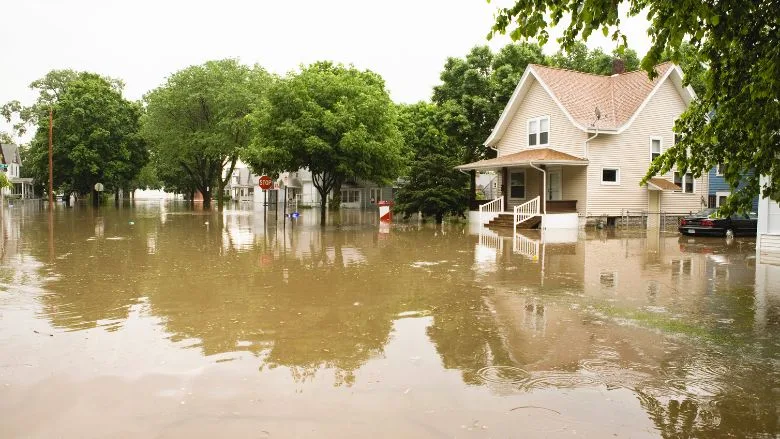
Flooding occurs when natural or engineered control systems fail, such as a supply line under pressure or stormwater systems and drainage swales that simply can’t keep up with the volume of water from a major storm. Unlike a small, isolated leak, flood events can affect entire neighborhoods, multi‑building campuses, and critical infrastructure all at once.
Safety First — We’re All Going Home
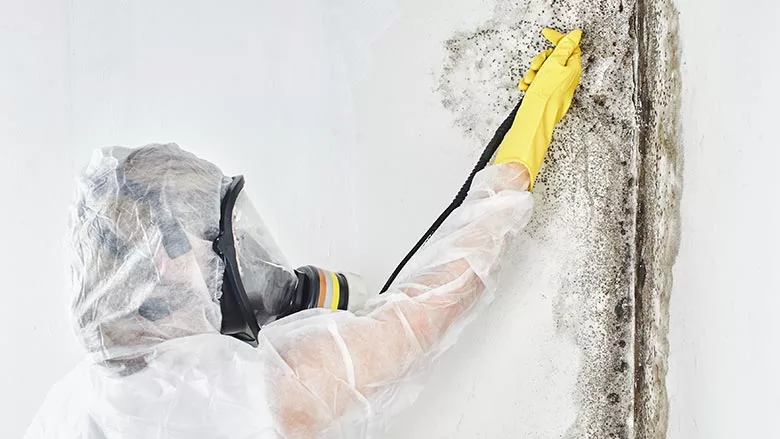
One of the first points we need to drive home is that flooding is not a “clean water” event. Ocean surge, river overflow, and even long‑standing ground water carry contamination, such as sewage, agricultural runoff, chemicals, and debris. That water is not just “wetting” building materials, it is saturating and loading them with contaminants that can drive serious health issues.
During the 2024 hurricanes that hit Florida, our team met dozens of property owners who had waded through floodwater, convinced they could dry things out themselves by opening doors and windows and “letting it air out.” They didn’t understand that the water they were standing in could carry bacteria and pathogens capable of landing them in a hospital. In one instance, a homeowner we spoke with was later hospitalized for weeks after contracting a waterborne illness. These are not just possible risks; they are real outcomes that we see in the field. Simply touching wet building material without proper PPE can cause waterborne illnesses, nausea, infections, and more.
The essential steps for drying a structure effectively actually begin before a single piece of equipment is placed. In a flood event, especially during hurricane season, power may be out or unstable. Electrical panels may be submerged or compromised. Structural elements may be weakened. Contaminants may be present in every room. In some instances, salt water can cause fires. For example, we saw many homes along the Gulf Coast burn because the salt water was in the electrical outlets when power was restored or property owners left their electric vehicles behind.
As leaders, we have a responsibility to bring our teams home safe. That means we start every major flood project with a safety assessment: electrical, structural, environmental. We must be willing to tell an anxious property owner, “No, we are not turning that breaker on yet,” or “We cannot put equipment in this area until it is safe.” It’s not always what they want to hear, but it’s what they need to hear. It’s also imperative that teams know the differences between disinfection and sanitization. Many disinfection products often have time-sensitive instructions, and a single product can serve multiple purposes to ensure your vehicles, equipment, and tools are safe for your team to use on the next project.
Water has incredible strength. We’ve seen it undermine foundations, bow and knock down walls, dislodge mechanical systems, and toss household furniture and appliances around like feathers blowing in the wind. Treating a flood loss like “wet carpet” is how people get hurt. Safety isn’t a box we check; it’s the first phase of drying.
Looking for quick answers on restoration, remediation and cleaning topics?
Try Ask R&R, our new smart AI search tool.
Ask R&R →
The Cost of Waiting and “Shopping Around”
One of the growing challenges we see in large storm events is the tendency for property owners to “shop” emergency services. Your insurance company is required to pay for these losses (and in the perfect world they should), so why are property owners delaying their own emergency and damages to find the dollar store restorer? Friends, social media, or even misinformation from adjusters can push them to get multiple quotes while water is still in the building and worsening materials and increasing the cost by the minute. We have seen a significant increase in property owners “shopping around” during the past few years.
As an industry, we must address this head on. Emergency mitigation is not like buying a new appliance. If you get hit by a car, you don’t ask the ambulance crew for three bids before you allow treatment. In a flood event or really every property emergency, the clock is ticking from the moment water hits the structure. Every hour of delay compounds damage, increases the likelihood of microbial growth, and raises the eventual scope and cost of repairs.
Our duty as professional restorers is to explain that the insured’s responsibility is to mitigate damage, not to become a procurement officer for the insurance carrier. Remember, we work for the property owner, not the insurance carrier. When restorers and property owners start to chase for the lowest number in the middle of an emergency, that’s when we see the “wild west” remediators show up: unmarked vehicles, rental equipment from big‑box stores, no insurance, no certifications, and no respect for safety standards. They’re here today and gone tomorrow. It might look cheaper in the short term, but the long-term cost and affects will last a lifetime.
Documentation and Technical Drying Discipline
Once safety is established and the client understands the urgency, we move into the technical side of drying. Here, discipline and documentation matter just as much as air movers and dehumidifiers. As a mentor of mine shared with me, “property restoration is not a race. It’s a marathon.” Conveying this to property owners is critical. We’re not going to race through projects and miss the discipline in property documentation.
We cannot just snap a picture of the primary affected room and call it a day. Teams must thoroughly document every area they enter or impact during remediation. Comprehensive documentation requires capturing the before, during, and after stages of work through photos, video walkthroughs, moisture readings, equipment logs, and detailed notes on material conditions. Providing a checklist for your team will ensure they document correctly.
In flood situations, documentation does more than protect us, it protects the client. It tells the story of why certain materials had to be removed, why we treated specific zones as grossly contaminated, and how our drying strategy followed recognized standards and safety principles. When adjusters question scope or cost, a well-documented project allows us to respond with facts instead of frustration.
Hurricane Season: Power Outages, Equipment Risk, and Tough Choices
Hurricane season adds layers of complexity to all of this. Flooding is rarely the only issue. We’re dealing with widespread power outages, inaccessible roads, curfews, criminal elements, and stretched law enforcement. In many cases, there is very little we can do on day one beyond site assessments, comfort conversations, and planning.
Then there’s the question of equipment and logistics. In large events, our air movers, dehumidifiers, and specialty tools may be staged at multiple properties across a wide area. We must ask hard questions: where is our equipment? Is it secure? Is this site safe to leave equipment overnight? Are we, or the property owner, truly able to protect it, and will they be present or are they staying offsite?
During the back‑to‑back hurricanes in 2024, we had equipment deployed at different properties when another storm was already tracking toward the same area. Some owners were still “shopping around” for better pricing while expecting us to mobilize full crews as the next hurricane was approaching. We had to make tough calls about which sites we would continue to service, where we could safely leave equipment, and when we needed to pull back to protect our team and assets. Those tough decisions are part of being a professional restorer in high-risk environments.
FEMA, Insurance, and Knowing When to Walk Away
Another reality in major flood events is the financial uncertainty many property owners face. Some large associations and condo boards look past their existing insurance policies, hoping FEMA aid will eventually arrive and cover their losses at a lower perceived cost.
We saw this with occur in a large condominium complex that had full insurance coverage and the ability to begin professional mitigation promptly. Instead, they chose to wait, chasing the idea of lower cost through federal aid. The result was predictable; contamination set in deeper, structural materials deteriorated, and the eventual scope of work ballooned far beyond what an earlier response would have required.
As contractors, we feel the pressure to help everyone, but we can’t. We must know our niche and our capacity. Making the decision to walk away in some situations takes leadership. Some projects are simply too large, too politically complicated, or too misaligned with our business model. Knowing when to walk away is part of being a responsible restorer. Taking on work you can’t safely or properly manage doesn’t help the client, your team, or the industry.
Being Trusted Partners and Community Educators
If we want to raise the standard in our profession, we must see ourselves as trusted partners and educators, not just vendors. When you’re not working inside a managed repair or program environment, your client is the property owner, not the insurance carrier. Your job is to help the person who signed your contract get their home or business back to normal, safely and correctly.
As an industry, we’ve spent far too many hours trying to “babysit” insurance carriers and fight battles that don’t belong to us. We didn’t design their policy, we didn’t decide their coverage limits, and we weren’t there when they chose to underinsure their property. The carrier and the insured are in a long‑term contractual relationship, almost like a marriage. As restorers, we’re the professionals called in after the crisis, not one of the married parties. When we wedge ourselves in the middle of that relationship, we do a disservice to ourselves and to the industry. We lose revenue and we lose time.
What we can and should do is remind property owners that they are their own best advocate. We can provide detailed documentation, photos, readings and clear narratives for them to support their claim. We can explain the scope, the contamination, and the safety concerns in plain language. But we cannot take full responsibility for “fixing” their policy, lowering our operating costs, solving underinsurance, or winning every coverage dispute. Our responsibility is to do the work correctly and to equip the owner with the information they need to stand up for themselves.
The same mindset applies at the community level after hurricanes and major storms. You’ll see volunteer groups handing out bleach at roadside checkpoints, convinced they’re giving neighbors exactly what they need to fight “mold” because the flood waters have now progressed into worsening property damage. The intention is good, but the advice is often wrong. Bleach on wet, porous building materials does not solve moisture or contamination problems; it often creates a false sense of security while conditions behind the scenes get worse.
That’s where we step in as educators. Our role is to say, “We appreciate the effort, but here’s what actually works and why,” and to back that up with experience and science. When we consistently show up as trusted partners, protecting health, explaining risk, and guiding people through the process, we raise the bar for our profession and earn lasting relationships in our communities.
That starts long before the storm hits. We should be walking properties with key stakeholders, reviewing emergency response plans, and discussing power, access, and priority areas. These are relationship building activities that pay off when everything goes sideways. When we invest in those relationships and show up consistently as professionals, we’re not just the company that brings equipment, we’re the company that brings clarity.
Looking for a reprint of this article?
From high-res PDFs to custom plaques, order your copy today!