Restoration logo
search
cart
facebook twitter linkedin youtube
  • Sign In
  • Create Account
  • Sign Out
  • My Account
Restoration logo
  • NEWS
  • PRODUCTS
    • New Products & Technologies
    • Submit Your Product
    • Interactive Product Spotlights
  • CATASTROPHE
    • Hurricane
  • TOPICS
    • Architecture
    • Cleaning & Sanitation
    • Contamination
    • Contractor Safety
    • Contents
    • Fire & Smoke
    • Mold
    • Odor
    • Recon & Reno
    • Water
  • EDUCATION
    • Training & Education
    • Business Management
    • Insurance/Legal Matters
    • KnowHow.
    • Podcasts
    • Webinars
    • Whitepapers
    • Industry Events
    • Sponsor Insights
    • Ask R&R AI
  • VIDEOS
    • Ask the Expert
    • Ask Annissa
    • Marketing Monday
    • Tech Tip Tuesday
  • BUYER'S GUIDE
  • THE EXPERIENCE
    • Convention & Trade Show
  • ABOUT
    • Contact
    • Advertise
  • SIGN UP
Catastrophe RestorationPreparing to Respond: Hurricanes

How Restoration Contractors Can Set Better Expectations After a Hurricane

Why timelines, communication, and coordinating with the carrier matter during CAT response
By Kayla McGowan, Jordan Demmon
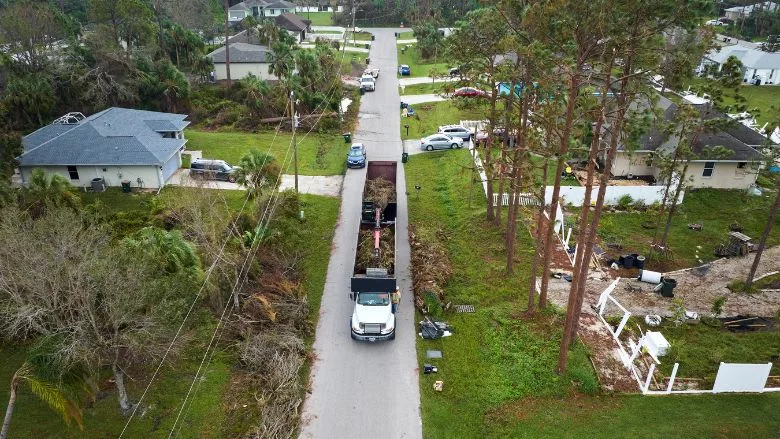
dump truck picking up vegetation from Florida streets in the aftermath of Hurricane Ian
Credit: Bilanol / iStock / Getty Images Plus
May 25, 2026

After a hurricane, uncertainty is just as stressful as the damage left behind. This Q&A is designed to help you set clearer expectations with their homeowners in the days following a hurricane. Understanding why timelines, inspections, and communication may look different during catastrophic events can reduce frustration and confusion for the homeowners. For you as restorers, proactive expectations help protect your team, improve your coordination with the insurers, and create successful project outcomes. Clear communication after the storm isn’t just good customer service; it’s an operational necessity.


Why do response times look different during hurricanes compared to everyday losses?

Response times for routine losses necessitate immediate action to mitigate damages. In hurricane situations, immediate deployment may be unsafe. Hurricanes cause substantial damage that requires coordinated emergency response from local, state, and federal services to ensure everyone’s safety. This includes overcoming hazards such as downed power lines and fallen trees, which may only allow emergency vehicles operating initially.

Hurricane Month
Prepare before the storm with specially-curated articles during the month of May. Learn more!

From the restorer’s perspective, safety and access dictate response—not urgency alone. For instance, in my first hurricane response, I observed the limited availability of fuel in affected areas, which directly affected our deployment timing.


What factors influence how quickly a restoration company can respond after a major storm?

Power being restored and safe travel conditions are immediate priorities for a restoration company. In their absence, our capabilities are significantly constrained.

This is where education and training become critical. We often prepare our customers by informing them about the restoration process and advising them on steps they can take during the time we are unable to access their property. These early conversations help homeowners remain productive while crews are staged, allowing for a faster and more efficient recovery once access is restored.


What does the initial inspection process typically involve after hurricane damage?

The initial inspection process closely resembles our routine operations. We usually conduct a walkthrough of the affected home or business with the customer, outlining our initial mitigation strategy. Once the plan is established, it is promptly communicated to our team for implementation.

While the initial process aligns with our typical losses, the insurance procedures in the context of natural disasters differ significantly. It is crucial for you to guide property owners through these differences, as many homeowners and business owners have not previously navigated large-scale disaster claims and are uncertain about what the path to normalcy looks like.

Looking for quick answers on restoration, remediation and cleaning topics?
Try Ask R&R, our new smart AI search tool.
Ask R&R →


Why can inspections and estimates take longer during CAT events?

Increased claim volumes often result in slower response times. This also delays insurers in processing the necessary paperwork and issuing payments.

You can reduce some of this friction internally. You can significantly impact efficiency by designating a team member exclusively for managing estimates, ideally someone not engaged in the fieldwork. This individual should possess comprehensive knowledge of policy specifics and chargeable items. Ensuring proper paperwork complies with FEMA guidelines helps reduce delays and minimize rework and follow-ups.


How can homeowners help you set realistic expectations around scheduling and timelines?

It is essential for the individual conducting the inspection and communicating with the homeowner to establish clear expectations from the outset. If expectations regarding timelines are not mutually agreed upon, it may indicate a misalignment in service.

From your standpoint, expectation-setting is part of your technical expertise and part of your communication skills. You must clearly outline the process and create timelines that are both realistic and appropriate for CAT conditions. Doing so helps secure the job, reduces customer anxiety, and prevents homeowners from searching for alternatives due to uncertainty. Should the homeowner have any conflicts upfront with scheduling, they can be addressed immediately prior to any work beginning. 


What role does the insurance play in the early phases of mitigation and restoration?

Given the high volume of claims, insurance companies frequently engage independent adjusters to oversee initial mitigation and compile repair estimates. These adjusters often manage heavy caseloads, making streamlined interaction critical.

For you, execution and documentation matter here. Performing quality work, accurately reflecting chargeable items per flood policy guidelines, and submitting complete paperwork quickly can significantly improve claim processing speed and payment timelines. Delays often push files into backlogs.


How do restorers coordinate with insurance carriers during storm recovery?

Effective communication with the insurance carriers can be challenging during hurricanes due to the influx of claims. The assigned adjuster may not always be readily available.

Your best protection is your documentation. Maintain detailed records of every interaction. If contact is unsuccessful, document the attempt, follow up with written communication outlining questions, and log all outcomes. These records protect you and keep the claim moving forward.


What information can homeowners provide to help you move the process along more efficiently?

Homeowners should supply all pertinent insurance details, including policy numbers, claim identifiers, and contact information for involved parties.

They should also communicate what they’re observing: whether contents are damaged, pack-out is likely, or if pre-existing issues such as mold are present. This information allows your team to arrive better prepared, saving time during the inspection and reducing unnecessary return trips.


Why is patience often necessary, even when homeowners urgently want progress?

As you know the restoration process involves multiple steps that are dependent on one another, many of which rely on third parties such as utilities, municipalities, and insurers. Helping homeowners understand this sequence early helps reduce tension and unrealistic expectations during the process.


How does clear expectation-setting early on reduce stress and misunderstandings later?

You must establish clear expectations to significantly reduces misunderstandings for both parties. Articulating the process and confirming understanding upfront is critical.

For you as restorers, overcommitting during a CAT event creates long-term problems. Understanding internal capacity, following guidelines, responding consistently, delivering quality work, and submitting accurate estimates all contribute to a positive outcome. Clear communication protects the team, the customer relationship, and the reputation of the company.

KEYWORDS: customer expectations disaster response restoration business strategy weather events working with carriers

Share This Story

Looking for a reprint of this article?
From high-res PDFs to custom plaques, order your copy today!

Kayla mcgowan author

Kayla McGowan is the Editor-in-Chief of R&R Magazine, with 10 years of experience in marketing and communications in the restoration and cleaning industry. She leads the editorial strategy for R&R and The Experience Events, creating content that informs and connects industry professionals. 

Kayla holds a B.S. in Criminal Science and M.S. in Public Safety and Emergency Management from Grand Canyon University. She serves as Co-Chair on the RIA’s Marketing Committee.

Kayla is a Microbial Warrior®, a Certified Forensic Operator® and a High Risk/ High Level Decontamination Specialist™. Kayla is passionate about elevating the industry, is a food lover, enjoys spending time with her family, and embracing the outdoors.

Jordan demmon   full headshot

Recommended Content

JOIN TODAY
To unlock your recommendations.

Already have an account? Sign In

  • Digital view of the United States with a Hurricane and coding

    Is Your Restoration Technology Ready for the Upcoming Hurricane Season?

    Here’s how restoration contractors can prepare their...
    Catastrophe Restoration
    By: Taylor Carmichael
  • Business team analyzing financial data on digital tablets during a meeting

    7 Trends Influencing the Restoration Industry in 2026

    With market uncertainty, workforce transitions, new...
    Columns
    By: Oscar Collins
  • mold remediation

    Fighting Mold and Bacteria Damage

    Successful mold remediation can be multidisciplinary,...
    Mold Remediation
    By: Josh Woolen
You must login or register in order to post a comment.

Report Abusive Comment

Manage My Account
  • Newsletters
  • Online Registration
  • Subscription Customer Service
  • Manage My Preferences

More Videos

Sponsored Content

Sponsored Content is a special paid section where industry companies provide high quality, objective, non-commercial content around topics of interest to the Restoration & Remediation audience. All Sponsored Content is supplied by the advertising company and any opinions expressed in this article are those of the author and not necessarily reflect the views of Restoration & Remediation or its parent company, BNP Media. Interested in participating in our Sponsored Content section? Contact your local rep!

close
  • restoration technician working a water damage project
    Sponsored byCotality

    Schedule smarter with DASH’s mobile restoration job management

Popular Stories

Restoration crews deploy into a hurricane-damaged neighborhood, unloading equipment and preparing emergency response operations as recovery efforts begin after the storm

Preparing for a CAT Event: What Restoration Contractors Need to Know

Digital view of the United States with a Hurricane and coding

Is Your Restoration Technology Ready for the Upcoming Hurricane Season?

Flooded streets and debris caused by hurricane Sandy

Managing the First 72 Hours of Hurricane Response in Restoration

Register for Webinar - Connecting the Field, Office and Carriers: How to Streamline Claims with Better Data and Communication

Events

June 16, 2026

Connecting the Field, Office, and Carriers: How to Streamline Claims with Better Data and Communication

The modern claims ecosystem depends on seamless integration between the field, office, and carrier. Learn how a unified “golden thread” of communication transforms fragmented workflows into a transparent, high-performance process.

September 9, 2026

The Experience Convention and Trade Show

The Experience Convention & Trade Show logoThe Experience Convention and Trade Show unites the cleaning, restoration, inspection, indoor air quality, and HVAC industries through hands-on education, live demonstrations, and high-impact networking. Attendees gain practical skills, business insight, and connections that elevate industry standards and drive growth.

View All Submit An Event

Poll

Using Hurricane Prep to Your Advantage

What gives your team the biggest advantage during Hurricane Season?
View Results Poll Archive

Products

The Cleaning, Restoration, Inspection, and Safety Glossary

The Cleaning, Restoration, Inspection, and Safety Glossary

The Cleaning, Restoration, Inspection, and Safety Glossary.

See More Products
Hurricane Month - How Restoration Professionals Can Prepare Before the Storm

Related Articles

  • meeting a customer to go over insurance documents

    Why Communication During Restoration After a Hurricane Matters Most

    See More
  • Editor's Note - Getting Hurricane-Ready: How Restoration Professionals Can Prepare Before the Storm

    Getting Hurricane-Ready: How Restoration Professionals Can Prepare Before the Storm

    See More
  • hurricane

    Rebuilding After Hurricanes Milton and Helene: How You Can Help

    See More

Related Products

See More Products
  • thumbnail.jpg

    Complete Marketing Manual for Restoration & Mitigation Contractors

  • After-The-Smoke-Clears.gif

    After The Smoke Clears...

  • COVER pdf.jpg

    How to Get More Restoration Jobs in 14 Days... (ebook)

See More Products

Events

View AllSubmit An Event
  • June 16, 2026

    Connecting the Field, Office, and Carriers: How to Streamline Claims with Better Data and Communication

    The modern claims ecosystem depends on seamless integration between the field, office, and carrier. Learn how a unified “golden thread” of communication transforms fragmented workflows into a transparent, high-performance process.
  • May 19, 2026

    Hurricane Response: What’s Changed, Who’s at Risk, and How to Scale Without Breaking

    This webinar is part of the Preparing to Respond: Hurricanes series.  On Demand: Hurricane season isn’t what it used to be, and neither is disaster response. In this webinar, our panel will break down what’s changed for hurricane response, and how restorers can scale responsibly without sacrificing their safety, retention, or profitability.
View AllSubmit An Event
×

Stay ahead of the curve with our newsletters.

Get the latest industry updates tailored your way.

JOIN TODAY!
  • RESOURCES
    • Advertise
    • Contact Us
    • Directories
    • Store
    • Want More
    • Submit a Press Release
  • SIGN UP TODAY
    • Create Account
    • Newsletters
    • Customer Service
    • Manage Preferences
  • SERVICES
    • Reprints
    • Marketing Services
    • Market Research
    • List Rental
    • Survey/Respondent Access
  • STAY CONNECTED
    • LinkedIn
    • Facebook
    • Instagram
    • YouTube
    • X (Twitter)
  • PRIVACY
    • PRIVACY POLICY
    • TERMS & CONDITIONS
    • DO NOT SELL MY PERSONAL INFORMATION
    • PRIVACY REQUEST
    • ACCESSIBILITY

Copyright ©2026. All Rights Reserved BNP Media, Inc. and BNP Media II, LLC.

Design, CMS, Hosting & Web Development :: ePublishing