Weekly Hands-on How-To powered by KnowHow
How to Use Mold Stain Removers and Sealants in Restoration
A step-by-step process behind effective mold stain removal and sealant application
Killing mold is only part of the job. Even after spores are neutralized and the area is cleaned, dark stains often remain — and if you skip this step, you could jeopardize your final inspection, coating adhesion, or occupant peace of mind. That’s where mold stain removers and sealants come in.
In this weekly how-to, powered by KnowHow, we walk through how to properly remove mold stains and apply protective sealants — using chemistry that brightens surfaces, improves coating adhesion, and helps lock down any microscopic fragments left behind. When done right, it not only improves post-remediation verification but saves time, money, and materials compared to demolition and replacement.

1. Why Mold Stain Removal Matters
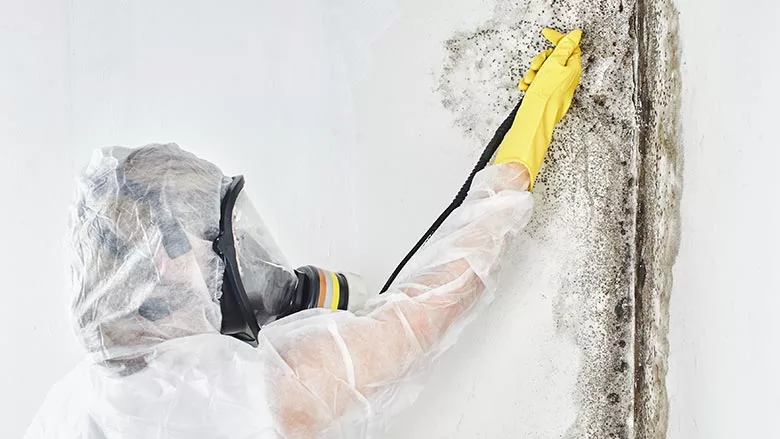
Even after successful mold remediation, visible stains can remain. These dark patches — often melanin-based pigments embedded deep in porous materials — aren’t active mold, but they can:
- Raise concerns during PRV (post-remediation verification)
- Affect coating adhesion by interfering with primers or encapsulants
- Undermine occupant trust even when mold is fully neutralized
That’s why stain removal is more than cosmetic, it’s part of delivering a clean, verifiable result.
Mold stain removers work by chemically oxidizing or reducing pigmented polymers, turning them colorless and lifting them from fibers. Common active ingredients include peroxides (in ready-to-use or two-part formulas), sodium hypochlorite, chlorine dioxide, and occasionally buffered acids or enzymes.
You’ll know the product is working when you see a quick color change, a uniform finish, and minimal surface etching all without corroding surrounding hardware or fasteners.
2. How to Apply Mold Stain Removers
Proper prep and application are critical for stain removers to do their job effectively and safely. Here’s how to apply them the right way:
-
Pre-clean the area using a HEPA vacuum and detergent to reduce organic debris and spore load.
-
Protect adjacent surfaces — cover nearby metals, HVAC coils, and soft textiles to prevent overspray damage.
-
Apply stain remover per manufacturer instructions, keeping the surface visibly wet throughout the dwell time. Re-mist if needed.
-
Agitate gently using soft-bristle brushes for textured wood or concrete — avoid damaging drywall or paper-faced surfaces.
-
Neutralize or rinse the surface if the chemistry is high-pH or chlorine-based, to prevent issues with future coatings.
-
Ensure drying to ≤15% moisture content before applying any sealants.
3. How to Choose the Right Stain Remover
Not all stain removers are suitable for all surfaces. Use this checklist to select the right one:
Looking for quick answers on restoration, remediation and cleaning topics?
Try Ask R&R, our new smart AI search tool.
Ask R&R →
-
Substrate compatibility: Some formulas work best on wood, others on masonry or gypsum.
-
Final pH: Lower-pH rinses reduce the risk of coating failure.
-
Odor and VOC content: Crucial when working in occupied buildings.
-
Corrosion inhibitors: Needed around HVAC systems or metal fixtures.
-
EPA registration: Not required for stain removal alone, but many products also claim antimicrobial action — check labels for proper use.
4. Why You Should Use a Mold Sealant
Once stains are removed, a mold sealant helps lock down any microscopic fragments that remain. Even after HEPA vacuuming and peroxide treatment, tiny mold residues can still hide in wood grain or concrete pores.
Sealants play a key role by:
-
Encapsulating particles in a cured film, preventing future aerosolization
-
Creating a bright, uniform surface for easy post-remediation inspection
-
Providing a tough, scrub-resistant barrier that withstands cleaning and airflow
-
Balancing vapor permeability (3–10 perms) to allow drying while blocking spore movement
-
Avoiding demolition in hard-to-reach or sensitive areas like attics and crawlspaces
5. How to Apply Mold Sealants
To apply mold sealants effectively:
-
Ensure the surface is fully cleaned and dry, with stains removed and moisture content below manufacturer thresholds.
-
Prime if needed, especially on porous OSB — some high-solids products require a thin initial coat.
-
Apply using an airless sprayer with a 517–521 tip or a roller, following the recommended wet mil thickness.
-
Overlap by 50% to maintain even coverage, and use a wet-film gauge to confirm square-footage application.
-
Control environmental conditions — keep temperature ≥5°C (41°F) and relative humidity under 70% for proper curing. Airflow helps.
6. Choosing the Right Sealant
Use the following criteria to select the best product for the job:
-
Match the chemistry to your substrate and jobsite — for example, softer woods may need a different formulation than CMU walls.
-
Verify standards like IICRC S520 for process and ASTM E1795 for coatings.
-
Don’t rely solely on biocide claims — effective results come from cleaning, drying, and coating integrity.
-
Document thoroughly — include stain removal photos, wet mil readings, moisture content logs, and cure time data for clearance.
7. Mold Remediation Workflow: Where Stain Removal and Sealants Fit
To integrate these steps into your overall mold remediation process:
-
Set up containment and PPE according to IICRC S520 and OSHA standards (respirators rated for peroxide/chlorine off-gassing).
-
Remove the source contamination using HEPA vacuuming, detergent wiping, and scraping or blasting if needed.
-
Apply stain remover (highly recommended for wood framing or CMU).
-
Dry the area thoroughly to below 15% moisture content.
-
Apply sealant to encapsulate remaining particles and prepare for reconstruction or leave exposed in utility areas.
- Conduct PRV testing, combining visual inspection with air or surface sampling. White or bright sealants help clearly identify missed spots or new discoloration.
Seal the Surface and the Process with KnowHow
Stain removal and encapsulation aren’t just cosmetic steps, they’re what give your remediation work staying power. When done properly, they set you up for smoother inspections, longer-lasting protection, and fewer callbacks down the line.
KnowHow makes it easy to get these steps right, and your team doesn’t need to rely on memory, guesswork, or hard-to-find documents. You can turn every step of this process into a clear, repeatable guide accessible from any job site, on any device, even offline. Whether you're walking a new tech through their first PRV or giving seasoned pros a quick refresh on dwell times and application methods, KnowHow keeps your whole crew aligned and accountable.
Click to download this template or book a demo with KnowHow to see how we help restoration teams lock in quality, job after job.
Looking for a reprint of this article?
From high-res PDFs to custom plaques, order your copy today!