Restoration logo
search
cart
facebook twitter linkedin youtube
  • Sign In
  • Create Account
  • Sign Out
  • My Account
Restoration logo
  • NEWS
  • PRODUCTS
    • New Products & Technologies
    • Submit Your Product
    • Interactive Product Spotlights
  • EDUCATION
    • KnowHow.
    • Podcasts
    • Trade Shows & Expos
    • Training & Certification
    • Webinars
    • Whitepapers
  • TOPICS
    • Water Damage
    • Fire & Smoke Damage
    • Mold
    • Contamination
    • Odor
    • Contents
    • Architecture
    • Catastrophe
    • Cleaning
  • BUSINESS
    • Managing Your Business
    • Insurance/Legal Matters
  • BUYER'S GUIDE
  • VIDEOS
    • Ask the Expert
    • TradeTalks
    • Video Channel
  • THE EXPERIENCE
    • Convention & Trade Show
    • R&R Special Issue
  • EMAG
    • eMagazine
    • Archive Issues
    • Contact
    • Advertise
  • SIGN UP
Water Damage Restoration

4 Pro Tips for Wall and Cavity Drying
By Jocelyn Hare, Charlie Hare
wall cavity drying
August 28, 2020

There are multiple ways to dry affected walls, each with different benefits depending on the severity of the loss. It is often recommended to start with the drying process that requires the least amount of demolition. When you remove affected materials that could be dried, you decrease the amount of drying equipment needed. Drying walls allows you to minimize your labor costs while maximizing the amount of drying equipment on a job.

1.  A common step to drying affected walls is to remove affected baseboard. By detaching baseboard from wet walls, capillary action (stage 2 of the drying process) can occur. While baseboards may impede the dry-time of wet walls, this is also the case with wall coverings such as calcimine (often referred to as “cal-cote”), gloss and semi-gloss paints, and wallpaper. Once the baseboard is removed, and nearby flooring is dry, bound moisture in the walls may “wick” out through the bottom of the walls. Contractors often leave a small gap between the wall material and the subfloor.

Pro Tip#1: To reduce secondary damage to affected walls, carefully score the top of the baseboard to disconnect it from the wall or wall covering.

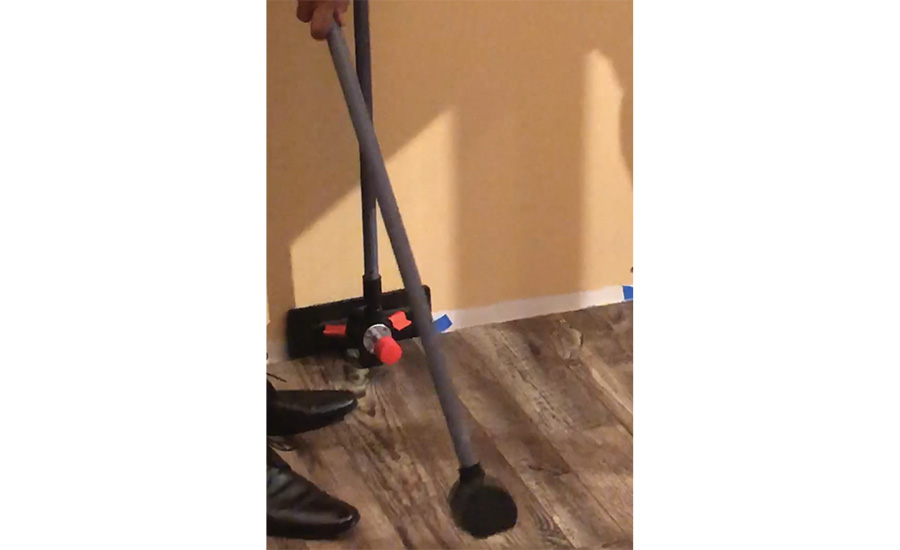
2.  When materials become wet, the moisture becomes bound within the materials, including the inside of wall cavities. To dry materials that contain bound water, the drying process goes through the third and final stage of drying, “vapor diffusion”. The best way to allow airflow to access the affected wall cavities is through wall cavity drying. By removing the baseboard and creating one 5/8” hole every 14-16 inches (or in between each stud bay), the decrease in vapor pressure will allow moisture trapped inside the materials to turn into vapor and evaporate into the drying chamber. Wall cavity drying can help reduce the overall dry-time of affected materials.

Pro Tip #2: Use an aerator, like the one created for restorers by Restoration Tools, to create the holes for wall cavity drying. It is 15 times faster than the current method and leaves no debris to clean up.

Pro Tip #3: The process of creating holes for wall cavity drying can typically be added to estimates. (ex: Xactimate users, use WTR WALLH)

3.  In some cases, the process of wall cavity drying may require the use of specialty drying equipment. Unlike typical wall cavity drying, where the vapor evaporates into the drying chamber through the cavity hole, the injected airflow helps to inject drier air from the chamber into the cavities.

wall cavity drying

Pro Tip #4: Using injected-air drying systems can be advantageous in drying hard-to-reach spaces or sensitive areas such as server/computer rooms.

As with any water loss, it is necessary to utilize proper drying equipment sized and placed to allow for optimum drying. Follow local and industry guidelines in determining salvageable materials and the best drying process for each water loss.

Be sure to follow the EPA’s lead RRP procedures when doing demolition in a building built before 1978. Older buildings may have lead paint or asbestos, and it is imperative that safe abatement procedures are followed. 

KEYWORDS: drying equipment flood damage restoration innovations in restoration restorative drying structural drying

Share This Story

Looking for a reprint of this article?
From high-res PDFs to custom plaques, order your copy today!


Jocelyn is the COO with Restoration Tools and holds over 10 years in the disaster restoration industry. The team is dedicated to providing innovative solutions specifically designed for restoration professionals.

Co-inventor of The Aerator and co-founder of Restoration Tools, Charlie has over 15 years of experience as a business owner within the industry. He is an IICRC certified Master Water, Fire & Smoke Restorer, including Commercial Drying Specialist. 

Recommended Content

JOIN TODAY
To unlock your recommendations.

Already have an account? Sign In

  • mold remediation

    Fighting Mold and Bacteria Damage

    Successful mold remediation can be multidisciplinary,...
    Mold Remediation
    By: Josh Woolen
  • certifications and licenses for restoration professionals

    Certifications and Licenses Every Restoration Company Needs

    Restoration companies need to make sure they have the...
    Restoration Training/Education
    By: Sharon Elzarat
  • a wall covered in moss and fungus

    Zero Tolerance for Toxic Molds: Essential Steps for Successful Remediation

    Understanding the importance of zero tolerance for toxic...
    Mold Remediation
    By: Michael A. Pinto CSP, SMS, CMP, RTPE, FLS, ERS and Kendra Seymour
You must login or register in order to post a comment.

Report Abusive Comment

Manage My Account
  • eNewsletter
  • Online Registration
  • Subscription Customer Service
  • Manage My Preferences

More Videos

Popular Stories

Ask the Expert - Margin vs. Markup: The Costly Confusion in Restoration

Why Understanding Markup, Margin and Overhead is Critical for Restoration Success

mold spores

Mold and Mental Health: The Dual Crisis Facing Indoor Environmental Remediation Teams

calculating profits

How Poor Documentation and Manual Billing Quietly Erode Restoration Profits

2025 Technician Award winner - Congratulations, Kaylin Glaspie!

Events

January 20, 2026

INTRCONNECT

Dive into the latest trends, innovations, and best practices shaping the future of property insurance and restoration.

April 27, 2026

RIA Convention & Expo

This event empowers professionals through world-class education, powerful networking, and access to cutting-edge tools and services.

View All Submit An Event

Poll

Technology Innovations

Which emerging technology do you believe will have the biggest impact on restoration work in the next 5 years?
View Results Poll Archive

Products

The Cleaning, Restoration, Inspection, and Safety Glossary

The Cleaning, Restoration, Inspection, and Safety Glossary

The Cleaning, Restoration, Inspection, and Safety Glossary.

See More Products
Prepare for CATASTROPHE with R&R!

Related Articles

  • restoration tools drying

    Techniques for Effective Wall Cavity Drying

    See More
  • Wall & Cavity Drying: What’s in your arsenal for these hard-to-reach areas?

    See More
  • Wall and Cavity Drying

    Wall & Cavity Drying: Reaching Full Drying Potential

    See More

Related Products

See More Products
  • thumbnail.jpg

    Complete Marketing Manual for Restoration & Mitigation Contractors

See More Products

Related Directories

  • Implement4

    Implement4 is a dynamic consulting and recruiting firm specializing in operational strategy, business transformation, and technology implementation. We partner with Restoration companies to streamline processes, drive efficiency, and deliver measurable results. Our team combines deep industry knowledge with hands-on execution to help clients successfully implement change and achieve their goals.
  • Climate by Design International Inc.

    Climate by Design International (CDI) manufactures and distributes ARID-DRY mobile desiccant dehumidifiers for temporary humidity control and constructive drying with optional consistent heated discharge temperatures to fit any drying need. Our product offering includes a variety of mobile systems for temporary humidity control. Units are available in caster and cage configurations with 2000 to 18,000 CFM supply volumes. CDI has a mobile system for any application.
×

Stay ahead of the curve with our eNewsletters.

Get the latest industry updates tailored your way.

JOIN TODAY!
  • RESOURCES
    • Advertise
    • Contact Us
    • Directories
    • Store
    • Want More
    • Submit a Press Release
  • SIGN UP TODAY
    • Create Account
    • eNewsletters
    • Customer Service
    • Manage Preferences
  • SERVICES
    • Reprints
    • Marketing Services
    • Market Research
    • List Rental
    • Survey/Respondent Access
  • STAY CONNECTED
    • LinkedIn
    • Facebook
    • Instagram
    • YouTube
    • X (Twitter)
  • PRIVACY
    • PRIVACY POLICY
    • TERMS & CONDITIONS
    • DO NOT SELL MY PERSONAL INFORMATION
    • PRIVACY REQUEST
    • ACCESSIBILITY

Copyright ©2025. All Rights Reserved BNP Media.

Design, CMS, Hosting & Web Development :: ePublishing