Focus on Blasting Without Losing Your Focus
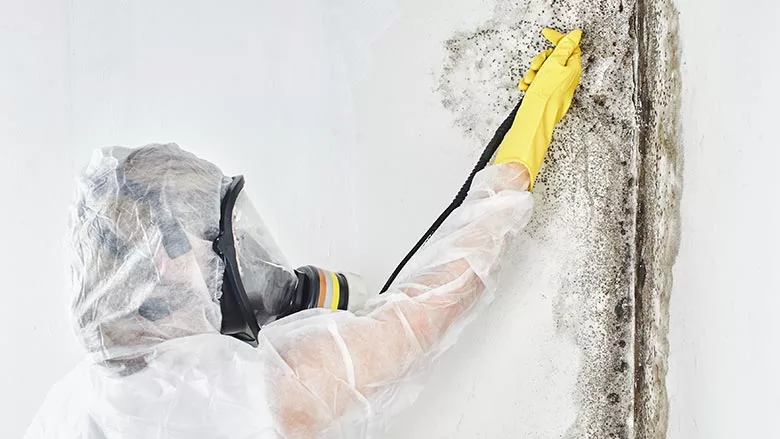
The versatility of today’s blasting equipment allows it to be utilized for more than just mold and fire jobs.
The first step to outfitting a restoration professional with the right type of blasting equipment is first determining the demands of the job they’re working. In other words, you need to match the right equipment to the right application. For instance, fire losses with heavy soot damage on otherwise structurally sound building materials (Image 1 and 2) just scream baking soda blasting based on its ability to quickly and effectively clean most materials with minimal damage - and the added benefit of odor neutralization. Fire losses, and the application of baking soda, may seem like a no-brainer to those with years of experience, but to a contractor anticipating a significant investment in a new process, it still requires a degree of discussion and, sometimes, convincing.
Firstly, consider that fire losses are generally larger in scope than many other types of restoration projects, due in large part to the pervasive nature of the damage. Flames, heat and soot penetrate the cracks and crevices of a structure, moving into attics, wall cavities - literally everywhere inside - and sometimes even outside the structure (Image 3). What this means is that fire losses can create a great deal of revenue due simply to the overall square footage affected and the cleaning it requires. While there may not be a “typical” fire loss, the average that I’ve seen usually involves between 2,000 and 5,000 square feet of surface area, depending largely on the structure itself and the nature of the fire, of course. Couple this with the revenue generated by baking soda blasting and the fire damage - usually between $1.50 and $2.25 per square foot of blasting – and the resulting outcome averages from $3,500 up to over $11,000 for the blasting alone. When you consider that most new contractors spend between $7,000 and $10,000 for new media blasting equipment (Image 4), it’s easy to see why the investment is easy to justify. If you have these types of jobs coming to you, this should be a very simple decision.
When it comes to blasting, the revenues largely pay for the equipment required in one or two jobs. I’d be skeptical of those numbers myself if I hadn’t had them confirmed over and over again by an army of contractors that agree. But the versatility of this equipment, arguably, is what makes it truly stand out. There are, of course, many applications for baking soda blasting beyond restoration, from oil field and refinery applications to food processing plants to the stripping of classic cars. In addition, many of the baking soda blasting machines in use today are also capable of blasting with more traditional media such as corn cob meal, ground walnut shells, and hard abrasives like garnet, crushed glass and silica sand replacements (Image 5). Media blasting is versatile for sure, but it’s also important for the user to keep their focus.
That admonition about focus is most often met with a somewhat defensive response – something like, “We just don’t like to see equipment just sitting around.” But what nobody wants is to see a restoration contractor lose focus, waste time and ultimately lose money chasing jobs in foreign territory or outside their normal restoration market (i.e. boat bottom blasting, classic car restoration, industrial contracting, etc.) With that in mind, my answer is still the same: blasting can do a great deal more in the restoration business than just fire losses. There are many ways to diversify, and stay within the industry and your area of expertise at the same time.
Focus your attention for a moment on some of the applications that aren’t as foreign as you might imagine. Applications that meet the two previously established criteria of being an additional service you can perform with your blasting equipment and/or a service that’s within the focus of most restoration contractors. Cob meal blasting, for instance, has been a standard in the log home industry for many years. Re-finishing of log structures (Image 6) with cob meal is very effective at the removal of stubborn coatings like varnish, paint and polyurethane with little or no damage to the structure itself. Cob meal media is typically inexpensive, safe, readily available, environmentally safe and bio-degradable. Add to this the ability to recycle the blast media, and the process can be very cost effective and profitable. Marketing this service to builders, painters and the normal channel of building trades people should be easy to do alongside your current restoration offerings.
Another application that meets these same criteria while remaining within the focus of you current restoration business is re-finishing of metal architectural components like wrought iron fences and other metal building materials (Image 7A and 7B). Rusted metal requires aggressive cleaning prior to re-coating. Blasting with hard abrasives like garnet, crushed glass, magnesium oxide and others effectively removes rust and paint while providing a beneficial anchor pattern for coatings. This anchor pattern is often referred to as a profile, measured in mils, or thousandths of an inch. This profile is required by the different coatings manufacturers for proper product performance and conformance with warranty requirements. The process can be applied either “dry” or “wet,” utilizing water as a method of dust suppression. Again, the blast media is inexpensive, safe and recyclable, making the process potentially profitable given the right circumstances. Lastly, the process can be marketed to much the same group that your current efforts target.
The last example I’ll cite of an alternate application is the cleaning of concrete and masonry. This is done with all types of media for all sorts of reasons. Masonry cleaning covers a great deal of ground, from simple blast cleaning of graffiti to enclosing and blasting a historic bridge over a scenic river (Images 8 and 9). Finding these jobs will be a challenge at first. But, success breeds success – one successful job leading to the next. Just as there is no “typical” restoration job, the requirements for media blasting masonry will also vary greatly – sometimes requiring baking soda-like gentleness and other times requiring aluminum oxide aggressiveness. Regardless of the subtle differences, blast cleaning of masonry of all types offers a route to putting that media blasting system to use while not losing focus on the business of restoration.
Diversification and offering blasting services that vary from the norm can add to the bottom line while keeping your machine and crews busy. These other applications will allow you to be more profitable, and you won’t have to look at a machine just sitting still - just don’t lose that all so important focus on the applications like mold remediation and fire restoration that paid the bill in the first place (Image 10 and 11).
Looking for quick answers on restoration, remediation and cleaning topics?
Try Ask R&R, our new smart AI search tool.
Ask R&R →
Looking for a reprint of this article?
From high-res PDFs to custom plaques, order your copy today!