Restoring Success: What’s Your Inventory Control Solution?
There are an endless number of approaches and combinations of approaches that may work for your organization
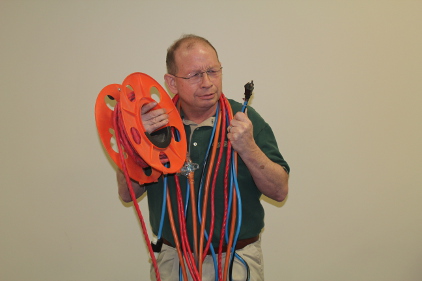 A frustration shared by many restorers is inventory control. You wake up one morning and all the extension cords are gone, an air mover goes missing, a dehumidifier gets left on a job site. How does this happen? This topic gets the blood boiling within every manager and owner that I encounter.
If you ask a manager or owner this question, you may hear, “They just don’t care!” Although this is a somewhat understandable reaction, I caution using this emotional response as the basis for your inventory management system. Let’s assume everyone in the company understands the cost and value of tools and equipment and that everyone cares. After all, we’ve all lost something.
I had a watch for 10 years. It was special to me because it was purchased on vacation with my husband. It was what I consider an expensive watch. I valued and understood the cost, I respected the dollars spent on the watch and what those dollars represent. I had something I treasured, and I respected. It was precious to me and yet, I lost it! We have all lost something we have had respect for, we cared about and we have valued.
Let’s agree that your team does care. Your team understands the cost of the tools and equipment of our trade, the value they have in the rendering of our services and the investment the company makes in these items. If you are still not buying it, I encourage you to present this information at your next company meeting. If you think an individual really does not care, ask yourself if they should be a member of your team. Declaring “they don’t care” can be demoralizing to those who really do care. As an owner, I make it clear that company equipment is not mine. It is “ours” and belongs to every member of the company. I love to hear someone get passionate and excited about “their equipment!” Our tools and equipment are a big investment and the better everyone takes care of them the better the company does and the better we all do.
The Answer to Inventory Control?
I don’t have one. Sorry, if I let you down. So why am I wasting your time in this edition of Restoring Success? Well, there are an endless number of approaches and combinations of approaches that may work for your organization. For instance:
- Software and barcode systems
- Assign or hire a person in charge of equipment management
- Manual tracking
Some of the key ingredients to a successful equipment tracking approach for the restoration industry are as follows:
- Each piece of equipment is assigned a unique number and there is a “spot” where it belongs. This simple step keeps things where they belong and allows for quick visual assessments of your inventory. Example: Air mover #172 goes in a spot labeled #172.
- Allow for mobility: Due to the rapid pace of our industry and fast movement of equipment through multiple locations, your system should allow for a quick and easy solution for tracking equipment from one job site to the next.
- Efficiency: Depending on the size and structure of your company, the system may need to be accessible to every team member.
- Allow for movement within your company and controls for maintenance and cleaning: Most of our equipment requires some kind of cleaning or maintenance. It moves from Point A (job) to Point B (cleaning and maintenance) to Point C (back into its assigned location, field ready).
Is it Material?
My background is in accounting. Many years ago I read an article about solving equipment inventory control problems and it reminded me of a very important concept in accounting: The concept of “materiality.” In simplistic terms, if inventory replacement costs .01% of your equipment inventory, which translates .05% of your operating expenses, the questions are:
- Do you have a problem?
- What is the cost of your solution versus the cost of the benefit?
- Is it material?
As an example, if you have $2 million worth of equipment inventory and you are replacing $20,000 or .01% of equipment per year, is it material? If you have $200,000 in equipment inventory and you are replacing $20,000 or 10% of equipment per year, is this material? (My opinion would be “yes.”) Consider $20,000 and compare this to the cost of your system or the improvements you plan to make. Not only should you look at the hard cost like the software fees and direct labor costs, but also the opportunity costs of giving existing team members additional duties.
Looking for quick answers on restoration, remediation and cleaning topics?
Try Ask R&R, our new smart AI search tool.
Ask R&R →
Regardless of your inventory size, $20,000 of lost equipment can equate to 5 dehumidifiers, 26 air movers and 100 extension cords and that is enough to evoke an emotional response in the best of us. Managing our budgets and costs is a vital and ever evolving challenge. Typically, every dollar counts.
It is my hope that you gained perspective regarding the function of inventory management. You are not alone if this is something that you are struggling to improve in your organization. Take into consideration the unique needs of our industry and the costs involved. Take a look at the technology available today and make an informed decision, weigh all the facts and make the right decision for your organization.
Best wishes for your continued success.
Looking for a reprint of this article?
From high-res PDFs to custom plaques, order your copy today!