The Training Dilemma: Turning Technician Training from an Expense to an Asset
How restorers and cleaners can rethink training costs to support quality, productivity, and growth
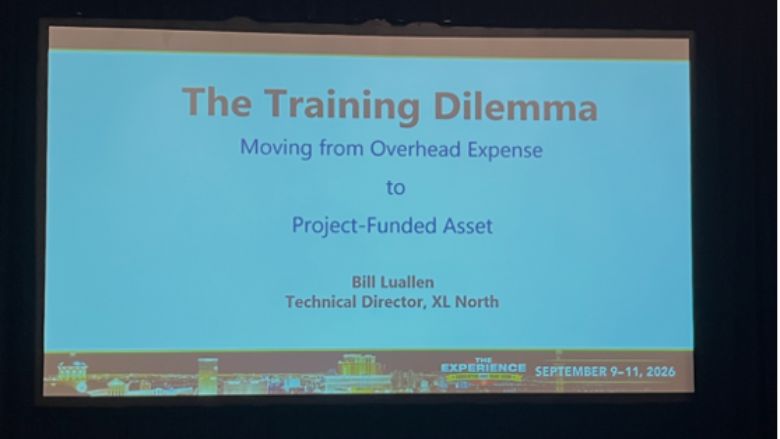
Editor’s note: This article expands on my in-person presentation at The Experience Event in Vegas and builds on my article earlier in the year, The Training Dilemma, by reframing training as a project-funded cost of quality rather than discretionary overhead.
After presenting this idea in person at The Experience Event in Vegas, I kept coming back to the same question: how do we help contractors move training out of the “nice to have” category and into the way the business actually funds quality? My previous The Training Dilemma article, opened that conversation by pointing out the tension every service company knows too well: we say training matters, but we struggle to make room for it when the schedule is full, the trucks are rolling, and every productive hour feels spoken for.
Credit: Bill Luallen
The original dilemma has not gone away. Owners still feel guilty pulling technicians out of the field. Managers still worry about lost production. Technicians still end up learning too many lessons the hard way. But the more I look at it, the more I believe the real problem is not simply whether companies value training. Most do. The problem is that training is still being accounted for in a way that makes it look like a short-term loss instead of a long-term asset.
That is why this follow-up matters. The presentation gave us a chance to talk about the issue face to face. This article is intended to put that conversation into a practical framework: stop treating training as a discretionary overhead expense and start treating it as a project-funded cost of quality.

Credit: Elo_Omella / iStock / Getty Images Plus
Look at the Problem Through a Different Lens
My mentor, Bob DeWeese, used to tell me, “You need to look at problems through a different lens.” That stuck with me because most of the time, the problem is not what we think it is. In the first article, the lens was time: how do we justify taking people out of production long enough to teach them? In this follow-up, the lens is accounting: where does training belong in the economics of the job?
If we keep calling training an “overhead” expense, it will always feel like something taking money away from the business. But if we treat it as a project-funded cost of quality, the whole conversation changes. Same training. Same classroom. Same technician. Different lens.
Building Training into the Estimate
Think about how we already price work. We do not agonize over fuel, or pretend chemicals are free. We build supplies, wear items, equipment costs, and other consumables into the job because they are part of doing the work right. Training belongs in that same conversation.
Looking for quick answers on restoration, remediation and cleaning topics?
Try Ask R&R, our new smart AI search tool.
Ask R&R →
One practical way to do it is to add a small “Growth and Quality” burden to each estimate. Maybe that number is 2.5 percent. Maybe your business model needs a little more or a little less. The percentage is not the point. The point is creating a system where every job helps fund the knowledge required to do the next job better.
On a 40-man-hour project, a 2.5 percent training accrual gives you one fully funded training hour. That hour (money) is no longer something you have to “find” later. It has already been earned. And from the customer’s perspective, that is fair. They are not just buying motion. They are buying judgment, skill, and the confidence that the work will be done right the first time.

Credit: Zhanna Danilova / iStock / Getty Images Plus
The Training Reservoir
Once you build training into the estimate, you can manage those funded hours like a reservoir. As jobs are completed, training minutes begin to collect. They do not have to be emotional. They do not have to be debated every time the schedule opens. They are simply part of the system.
When the “training bucket” reaches a set point, maybe eight hours, you rotate a person into structured training. The downtime has already been funded by completed work. Cash flow stays neutral, the technician gets better, and the company grows capability without acting like every class is a financial emergency.
The Callback Penalty
Now let’s talk about the part nobody likes to put on a spreadsheet: the cost of not training. A re-do trip does not just cost fuel and labor. It costs schedule space. It costs customer confidence. It costs morale. And sometimes it costs the next job because the customer remembers the callback longer than they remember the original service.
We have all heard some version of the old saying that one bad moment can wipe out a thousand good ones. That is what callbacks do. They erase margin in a hurry. But a trained technician who knows the process, understands the product, and does not skip the hard steps can often turn a four-hour problem into a three-hour solution that holds. That is not just efficiency. That is effective hourly yield.

Credit: Rawpixel / iStock / Getty Images Plus
Technicians Are Industrial Athletes
I have always liked the phrase “industrial athletes” for technicians because it fits. Owners build the stadium. They provide tools, chemistry, the equipment, and also the playbook. But the technician is the one on the field dealing with the real conditions, the customer, the surface, the surprises, the pressure, and the clock.
If you want people to perform like professionals, you have to invest in them like professionals. Training builds confidence. It tells your people they matter. It gives them a reason to stay, improve, and take pride in the work. And in a labor market where good technicians are hard to find and expensive to replace, that matters.
The company gets better quality, fewer callbacks, stronger throughput, and a more confident field team. The technician gets skill, confidence, earning power, and professional pride. Same investment. Two returns.
Measuring the Right Number
Too many companies manage raw utilization like it is the only number that matters. I understand why. If the truck is moving and the technician is billing, it feels productive. But utilization itself does not tell you whether the work was done right, whether it will hold, or whether you just bought yourself a callback next week.
The better number is effective hourly yield. When trained people complete work faster, cleaner, and with fewer returns, the value of each productive hour goes up even if your rate never changes. That is where training starts showing up as an asset instead of an expense.
Bob Blochinger, an industry icon and IICRC Board of Director, said it well: “While taking a class means a short-term loss of income, this will be made up easily through the value of knowledge you’ve received. You can immediately upgrade your level of workmanship and increase your income.” That is the tradeoff. Short dip. Durable gain.
What About Pushback from Customers or Insurance Companies?
Now, I know what some cleaning and restoration contractors are thinking: “That sounds good, Bill, but what happens when a customer, property manager, adjuster, or insurance company questions that line item?” Fair question and the answer is to not to hide it, and it is not to make it sound like some mysterious add-on. The answer is to position it correctly for the type of work being performed.
I would be careful about calling it a “training fee” on a quote or invoice. That language invites the wrong conversation. A cleaning customer may wonder why they are paying to train your people. A property manager may see it as overhead. An insurance company may see it as unrelated to the claim. For cleaning work, the language should connect to workmanship consistency, surface protection, product knowledge, equipment readiness, and quality assurance. For restoration work, the language needs to stay connected to the project itself: scope execution, documentation, supervision, field readiness, and reducing the likelihood of rework or claim supplements. Those are defensible job-related functions, not vague general expenses.
Cleaning customers are usually looking for a professional result that protects their flooring, fabric, surfaces, image, and indoor environment. For restoration, carriers are usually looking for charges that are reasonable, necessary, documented, and tied to the approved scope of work. In both cases, the wording should avoid sounding like company-wide overhead or employee development. Instead, frame the allocation as project or service support that helps ensure the work is performed correctly, documented properly when required, supervised appropriately, and completed in a way that reduces the risk of return visits, failed outcomes, damage, or avoidable rework.
If challenged, the explanation can be simple: “This is a job-related quality control and field-readiness allocation. For cleaning work, it supports proper product use, surface protection, equipment readiness, and workmanship consistency. For restoration work, it supports the scope execution, documentation, supervision, and workmanship consistency so the approved work can be completed correctly, and the risk of callbacks, rework, or supplements is reduced.” That is a much more defensible position than asking someone to pay for “training.” It connects the charge directly to the work being performed and the outcome the customer or claim is intended to receive.
Sample Quote and Invoice Wording
Here is the kind of language I would consider using. Keep it simple, professional, and tied directly to quality. Cleaning companies may use service-quality language. Restoration companies may use project support and documentation language. Do not over-explain it on the invoice. If someone asks, then you have a clear answer ready.
Sample cleaning quote line item: Service Quality and Field Readiness Allocation — supports proper product selection, equipment readiness, surface protection, workmanship consistency, and quality assurance for the specified cleaning scope.
Sample restoration quote line item: Project Quality Control and Field Readiness Allocation — supports job-specific supervision, documentation, scope compliance, workmanship consistency, and proper execution of the approved restoration scope.
Alternate restoration wording: Project Administration and Quality Assurance Allocation — applied to support project coordination, field readiness, documentation, quality control procedures, and reduced risk of callbacks, rework, or claim supplements related to avoidable workmanship issues.
Sample cleaning invoice wording: Quality Assurance / Service Support Allocation — service-related support for workmanship consistency, proper product application, equipment readiness, surface protection, and completion of the cleaning scope as quoted.
Sample restoration invoice wording: Quality Control / Project Support Allocation — project-related support for scope execution, documentation, workmanship consistency, supervision, and completion of the approved work in accordance with the estimate.
If questioned on a cleaning service: “This is a standard service-quality allocation. It supports proper product use, equipment readiness, surface protection, and workmanship consistency so the quoted cleaning work can be completed correctly and with less risk of return visits or avoidable issues.”
If questioned on a restoration claim: “This is not a general training charge. It is a project-related quality control and field-readiness allocation that supports proper scope execution, documentation, supervision, and workmanship consistency. The purpose is to help complete the approved work correctly and reduce the likelihood of callbacks, rework, or unnecessary claim supplements.”
The goal is not to make the customer or carrier pay for a classroom. The goal is to accurately price the service-related or project-related systems, documentation, supervision, technical readiness, and quality controls required to deliver the work properly. For cleaning companies, that may mean protecting surfaces, applying the right solutions, and maintaining consistent workmanship. For restoration companies, that may mean documenting the claim, following the approved scope, supervising the job, and reducing avoidable rework or supplements. If the allocation is reasonable, consistently applied, and connected to the specific work being performed, it becomes much easier to explain and defend.
Strategic Takeaways
- Stop treating training like general overhead and start treating it as a project-funded cost of quality.
- Add a modest Growth and Quality accrual to each estimate so the next class is funded before the calendar opens up.
- Let those funded minutes accumulate in a training reservoir, then rotate technicians into structured development when their bucket is full.
- Measure the return in callbacks avoided, better first-time quality, stronger hourly yield, improved retention, and more confident technicians.
The New Bottom Line
The training conversation needs to be more practical. Contractors must connect training directly to how work is priced, performed, and protected.
Callbacks, avoidable mistakes, frustrated technicians, and lost customer confidence all carry a cost. It may not show up neatly on the profit and loss statement, but it is real. A small training accrual built into each estimate creates a disciplined way to pay for improvement instead of repeatedly paying for failure.
That is the next step: stop seeing the classroom as a place where money goes to die. See it as the laboratory where profit is engineered. On the next estimate, do not ask whether you can afford to train. Ask what it is already costing you not to. Then add the line, fund the reservoir, and make training part of how every job pays for the quality your customer expects.
Looking for a reprint of this article?
From high-res PDFs to custom plaques, order your copy today!