Why Thermal Imaging and Mositure Meters Work Better Together
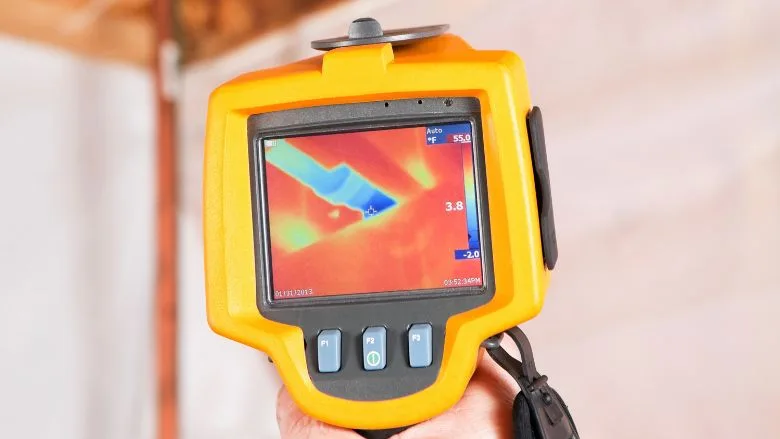
Thermal imaging cameras allow you to see cold and heat patterns that the naked eye won’t see.
Naturally, building inspectors have to be detail-oriented to do their jobs well. One of the primary issues they look for is moisture (or the potential for moisture) in places it shouldn’t be. So they’re checking nooks, corners, crawl spaces, behind appliances and hard-to-each places, etc.
Their keen skills can take them far, but problematic moisture isn’t always visible to the naked eye until it’s already causing damage. With the help of the right tools, however, inspectors can be more thorough and more likely to detect hidden moisture before it becomes a problem.
Thermal imaging cameras and moisture meters are two products that complement each other in the search for moisture-related code violations, malfunctions, or potential hazards in a commercial or residential building. Here’s how:
- The role of thermal imaging cameras
- The role of moisture meters
- Why restoration pros need both tools
- What combining both tools can look like
First, let’s get our feet wet (see what we did there?) with the role of thermal imaging cameras.
The role of thermal imaging cameras
Whether the inspector is conducting an annual electrical inspection, performing HVAC diagnostics, or a more specialized home inspection, chances are building inspectors use a thermal imaging camera to identify temperature anomalies that could indicate several types of issues, including potential moisture intrusion. Then, these findings help direct an inspector to areas requiring closer examination.
For example, if hot spots are detected, it could mean potential airflow restrictions, electrical issues, equipment malfunction, etc. Cold spots could also signal possible ventilation issues, as well as insulation gaps or moisture intrusion.
When it comes to trapped moisture, it can cause a variety of issues before it ever becomes visible (discoloration, peeling paint, structural damage, etc.) or gives off a telltale odor. And by then, it’s likely that the damage is already significant.
Looking for quick answers on restoration, remediation and cleaning topics?
Try Ask R&R, our new smart AI search tool.
Ask R&R →
But a thermal imaging camera can help identify areas of concern well before they become visible.
That’s why these devices are an essential screening tool when scanning for conditions consistent with moisture intrusion in walls, floors, attics, etc., or around household items like water heaters, vents, bathrooms, or dishwashers. They indicate which areas to zero in on for further investigation.
But what they can’t do is provide actual moisture content readings. And this is where a quality moisture meter comes in.
The role of moisture meters
After scanning for areas of concern, it’s time to gather accurate, reliable data and move beyond guesswork.
Wood moisture meters confirm the presence of moisture. Then an inspector can determine whether an area of concern actually indicates a current or potential problem if it isn’t addressed.
Framing or exterior construction that shows a reading of 12% Moisutre Content (MC) might be ideal for outdoor conditions. But a 12% MC reading in indoor hardwood flooring could mean trouble because it could be too high for indoor conditions. So a precise moisture meter reading is needed.
With these readings, building inspectors get a better idea of the scope of any moisture-related issues. With a better idea of how much moisture is present, they may recommend adjustments to improve the ventilation of an area rather than to rip down an entire wall.
Some higher-end moisture meters also have relative mode, which reads non-wood materials like drywall or plywood. Relative mode, as the name suggests, provides comparative readings so inspectors can:
- Establish moisture boundaries
- Limit unnecessary demolition
- Compare wet vs dry areas
Relative mode is also useful when exact MC values aren’t available or applicable. Just knowing that one area is has a higher MC than another area can indicate a budding issue that can be addressed before it’s too late.
Combine the advantages of a thermal imaging camera and a moisture meter and you’ve got an excellent combination of tools for any building inspection.
Why restoration pros need both thermal imaging & moisture meters
Both thermal imaging cameras and moisture meters are great tools for building inspection, and now we’ve covered how they serve different roles. Thermal cameras help identify areas that need a closer look, and moisture meters provide an actionable reading of the moisture content.
So yes, you can use just one of these tools during an inspection, but it’s far better to use them together since they complement each other so well. If a thermal camera identifies a potentially problematic area, a moisture meter can validate those findings.
So even though these two tools have different roles in building inspection, when they’re used together, inspectors can have confidence in what they recommend.
And since thermal cameras and moisture meters also store data, an inspector who uses both has advanced reporting skills right in the palm of their hand. Timestamped archiving, more thorough analysis, and easy exporting mean more detailed inspection reports. That extra level of insurance is always useful, especially for high-stakes projects.
Using thermal imaging scans and moisture meter readings together is a simple way to improve accuracy and efficiency during inspections.
What Combining Thermal Cameras and Moisture Meters Can Look Like
To put both tools to their best use, here’s an example of the steps an inspector can take:
- Scan an area with a thermal imaging camera
- Identify temperature anomalies and potential problem areas
- Confirm moisture using a moisture meter
- Use a moisture meter’s relative mode to map moisture across materials
- Document readings to provide the appropriate recommendations for next steps
This process allows thermal imaging cameras and moisture meters to work together for the ultimate 1-2 punch in establishing a full picture in moisture detection.
Looking for a reprint of this article?
From high-res PDFs to custom plaques, order your copy today!