Restoration logo
search
cart
facebook twitter linkedin youtube
  • Sign In
  • Create Account
  • Sign Out
  • My Account
Restoration logo
  • NEWS
  • PRODUCTS
    • New Products & Technologies
    • Submit Your Product
    • Interactive Product Spotlights
  • EDUCATION
    • KnowHow.
    • Podcasts
    • Trade Shows & Expos
    • Training & Certification
    • Webinars
    • Whitepapers
  • TOPICS
    • Water Damage
    • Fire & Smoke Damage
    • Mold
    • Contamination
    • Odor
    • Contents
    • Architecture
    • Catastrophe
    • Cleaning
  • BUSINESS
    • Managing Your Business
    • Insurance/Legal Matters
  • BUYER'S GUIDE
  • VIDEOS
    • Ask the Expert
    • TradeTalks
    • Video Channel
  • THE EXPERIENCE
    • Convention & Trade Show
    • R&R Special Issue
  • EMAG
    • eMagazine
    • Archive Issues
    • Contact
    • Advertise
  • SIGN UP
Water Damage Restoration

Thermal Imaging: The Importance of Resolution
By Branden Adams
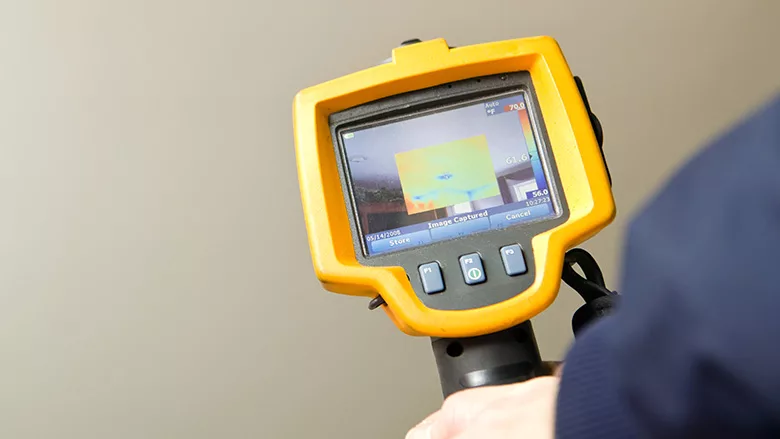
infrared thermal imaging camera

Photo: BanksPhotos / E+ via Getty Images

February 14, 2025

Infrared thermal imaging has been adapted to our industry for over a decade. When it was first introduced, basic cameras with low resolutions were clunky and hardly affordable, often reaching over $10,000. As technology and manufacturing have advanced, handheld thermal cameras have become much more accessible and affordable. What is thermal imaging? These cameras operate on the infrared electromagnetic spectrum. We use these cameras to observe temperature differentials. They do not detect water, they cannot see through walls like depicted in some movies, and most cannot be used to take our temperature. In fact, these cameras can only observe top layer surfaces.

The industries that primarily use thermal imaging cameras include the military, electricians, home inspectors, building moisture inspectors, and restoration technicians. Electricians typically use these cameras to observe temperature differences of overheating parts in energized electrical equipment, such as breakers in a breaker panel. The military commonly uses thermal imaging in drones and other equipment to scan environments. Building moisture inspectors use these cameras for a multitude of uses including the most basic one in our industry. For the restoration industry, these cameras are usually only used on inspections for water damage projects to search for building materials that have been impacted by water. Most cameras indicate wet building materials as blue images, representing colder temperatures. These areas are represented as cooler due to evaporative cooling from water evaporating from the surface. This is the most basic use for these cameras, and the pocket style cameras are more than suitable for this purpose.
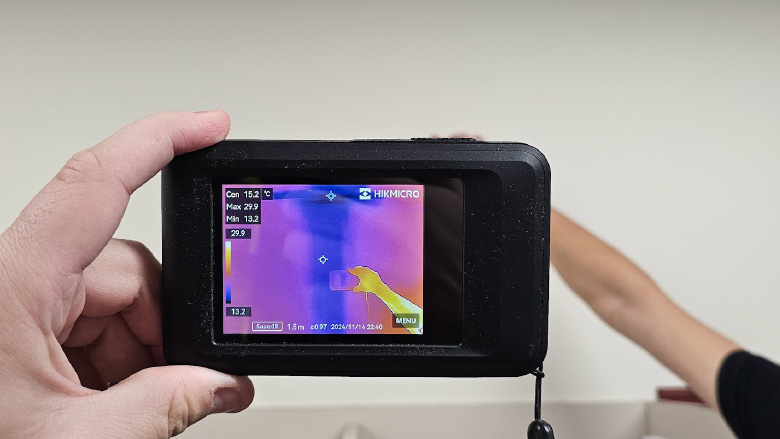
pocket camera

Photo Credit Branden Adams

As seen in this image, water was suspected to have traveled down the wall due to the cooler (blue) temperatures observed. Using a nonpenetrating meter, the drywall was verified to contain an elevated moisture level. Due to this being a very large wall, this wet area may have been missed if thermal imaging was not used. 

Some lesser-known applications for these cameras include analyzing how HVAC systems interact with the indoor environment, observing if insulation is efficient in preventing thermal transfer through exterior walls and windows.

The pocket cameras often have lower resolutions set between 128x96 to 160x120. For most restorers, this is sufficient for their purposes. However, when a project has visible mold growth on random objects caused by an unknown water source, in a building with studded wall cavities used as air returns, in the middle of summer, in a house with 10–12-foot ceilings, this resolution will likely not be enough. The resolution of a thermal camera is how many pixels there are in the image. The higher the resolution, the better the picture quality. Cameras with higher resolutions tend to have lower thermal sensitivity (which is a good thing) which results in images that are sharper, more defined, and more capable of distinguishing different areas of thermal radiation (what the camera “sees” as temperature differences to create the image). For pocket cameras, the further you get away from a surface, the less information the camera can provide, especially when there are extremely tall ceilings, such as in a warehouse. Higher resolution cameras have a much better sensitivity range. For our industry, I would recommend cameras with a resolution of at least 300x200. To properly analyze the thermodynamics of a building however, a camera with a resolution of at least 600x300 is recommended. These higher-end models are the cameras that professional building moisture inspectors use. To learn more about building moisture inspectors, the tools they use, and how to apply them, the new 3-day IICRC certification course Building Moisture Inspector (BMI) is a great resource.

You may be asking, what kind of camera should I buy? I would strongly urge you to take a thermal imaging course before you buy a camera. That will provide a good understanding of how they work, how to use them for different applications, and how they apply to your industry and company. There are many courses available from one-day thermal imaging inspection courses to a Level 3 Thermography course. As professionals in the restoration industry, we should always strive to understand our tools and equipment to the best of our abilities. This will not only reflect in your knowledge and application of them, but also in how professional you appear to your clients. Professionalism is one of the most important traits a contractor can have for homeowners, property managers, or other business owners. Being able to properly use thermal imaging cameras and explaining how they work to your client will give a more professional opinion of you as a contractor, which in turn will increase the likelihood of them hiring your company.

The first step in any venture, purchase, or service is education. 

For a hands-on demonstration of the importance of thermal camera resolution, please join me at the Experience this Spring, April 8 – 10 in Punta Gorda, Florida at the restoration pavilion. I hope to see you there!

KEYWORDS: moisture detection and monitoring restoration technology thermal imaging

Share This Story

Looking for a reprint of this article?
From high-res PDFs to custom plaques, order your copy today!

Brandenadams 200x200

Branden Adams is an accomplished safety and restoration professional with over a decade of hands-on experience in the field. He began his career at Amerestore as a field technician, steadily advancing through the ranks to become Senior Project Manager, Senior Estimator, and ultimately Chief Safety Officer and Director of Education. Branden has led projects ranging from water, fire, mold, and biohazard remediation to full-scale safety program implementation. His deep technical expertise is rooted in real-world application, and he now oversees company-wide OSHA compliance, internal training, and operational standards, while mentoring teams across both field and administrative divisions.

In addition to his leadership at Amerestore, Branden serves as Director of Education for America’s Restoration Training Institute, where he creates course content, develops technical manuals, and delivers high-level instruction to restoration professionals nationwide. He holds Triple Master status through the IICRC (Master Water, Master Fire & Smoke, Master Textile Cleaner), is a certified MRS, and has earned the ASP credential through the BCSP. He is an IICRC Instructor for HST and assistant instructor for ASD, AMRT, and TCST, and regularly teaches ICRA 2.0 in healthcare settings.

Also as an Industrial Hygienist with Indoor Environmental Management, Inc., Branden conducts site assessments, collects and interprets microbial and CBP samples, and writes detailed remediation protocols tailored to building owners, public adjusters, and insurance carriers. Known for his precision, field-tested knowledge, and commitment to industry education, Branden brings unmatched depth to restoration training and environmental safety leadership.

Recommended Content

JOIN TODAY
To unlock your recommendations.

Already have an account? Sign In

  • mold remediation

    Fighting Mold and Bacteria Damage

    Successful mold remediation can be multidisciplinary,...
    Contamination Restoration & Remediation​
    By: Josh Woolen
  • certifications and licenses for restoration professionals

    Certifications and Licenses Every Restoration Company Needs

    Restoration companies need to make sure they have the...
    Restoration Training/Education
    By: Sharon Elzarat
  • a wall covered in moss and fungus

    Zero Tolerance for Toxic Molds: Essential Steps for Successful Remediation

    Understanding the importance of zero tolerance for toxic...
    Mold Remediation
    By: Michael A. Pinto CSP, SMS, CMP, RTPE, FLS, ERS and Kendra Seymour
You must login or register in order to post a comment.

Report Abusive Comment

Manage My Account
  • eNewsletter
  • Online Registration
  • Subscription Customer Service
  • Manage My Preferences

More Videos

Popular Stories

Ask the Expert - Inside the Cost of Doing Business Survey: What It Means for Restoration Companies Today

Inside the Cost of Doing Business Survey: What It Means for Restoration Companies Today

Ask the Expert - Margin vs. Markup: The Costly Confusion in Restoration

Why Understanding Markup, Margin and Overhead is Critical for Restoration Success

mold spores

Mold and Mental Health: The Dual Crisis Facing Indoor Environmental Remediation Teams

2025 Technician Award winner - Congratulations, Kaylin Glaspie!

Events

January 20, 2026

INTRCONNECT

Dive into the latest trends, innovations, and best practices shaping the future of property insurance and restoration.

April 27, 2026

RIA Convention & Expo

This event empowers professionals through world-class education, powerful networking, and access to cutting-edge tools and services.

View All Submit An Event

Poll

Technology Innovations

Which emerging technology do you believe will have the biggest impact on restoration work in the next 5 years?
View Results Poll Archive

Products

The Cleaning, Restoration, Inspection, and Safety Glossary

The Cleaning, Restoration, Inspection, and Safety Glossary

The Cleaning, Restoration, Inspection, and Safety Glossary.

See More Products
Prepare for CATASTROPHE with R&R!

Related Articles

  • Restorer’s Perspective: The Value of Thermal Imaging

    See More
  • thermal imaging roof leak detection

    The Evolution of Thermal Imaging Technology

    See More
  • FLIR CAT

    The New Cat S60: the World's First Thermal Imaging Smartphone

    See More

Related Products

See More Products
  • secrets-of-insurance-game.jpg

    Secrets of the Insurance Game

  • After-The-Smoke-Clears.gif

    After The Smoke Clears...

See More Products

Related Directories

  • Thermal Flow Technologies

    Supplier of portable industrial (indirect, direct and electric) heaters , air movers & ventilation equipment for temporary heat, structural drying and pest extermination. Indirect and direct fired heaters Oil (Diesel ) / LPNG-fueled, & make-up air heaters up to 2.3 million BTUs.
×

Stay ahead of the curve with our eNewsletters.

Get the latest industry updates tailored your way.

JOIN TODAY!
  • RESOURCES
    • Advertise
    • Contact Us
    • Directories
    • Store
    • Want More
    • Submit a Press Release
  • SIGN UP TODAY
    • Create Account
    • eNewsletters
    • Customer Service
    • Manage Preferences
  • SERVICES
    • Reprints
    • Marketing Services
    • Market Research
    • List Rental
    • Survey/Respondent Access
  • STAY CONNECTED
    • LinkedIn
    • Facebook
    • Instagram
    • YouTube
    • X (Twitter)
  • PRIVACY
    • PRIVACY POLICY
    • TERMS & CONDITIONS
    • DO NOT SELL MY PERSONAL INFORMATION
    • PRIVACY REQUEST
    • ACCESSIBILITY

Copyright ©2025. All Rights Reserved BNP Media.

Design, CMS, Hosting & Web Development :: ePublishing