How Restorers can Scale Their Deployments During Hurricane Season
Learn why cross-training, triggers, and leadership can drive efficient storm response
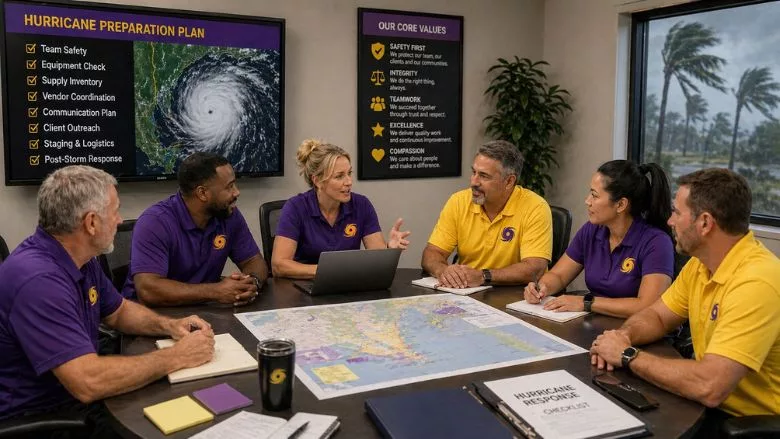
As hurricane seasons grow longer and more unpredictable, your staffing strategy is one of the most critical factors in your success as a restorer. What we’ve learned is rapid mobilization alone isn’t enough. The restorers that consistently win during hurricane season are the ones who prepare their teams, leadership, and systems long before the first hurricane ever makes landfall.
This is built on cross-training, operational triggers, leadership depth, and realistic plans for labor fatigue. Without those elements, you run the risk of stalled production, missed revenue, and overwhelmed teams.
Hurricane Month
Prepare before the storm with specially-curated articles during the month of May. Learn more!
The Right Mindset: Every Office Is Deployed
The foundation starts with the right mindset. When a major storm hits, a majority, if not all, of your team deploys, not just the ones that leave town.
Your home office becomes the command center that handles intake, documentation, customer communication, scheduling, and billing while your teams in the field focus on production. Restorers who treat deployment as a partial-office effort quickly run into bottlenecks that slow down the job and put customer experience at risk.
Cross-Training Roles That Remove Deployment Bottlenecks
Cross-training is one of the most powerful tools for you and your operation, but only when it’s done right.
Here are four key areas you should cross-train your team in before hurricane season starts:
- Contents teams trained to assist with water mitigation tasks
- Recon and project managers capable of performing emergency inspections
- Administrative staff who understand intake, scheduling, and customer updates
- Operations support trained to assist estimators and job file management
The goal isn’t to turn everyone into experts, it’s to create enough operational overlap to keep your production moving when you see spikes in volume.
Looking for quick answers on restoration, remediation and cleaning topics?
Try Ask R&R, our new smart AI search tool.
Ask R&R →
Here’s one important rule you shouldn’t ignore: You cannot sacrifice your home base opportunities to deploy to the disaster zone.
Why Sales-Trained Supervisors are Critical in the Field
Deploying a salesperson is helpful, but it’s not enough. Having a sales‑trained supervisor or project leader on the ground is essential.
During your response, decisions about scope, customer expectations, and next steps often happen in real time. Supervisors without sales and estimating experience can slow down the process and create unnecessary friction with your customers. Leadership in the field must be able to close gaps, not escalate them.
The Biggest Staffing Bottleneck During Major Storms
The biggest staffing bottleneck is not your drying equipment or labor; it’s your lead organization and follow-up.
Organic leads and call-in volumes skyrocket immediately after the hurricane passes through. Restorers who lack an organized intake system and follow-up process can lose control really fast. Your customers will become frustrated when they don’t understand your timelines, next steps, or scheduling, even if your teams are working hard.
This is where cross-trained staff make a huge difference.
Knowing When to Shift from Normal Staffing to Surge Readiness
Your surge readiness should never be reactive. As a restorer, you must clearly understand your normal operating capacity and establish predefined triggers that activate your surge plans.
Key effective triggers include:
- Intake volume thresholds
- Weather alerts and storm forecasts
- Predicted landfall locations
- Historical storm data tied to specific regions
When your triggers are reached, actions should happen automatically, additional teams will mobilize, outside labor is activated, and leadership roles shift without any debate.
Deploying Without Hurting Your Home Operations
One of the most common fears we as restorers have is “robbing Peter to pay Paul.” The reality is that strong cross-training and capacity planning eliminate that risk.
If pulling a small number of people cripples your home office, the problem isn’t hurricane deployment. Deployment success and home-market stability are built by the same staffing strategy.
Why Deployment Playbooks and Triggers Must Be Communicated Early
Your deployment playbooks, trigger plans, and staffing phases are only effective if your entire team understands them.
Every employee on your team should know:
- What happens at each trigger level
- Where they fit in the response
- Who deploys, who supports, and who stays home
Buy-in is non-negotiable. Restorers with clear, communicated plans deploy faster, and experience less internal conflict.
Leadership Cross-Training Is a Force Multiplier
Your leadership depth determines whether your hurricane response scales smoothly or folds under pressure.
Project managers, estimators, supervisors, and upper management must all be included in deployment planning. When your leadership roles are unclear, decisions stall and inexperienced staff are left unsupported.
It’s critical to your deployment because storm-related water losses are far more complex than losses handled in your normal territory. Without experienced supervision, risks can quickly increase.
Staffing for Multi-Week and Back-to-Back Hurricanes
Burnout is one of the most overlooked risks during hurricane season.
The last few hurricane seasons have proved that hurricanes can strike the same region within days or weeks. Restorers who planned for a single event struggled as deployments stretched into multiple weeks. Those with phased deployment plans, including staff rotation and volume-based escalation, performed better and protected their teams’ safety.
A complete staffing plan must include:
- Rotational deployment phases
- Fatigue management
- Planned escalation of labor resources
What you don’t plan for will always show up during your deployment.
Labor Shortages and the Shift to Hybrid Staffing Models
Ongoing labor shortages have reshaped hurricane staffing strategies industry wide. Most restorers rely on a hybrid approach that combines:
- Internal staff development
- Mutual aid agreements
- Subcontractors
- Staffing agencies
Even large organizations can’t rely solely on internal labor. The key is having agreements and relationships established long before hurricane season ever starts.
Why Real-Time Visibility into Labor Matters
Successful hurricane response depends on knowing:
- Who is available
- What skills they bring
- How fatigued they are
Restorers who achieve this visibility do so by planning labor resources in advance and regularly using outside partners on non-event jobs. This allows teams to vet quality and reliability long before surge conditions hit.
Assuming labor will “work itself out” during hurricane response is one of the most expensive mistakes a restorer can make.
The Most Costly Staffing Mistake During Hurricane Response
From a cost and risk standpoint, the most damaging mistake in deployment is putting inexperienced staff on the ground without experienced supervision.
Hurricane deployment magnifies your operational weaknesses. A water job while deployed is far more involved than one in your normal territory. Without strong leadership on the ground, mistakes multiply, and so do callbacks, claims, and reputational damage.
One Staffing Improvement That Changes Everything
If a restorer can make one staffing-related improvement before hurricane season, it would be: conduct deployment fire drills.
Practice your trigger plans. Test your staffing solutions. Simulate surge conditions. Identify your gaps early.
Preparation isn’t just operational insurance; it’s the difference between surviving hurricane season and leading it.
Looking for a reprint of this article?
From high-res PDFs to custom plaques, order your copy today!