Weekly Hands-on How-To powered by KnowHow
How to Properly Hang Drywall on a Ceiling
Expert Tips for Hanging Drywall on Ceilings the Right Way
All images provided by KnowHow.
Hanging drywall on a ceiling isn’t just about getting the sheets up—it’s about making sure they stay up. A poorly installed ceiling can sag over time, show visible seams, or even crack under pressure. That’s why proper technique matters.
From choosing the right drywall type to securing each sheet with precision, every step plays a role in creating a smooth, long-lasting finish. In this how-to, powered by KnowHow, we’ll break down the entire process so you can hang ceiling drywall the right way—without the headaches later. Let’s get started!

Step 1: Gather Necessary Materials
Before starting, ensure you have all the required tools and materials for a smooth installation:
- Screwgun or drill – for fastening the drywall.
- Drywall countersink bit – helps set screws at the correct depth.
- Drywall screws – 1 ¼” for ½” drywall, 1 ⅝” for ⅝” drywall.
- Drywall sheets – choose based on insulation needs (see Step 2).
- Knife & Drywall T-Square – for making precise cuts.
- Drywall cut-out tool – to cut openings for electrical boxes, vents, and fixtures.
- Pencil & measuring tape – for marking cut locations.
- Drywall foot lifter – to help position and hold sheets in place.
Step 2: Choose the Appropriate Type of Drywall
Not all drywall is created equal, and choosing the right type is essential—especially if insulation is going above it.
- Ceiling Board Drywall – More rigid, designed to support insulation without bowing.
- Standard Drywall – Suitable for ceilings without insulation above.
Using the correct type prevents sagging and ensures long-term stability.
Step 3: Select the Right Screws
Using the proper screws ensures a secure hold and prevents damage over time:
- Coarse Thread Screws – Used for fastening drywall to wood studs.
- Fine Thread Screws – Used for fastening drywall to metal studs.
Confirm you have the correct screws before installation to avoid complications.
Looking for quick answers on restoration, remediation and cleaning topics?
Try Ask R&R, our new smart AI search tool.
Ask R&R →
Step 4: Measure the Ceiling
Before hanging drywall, take accurate measurements of the ceiling to ensure proper alignment. Ceiling drywall should always be installed before walls in new construction for a cleaner, more seamless fit. Sheets should run perpendicular to the joists or trusses to help hide irregularities and prevent sagging over time.
To minimize cracks, always stagger the joints between sheets rather than aligning them in straight rows. Any cut edges should end in the middle of a joist or truss, or flush against a wall for proper support. Be sure to mark out electrical boxes, vents, and other cutouts before lifting the sheets into place.

Step 5: Check for Proper Backing
Before securing drywall, inspect the ceiling for adequate backing support in all corners and around electrical boxes. If any section spans more than 24 inches without support, additional backing must be added to prevent sagging. Unsupported spans can cause long-term structural issues, so taking the time to reinforce these areas before installation is crucial.
Step 6: Cut the Drywall
Accurate drywall cuts prevent unnecessary waste and ensure a proper fit. Start by measuring and marking cut lines on the paper face of the drywall using a pencil and T-square—avoid pens or markers, as they can bleed through paint.
Using a sharp knife, score the drywall along the T-square with light, even passes to avoid veering off course. Once the paper is fully cut, snap the drywall along the score line by applying pressure to both sides of the board. To complete the cut, flip the sheet over and slice through the back paper to fully separate the two pieces.
Step 7: Cut Out Required Boxes
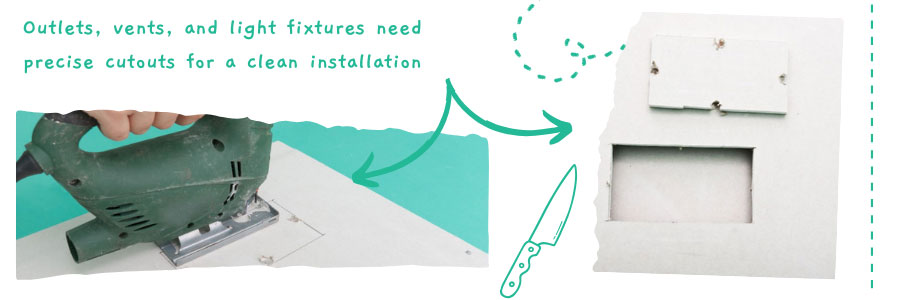
Outlets, vents, and light fixtures need precise cutouts for a clean installation. Some installers prefer to measure and cut openings before lifting the sheet, while others cut in place after securing the drywall.
For the fastest and most precise results, use a drywall cut-out tool while the sheet is pressed against the ceiling. Plunge the router into the sheet and guide it around the box’s outer edge—never the inside—to ensure the cutout is the right size. This method prevents misalignment and ensures a snug fit around electrical boxes.
Step 8: Hang the Drywall
Lifting and securing ceiling drywall is easiest with two people or a drywall lift to hold sheets in place. Once positioned, begin fastening the drywall by driving screws every 6 inches along the joists or trusses. Ensure the screws are countersunk just below the surface without breaking the paper—this creates a smooth finish for mudding and taping.
Proper installation ensures the drywall remains secure, preventing sagging and cracks down the line.
Keep Every Step Smooth with KnowHow
A properly installed drywall ceiling provides stability, seamless finishes, and long-term durability. By following these steps, you’ll ensure sheets are secure, seams are smooth, and the final product is built to last—without sagging or cracks down the line.
Even the most experienced restorers and builders need a refresher sometimes, but digging through old manuals or relying on memory isn’t efficient. That’s where KnowHow comes in. Instead of wasting time searching for answers or calling around for help, KnowHow gives your team instant access to company-specific SOPs—anytime, anywhere. And with a library of 1000+ industry-standard templates, your team will always have the guidance they need to work with confidence.
Standardize quality, eliminate mistakes, and keep every project on track. Visit tryknowhow.com today to see how KnowHow helps your team build with confidence.
Looking for a reprint of this article?
From high-res PDFs to custom plaques, order your copy today!