Wildfire Ash Composition, Health Effects and Cleanup
Understanding the Health Risks and Cleanup Methods of Wildfire Ash
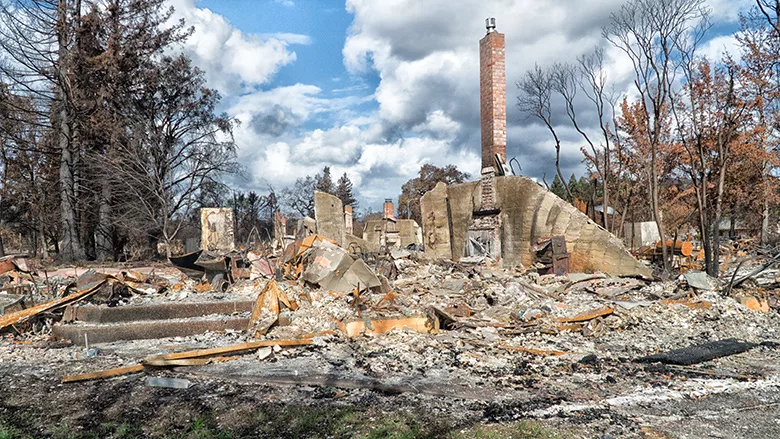
Photo credit: Bill Oxford / E+ via Getty Images
Introduction:
Intense heat produced by wildfire can cause chemical decomposition (pyrolysis) of vegetation, soil and building materials. It is important for the homeowner to understand the health effects in coming in contact with ash, the composition of ash and common cleanup methods. In brief:
- Health Concerns:
- When cleaning up ash, homeowners can experience health problems, where they need to protect eyes, skin and lungs.
- Landscape:
- After a wildfire, ash often contains potassium, magnesium and phosphorous, where in proper amounts, they can help to support soil fertility, promote plant regrowth and contribute to the overall resilience of the ecosystem. However, too much ash can change the pH of soils, leading to the death of plants, trees and grass.
- Building Exteriors:
- Ash can cause corrosion of electrical wiring (e.g., power to buildings, vehicles, ventilation, pools and water systems), electronics (e.g., gates, security systems, lighting), metals (e.g., rain gutters, roofing, door and window hinges).
- Building Interiors:
- Ash can cause corrosion of electrical, electronics and the metal components of light fixtures, computers and appliances.
- Ash is an indoor surface and pollutant, where it can damage or cause discoloration to ceilings, walls, flooring, countertops, carpet and fabrics.
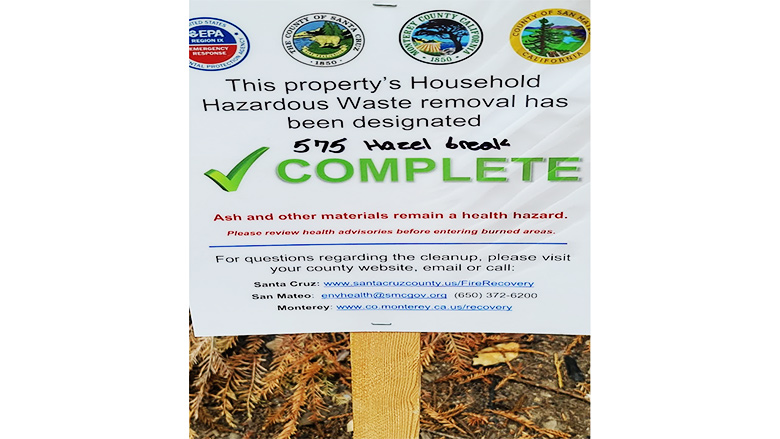
Photo credit: Patrick Moffett
Composition of Ash as a Wildfire Residue:
Wildfire ash can be a complex mixture of:
- Oxides, such as calcium carbonate (CaCO₃), potassium oxide (K₂O), magnesium oxide (MgO), silicon dioxide (SiO₂), aluminum oxide (Al₂O₃), iron oxides (Fe₂O₃) and sodium oxide (Na₂O).
- When oxides have contact with high humidity or water, they can form other compounds such as potassium hydroxide (KOH), calcium hydroxide (Ca(OH)₂).
- The presence of oxides typically result in an alkaline pH. The exact pH can vary depending on the concentration, humidity and specific conditions, but it generally ranges outdoors in piles of ash at 11 to 12 or higher, or indoor ash often at a lower pH.
- Trace elements, such as phosphorus (P₂O₅), sulfur compounds (e.g., SO₂) and carbonates (e.g., CaCO₃, MgCO₃), limestone (calcium carbonate) and other silicates.
- Regulated materials can be released from buildings that burn, such as asbestos-containing materials (ACMs), lead paint and polychlorinated biphenyls (PCBs).
- In ash, the presence of regulated materials requires specialized cleanup by licensed professionals.
- When suspecting the presence of regulated materials on property or inside buildings, consult state and local government officials.
- Hazardous substances can be released from buildings that burn, such as mercury (e.g., fluorescent light bulbs, thermometers, thermostats and some older electrical devices), household hazardous waste (HHW) (e.g., paints, solvents, pesticides, batteries and cleaning products), electronic waste (E-Waste) (e.g., computers, TVs and appliances can contain hazardous materials such as lead, cadmium, mercury and brominated flame retardants), treated wood (e.g., pressure-treated wood, often used in outdoor structures, decks and utility poles, contains chemicals like arsenic, chromium and copper), reactive and explosive materials such as propane, natural gas and gasoline.
- In ash, the presence of hazardous substances may require specialized cleanup by licensed professionals.
- When suspecting the presence of hazardous substances on property or inside buildings, consult state and local government officials.
- Heavy metals are also hazardous substances, such as arsenic (As), cadmium (Cd), chromium (Cr), copper (Cu), lead (Pb), mercury (Hg), nickel (Ni) and zinc (Zn).
- The presence of heavy metals can increase the risk of completing outdoor and indoor cleanup.
- Direct exposure to ash containing heavy metals can pose increased health risks, particularly through inhalation and skin contact.
- Long-term exposure may lead to serious health issues, including neurological damage, kidney disease and cancer.
- Organic compounds, such as burnt vegetation and building materials produce VOCs and SVOCs.
- VOCs are organic chemicals in char and other remaining materials. They have a high vapor pressure at room temperature, where they can evaporate into the air.
- SVOCs have a lower vapor pressure than VOCs, which mean they do not evaporate as quickly and can persist longer in the indoor environment.
Cleanup Safety:
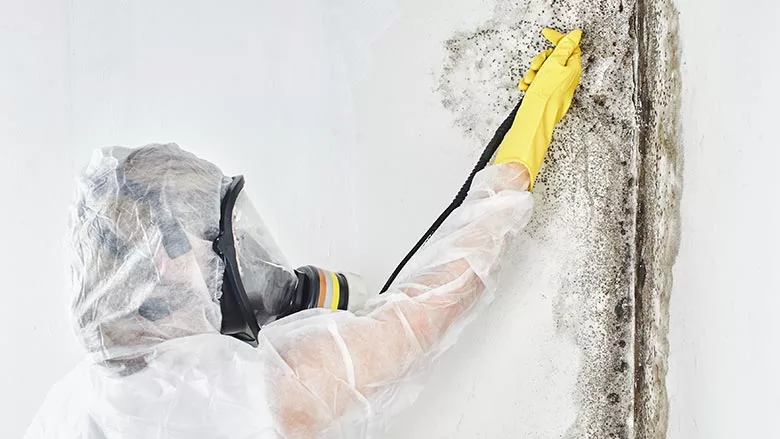
Ash from burned structures is generally more hazardous than wildfire ash, where heavy metals and hazardous materials can be present. Ash deposited on surfaces both indoors and outdoors, becomes airborne during cleanup where it can be inhaled into the lungs. Cleanup work can expose persons to ash and other products of the fire that can irritate the eyes, nose, or skin and cause coughing and other health effects. Ash inhaled deeply into lungs may cause asthma attacks and make it difficult to breathe. General cleanup recommendations include wearing a N95 respirator and protective gloves, goggles, shoes and clothing.
- People with heart or lung disease, including asthma, along with older adults, children and pregnant women should use special caution around ash, where they should consult their medical professional before wearing a respirator and cleaning up ash. Children and pets should not be nearby while removing ash.
Cleanup Work:
Avoid stirring up ash with a rake or leaf blower, because they can aerosolize large amounts of fine particulate matter, affecting people’s health and contaminating the environment.
- For outdoor removal, lightly mist ash before brooming and bagging, followed with a more detailed cleanup which may include:
- Washing driveways, sidewalks, decks, porches, sides of the building, windows, screens and roof. Ensure that the runoff water containing ash and other matter does not enter streets, streams, lakes, estuaries that can further harm the ecosystem.
- For indoor removal, use a HEPA (high-efficiency particulate air) vacuum. Don’t use a typical household vacuum or a shop vacuum. Once loose ash is removed, complete a more detailed surface cleaning:
- Affected hard surfaces (e.g., doors and door treads, windows and window blinds, flooring, counters, cabinets and appliances) use a mild liquid dishwashing detergent followed by rinsing and drying.
- Affected upholstery, draperies, carpet and Oriental rugs may require professional cleaning, where in a few cases, replacement may be required.
- Household linens and bedding, along with clothing may be machine washed, where in other cases, they may require professional cleaning.
- Dishes and other washables can be hand or dishwasher cleaned.
- Baby and small children’s games and toys should be HEPA vacuumed and detergent cleaned. If there is a question about their safety, they should be replaced.
Indoor Environment’s HVAC:
After a wildfire, the building’s ventilation system should have its air conditioning filter(s) changed immediately. When smoke odors persist, ventilation filters should be changed as often as necessary.
- Higher efficiency filters begin to remove smaller particles where they are rated at less than 50% to greater than 80% efficiency for removing particles down to 1 to 3 microns in size, where they carry a MERV rating of 9 to 12.
- Specialized portable air cleaners (air scrubbers) can be rented or purchased having a higher MERV rating of 13 to 16, where carbon filters can be added to the HEPA filter to assist in removing VOCs and SVOCs.
Professional Services:
After a wildfire, professional services include those the homeowner is not competent or qualified to complete on their own. They also include services the homeowner cannot be done on their own because of health issues or the amount of work is extensive. Examples include:
- When power to the building must be inspected or it is damaged, only licensed electricians should complete these services.
- When damaged trees or piles of debris are present, landscape professionals should remove them.
- When roofing, siding and other damage is present, a licensed building contractor should complete inspection and repairs.
- When the interior contains ash, char and other organic debris, along with smoke odor, certified specialists in fire damage restoration should be retained.
- When HVAC systems are smoke impacted, changing ventilation filters is required, where persistent smoke odors should be inspected and deodorized by competent HVAC professionals.
References:
https://csl.noaa.gov/news/2022/340_0113.html
Looking for quick answers on restoration, remediation and cleaning topics?
Try Ask R&R, our new smart AI search tool.
Ask R&R →
https://journals.ametsoc.org/view/journals/wefo/38/12/WAF-D-23-0086.1.xml
https://phys.org/news/2023-07-potentially-chemicals-lingered-homes-affected.htm
https://pubs.acs.org/doi/10.1021/acs.est.2c00619
https://rockymtnashrae.com/downloads/2011_Technical_Conference/wildfire_particulate_in_proximally_located_unburned_buildings_3_31_11_jz.pdf
https://ww2.arb.ca.gov/resources/fact-sheets/air-cleaning-devices-home
https://www.airnow.gov/wildfire-smoke-guide-publications/
https://www.airnow.gov/sites/default/files/2021-07/protect-yourself-from-ash-factsheet.pdf
https://www.airnow.gov/sites/default/files/2021-05/wildfire-smoke-guide-revised-2019.pdf
https://www.ashrae.org/file%20library/about/government%20affairs/public%20policy%20resources/ashrae_rfi-response_iaq_epa-hq-oar-2022-0794_12-05-2022.pdf
https://www.canada.ca/en/health-canada/services/publications/healthy-living/guidance-cleaner-air-spaces-during-wildfire-smoke-events.html
https://www.cdc.gov/air/wildfire-smoke/socialmedia/wildfire-air-filtration-508.pdf
https://www.cdph.ca.gov/Programs/EPO/Pages/Wildfire%20Pages/N95-Respirators-FAQs.aspx
http://www.eaabaxter.com/docs/UsingpHconductivity-cation-research%20paper2-2019-4.pdf
https://www3.epa.gov/airnow/smoke_fires/respiratory-protection-508.pdf
https://www.epa.gov/air-research/research-diy-air-cleaners-reduce-wildfire-smoke-indoors
https://www.epa.gov/air-quality/wildfires-and-smoke
https://www.epa.gov/indoor-air-quality-iaq/wildfires-and-indoor-air-quality-iaq
https://www.epa.gov/sciencematters/wildfire-smoke-pfas-innovative-epa-scientists-address-longstanding-research-gaps
https://www.epa.gov/wildfire-smoke-course/fire-or-smoke-event-plan
http://www.fema.gov/news/newsrelease.fema?id=4046
https://www.fema.gov/news-release/2003/07/25/tips-smoke-removal-and-fire-cleanup
https://www.fema.gov/sites/default/files/documents/fema_marshall-fire-mat-homeowners-guide-risk-reduction-remediation-residential-smoke-damage.pdf
https://www.fema.gov/sites/default/files/documents/fema_p2320-marshall-fire-mat-report-appendices.pdf
https://www.fs.usda.gov/Internet/FSE_DOCUMENTS/fsbdev3_053107.pdf
https://www.ncbi.nlm.nih.gov/books/NBK588637/
https://www.nps.gov/articles/wildland-urban-interface.htm
https://oehha.ca.gov/media/downloads/public-information/report/fireash.pdf
http://www.osha.gov/Publications/general_decontamination.html
http://www.osha.gov/SLTC/etools/anthrax/decon.html
https://synergist.aiha.org/201608-after-the-fire
https://synergist.aiha.org/201711-wildfire-residue-contamination-testing
https://online-ams.aiha.org/amsssa/ecssashop.show_product_detail?p_mode=detail&p_product_serno=1558
Looking for a reprint of this article?
From high-res PDFs to custom plaques, order your copy today!