The Asbestos Testing Cut-Off Date Myth, Part 1
Debunking the Asbestos Testing Cut-Off Date Myth – What You Need to Know
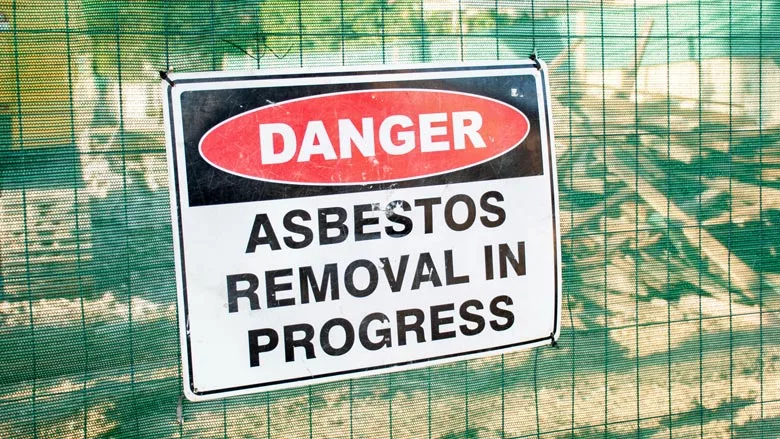
Photo: Daria Nipot / iStock / Getty Images Plus via Getty Images
What date do you use in your organization to decide if there is a need for asbestos testing before a renovation or restoration project? 1980? 1979? The truth is that there is no “cut off” date relieving the need for asbestos testing prior to any renovation, reconstruction, or demolition activity for all commercial buildings and residential use properties (This includes single-family homes!) I hope to provide clarification on a widely misinterpreted and controversial topic. The truth is that this is one of the most hotly contested topics in the construction and restoration industries.
Explaining to folks in the building trades and restoration industry that there is no cut-off date for asbestos testing (for both commercial and residential structures) can elicit a range of reactions from anger to complete dismissal. I am sure I am not the only one who experiences the frequent scoff when informing someone of the fact that there is no date in which a residence, multi-family dwelling or commercial structure needs to be tested for asbestos prior to any disturbance.
So, why is there so much contention and misunderstanding around this topic? First, the actual answer (that there is no cut-off date) is a major, and costly, inconvenience and a deviation from the “way we have always done/understood things.” Second, years of misinterpretation has been ingrained in the fabric of the construction industry with incorrect dates thrown around and used as the standard. And, finally, the biggest problem, in which I hope to improve with this article, is the fact that there is no easy way to get the definitive answer from one spot in “black and white.”
Over the years, I have leaned on many others in my pursuit of obtaining a better understanding of such a “murky” and misunderstood topic. I have much thanks to give to the Professional Abatement Contractors of New York (PACNY), and I urge all to join regional organizations like this one near you that give you the same guidance and access to true industry professionals like PACNY gave me. The truth of the matter is that there are many standards and regulations that need to be considered, and actually read, to fully understand why asbestos testing is not only needed per federal laws regardless of a date that a structure was constructed, but also the right thing to do for the safety of the public and those working on these projects. As restorers and contractors, we have a responsibility to keep employees working for us and our clients, who have reached out to us for help in their time of great need, safe from this very real and serious hazard.
History in the US
While I do not intend to dive very deep into the history of asbestos manufacturing and use in the U.S., it is important to touch on some very basic history for context as we discuss this issue.
Asbestos, a naturally occurring mineral, was used in the manufacturing of construction building materials and household items at its peak in the 1950’s through 1970’s because, if you ignore its hazardous properties, it truly is amazing! It is a fantastic insulator, a great sound absorber, it is resistant to heat and chemicals, extremely strong and durable, and cost effective to use. With properties like this it is no wonder it can be found in drywall, joint compound, insulation, tapes, adhesives, floor tile, and so much more. For those of us who perform asbestos inspections and abatement, we are never surprised when something contains asbestos that we have never encountered before because of how perfect the mineral is as a building material.
Looking for quick answers on restoration, remediation and cleaning topics?
Try Ask R&R, our new smart AI search tool.
Ask R&R →
Throughout the years, awareness grew as people exposed to asbestos began getting very sick and we learned about the health effects of asbestos. Workers began contracting mesothelioma, lung/kidney cancer, and asbestosis through the inhalation and handling of asbestos fibers.
So, with this very basic history in mind, and as we continue to discuss the hazard in this article and need for testing prior to each demolition or renovation project without consideration of build date, I would ask that you remember that asbestos-related diseases are slow, often fatal, and extremely painful. Below is a list of only SOME of the materials asbestos can often be found in:
- Glues and Mastics
- Vinyl Tile and Vinyl Sheet Goods
- Drywall
- Joint Compound
- Roofing Shingles and Tar
- Siding
- Chalkboards
- Sprayed on Fireproofing
- Pipe Wrap
- Duct Line Tape
- Acoustical Ceiling Tiles
- Wallboard and Plaster
- Caulks
- Window Glazing
- and much more!
Reading the above list may surprise many that all these materials may contain asbestos, it is important to keep in mind the above list and consider how much of the building materials in the structures we work in every single day may contain asbestos.
Background
Any asbestos industry professional will tell you that they often perform surveys in homes built after 1974, 1978 or 1980 (or any other date that is arbitrarily applied to absolve the need for testing) and regularly find building materials that contain asbestos. While the more modern the build, the hazard likelihood diminishes, it remains and is probably more frequently present than you would think. I can also tell you as a licensed asbestos inspector, I have pulled positive samples from homes built as late as the 90s.
For example the Asbestos Disease Awareness Organization (ADAO) purchased products between May 2006 to November 2007 and found asbestos present in a number of products available from various commercial retailers. The ADAO also responds here to the fact that U.S. imports of raw chrysotile asbestos reached an all-time high of 750 metric tons in 2017.
Regardless of what you have heard, i.e:
“The build is after XXXX date!”
“We just had that installed!”
“That never comes back positive!”
“I have the box that came in”
and my favorite;
“Asbestos isn’t in our area of the country”
Just remember that asbestos is out there and there is a possibility asbestos containing materials can still be installed today. Regardless of your location, the hazard potential is there.
Every single day, the above phrases are used as an excuse to proceed without inspection and asbestos containing materials are disturbed in the construction industry, that is just fact. Regardless of what the laws and regulations say, are you willing to roll the dice with your health, the health of your employees, and the health of your customers?
Myth: Asbestos has been banned
As recently as March 18th 2024, EPA has implemented an “asbestos ban.” But don’t be fooled; it’s not a complete ban of importation and use of asbestos in the US. This “ban” focus’ on just six specific uses of only one form of asbestos, chrysotile. Although this is a move in the right direction, if falls way short preventing asbestos use in building materials. Banned (phase-out) is limited to these uses of Chrysotile:
- Processing and Industrial use of Chrysotile Asbestos Diaphragms in the Chlor-alkali Industry;
- Processing and Industrial Use of Chrysotile Asbestos-Containing Sheet Gaskets in Chemical Production;
- Industrial Use and Disposal of Chrysotile Asbestos-Containing Brake Blocks in the Oil Industry;
- Commercial Use and Disposal of Aftermarket Automotive Chrysotile Asbestos-Containing Brakes/Linings;
- Commercial Use and Disposal of Other Chrysotile Asbestos-Containing Vehicle Friction Products;
- Commercial Use and Disposal of Other Chrysotile Asbestos-Containing Gaskets;
- Consumer Use and Disposal of Aftermarket Automotive Chrysotile Asbestos-Containing Brakes/Linings; and
- Consumer Use and Disposal of Other Chrysotile Asbestos-Containing Gaskets.
Nothing in this ban protects our workers from the potential of asbestos being in the products we install every day.
BAN VERDICT: ASBESTOS HAS NOT BEEN BANNED IN THE US.
What Does EPA Say?
One of the two federal standards (in which state specific laws can only expound upon and not negate) is the Environmental Protection Agency’s (EPA) National Emission Standard for Hazardous Pollutants or (NESHAP). The section that covers Asbestos Regulation is 40 CFR 61 Subpart M.
NESHAP specifies regulations for “practices for asbestos to be followed during demolitions and renovations of all facilities, including, but not limited to, structures, installations, and buildings (excluding residential buildings that have four or fewer dwelling units). The regulations require a thorough inspection where the demolition or renovation operation will occur. When buildings are under renovation, they are not being demolished, but asbestos-containing building material is being removed or disturbed”.
What you will not see in the NESHAP Regulations is a date in which you are excused from inspecting for the presence of asbestos in the buildings that it covers.
Directly from the Code of Federal Regulations:
§ 61.145 Standard for demolition and renovation.
(a) Applicability. To determine which requirements of paragraphs (a), (b), and (c) of this section apply to the owner or operator of a demolition or renovation activity and prior to the commencement of the demolition or renovation, thoroughly inspect the affected facility or part of the facility where the demolition or renovation operation will occur for the presence of asbestos, including Category I and Category II non friable ACM.
In a public response letter dated January 14th 2016 to NOVA Environmental from the EPA, you can see this being applied to our exact topic of discussion. The contractor (NOVA) had asked a multitude of clarifying questions in their letter. This letter offers a very clear statement from the EPA Office of Enforcement and Compliance Assurance to the Contractor on the issue:
“For any facility, irrespective of the date when the facility was constructed1, the Asbestos NESHAP requires the owner/operator, prior to a renovation or demolition operation, to conduct a thorough inspection either of the whole facility or the portion of the facility that will be affected by the renovation or demolition operation. See 40 C.F.R 61.145(a).1See 40 C.F.R 763 Subpart I - Prohibition of the Manufacture, Importation, Processing, and Distribution in Commerce of Certain Asbestos-Containing Products; Labeling Requirements for the few building materials banned in the United States. There is no complete ban on all asbestos-containing materials.”
EPA VERDICT: NO CUT-OFF DATE EXISTS FOR PROPERTIES COVERED UNDER NESHAP.
Part 1 Conclusion
So, in Part 1 of this 2-part series, we have established a two very important points.
- Asbestos is not fully banned to this day, and the recent expansion of the ban won’t really affect the presence of the hazard in building materials and
- It is clear that the EPA/ NESHAP does not recognize a date that absolves the need for a thorough inspection for the presence of asbestos prior to any demolition or renovation.
If this entire article ended here, we would at least have learned that the only structures not needing an inspection prior to any construction activity that may disturb asbestos containing building materials would be residential use buildings with four or fewer dwelling units.
Fortunately, this series will continue, as OSHA expands upon the need for testing without a cut-off date in a few different ways.
Looking for a reprint of this article?
From high-res PDFs to custom plaques, order your copy today!