Innovative Cleaning Technology Restores Damaged Leather Goods
Restore claimants’ happiness, make great savings -- smart tech for leather content restoration
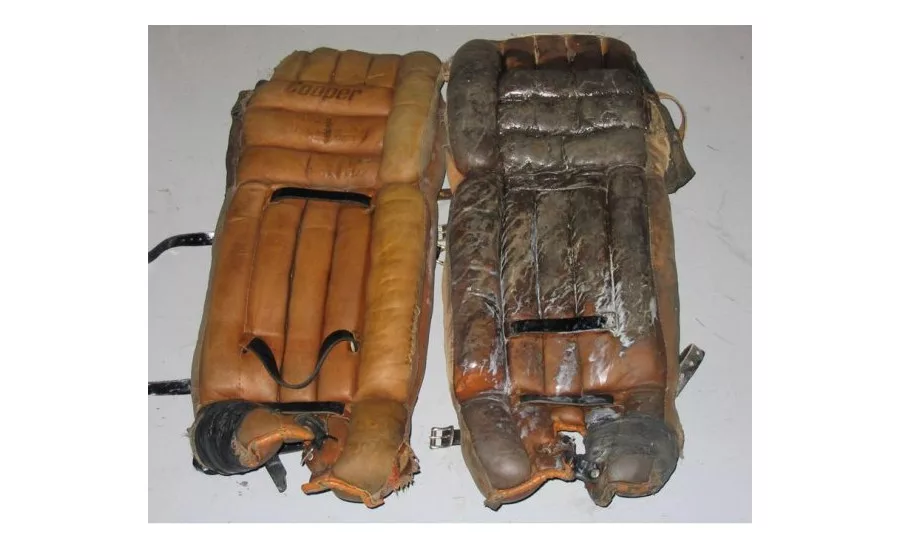
25 year-old goalie pads, before and after cleaning.
Leather can face a truckload of wear and tear and still not give away. As a material, it is as tough as they come. It is used to make a large number of products including shoes, belts, jackets, purses, car seats, sofas, chairs, even hockey goalie pads. Such products are not only appreciated for their strength but also their enduring look and feel.
While most people do not doubt the inherent resilience that leather brings to the table, one of the prevailing misconceived notions about leather goods is that these shouldn’t come in contact with water. It’s almost as if water has the ability to destroy leather’s robustness and durability; this notion naturally leads to a belief that a clean wash process is a really bad idea if you want to clean leather.
Giving Up on Damaged Leather Contents is “Easy”
More often than not, adjusters and claims professionals see leather items damaged by smoke or water as beyond salvage. It will be very difficult to find a dry-cleaning service provider who will make an attempt to restore your leather products; the truth is that it requires just too much effort to clean leather goods. There is very little ROI that stems from this effort.
For somebody making an attempt to clean leather; and for the customer, the results are underwhelming, to say the least. Even if you do get someone willing to put in strenuous efforts in an attempt to salvage your damaged leather content, your leather content will not look the same as before.
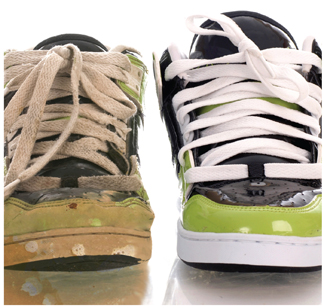
Think about it for a second. You have a damaged leather bag that’s wet and its zipper and pockets are clogged with dirt. Imagine trying to remove all that dirt from your bag by hand. Doesn’t make for a pretty picture, does it? And, even if you were to clean the bag of all that wet dirt, what about sanitizing it, getting rid of the odor and all those contaminants that you can’t see with your naked eye? Without the use of specialized technology, this is an impossible task.
Here’s another dimension to the problem. If your leather goods get damaged by gray water flooding or Cat 3 sewage, you simply can’t take a chance with its sanitization. Hand-cleaned leather goods in such cases will be unsafe for use. You will need to recruit the help of automated cleaning technology that is lab proven to not just remove dirt but bacteria, and foul odor as well.
Technology-driven leather restoration is a win-win for both the insurer and the policyholder as the former don’t have to bear replacement costs while the latter can get their precious leather content back, often better than pre-loss condition.
Looking for quick answers on restoration, remediation and cleaning topics?
Try Ask R&R, our new smart AI search tool.
Ask R&R →
Advanced Technology to the Rescue
Can the leather cleanup challenge be surmounted? Yes, it can, provided the wet clean wash process can adhere to strict temperature control and correct wash cycle; this will ensure the wash process doesn’t impact the glues or dyes. The cleaning process should focus on avoiding the use of detergents that can play havoc with the natural oils in the leather. The composition of these detergents should be non-caustic in nature and not extract or dry out the natural oils from the leather. Also, applying an organic sanitizer is an absolute must if the leather contents have been exposed to bio-waste; such sanitizers will get rid of the contamination and leave them ‘food grade’ clean.
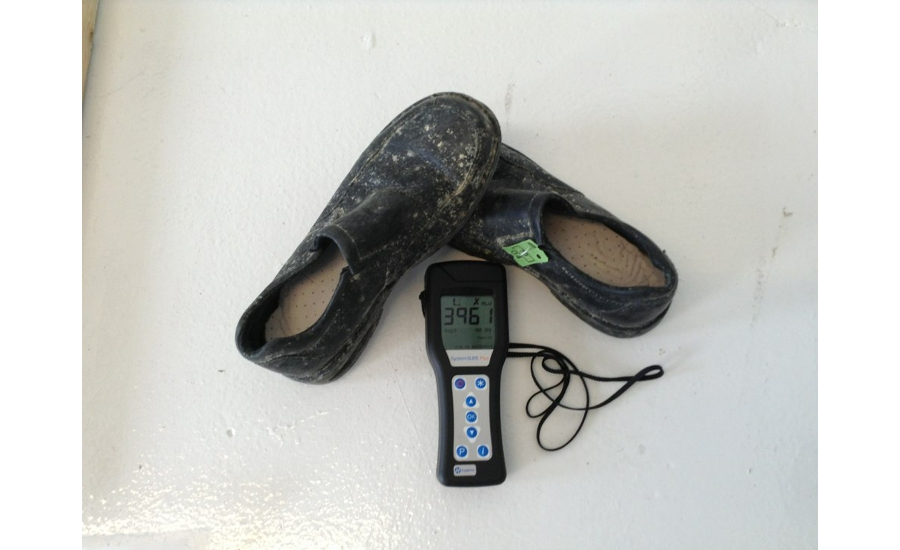
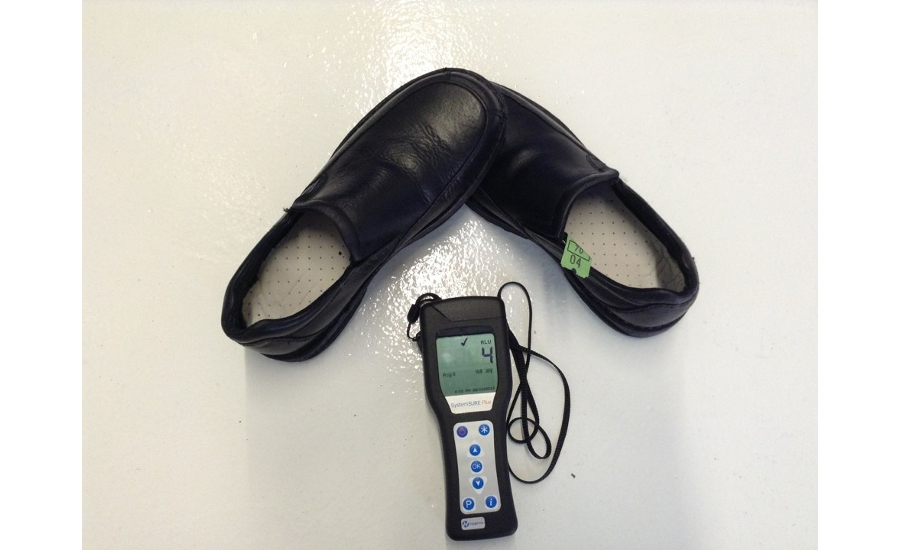
Leather restoration services providers have the advantage of using advanced cleaning systems whose automated technology can clean a large variety of leather goods at one go and policyholders can get their leather goods back in pre-loss condition within a day; yes, it’s that quick. This means the DLE (Daily Living Expense) for the carrier goes down and policyholders are assured their claim is being given top priority. P&C insurance providers now have the opportunity to leverage unique and innovative technology, which helps restore leather goods that were previously considered unsalvageable. Newer editions of the Esporta wash system offer advanced means to clean category 2 and 3 water-damaged leather goods using cleaning agents that are friendly to the environment and verified by third party lab reports.
A one-size-fits-all approach isn’t used during leather restoration as exposure to two different types of contaminants demands the use of different cleaning processes. So, there is a process that specifically comes into play when leather is damaged by water, soil and smoke, and there is another that is used if the leather is damaged by sewage or mold. The cleaning cycle is bolstered by proprietary wash recipes that include proprietary sanitizers, additives and detergents that are engineered to restore the leather.
If there is one thing that the restoration process must steer clear of is creating tension and any mechanical action creating agitation that has the potential to damage the item. In order to minimize the impact of mechanical agitation action, leather items are first put in laundry bags that limit their movement during the wash cycle. Contemporary cleaning systems reduce agitation caused to leather during the wash cycle by using a drum with separate cages; this drum keeps changing direction every 30 seconds to force both organic and inorganic contaminants, out of the leathers being washed. The hydraulic action of the process helps apply the kind of force that resembles waves crashing against sand on a beach. Think of paddle wheeler boats and how they move in water, this is the motion created to force out all contaminants through detergent water.
A spin cycle comes into play at the end of the leather wash to extract water. The wet leather items are taken through a drying process that involves placing them in a room with dehumidifiers that dry these items at ideal room temperature. Temperature control is important because the high temperature can result in leather losing its innate flexibility. The idea is to ensure the products don’t lose their natural shape or elasticity. The final step is conditioning and finishing the leather contents so that they are ready to be delivered to their homeowner, as they were before getting damaged.
This restoration process has the capacity to save claims professionals and adjusters plenty of time and money as they don’t need to replace leather products, just restore them. What’s more, homeowners find it a miracle to see their most prized possessions returned in mint condition. But this cannot happen without choosing the right restoration service providers who use the right technology and have a proven track record of using this technology to perfectly restore leather items.
Looking for a reprint of this article?
From high-res PDFs to custom plaques, order your copy today!