4 Main Features that Matter in Drying Equipment

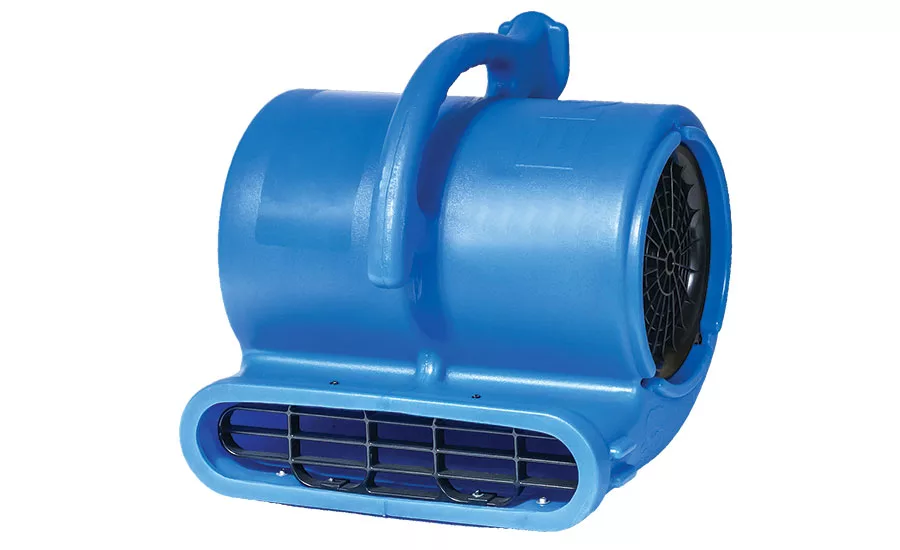
Durability is key. Understanding how the plastic housing is made will help you figure out how it will hold up on the job.
Photos Courtesy of Mark Gibson
The disaster restoration field has come a long way since its inception not so long ago. A foregleam of the RIA was established in 1946 by a group of rug cleaning professionals known then and now as the National Institute of Rug Cleaners (NIRC). Through the decades, the association arranged itself into multiple “institutes” that served different aspects of its membership, including fire and water damage. In 1980, the Association of Specialists in Cleaning in Restoration (ASCR) was formed under whose umbrella the National Institute of Fire Restoration (NIFR) was created. In the 90’s, the NIFR became the National Institute of Disaster Restoration (NIDR). And in 2007, ASCR once again rebranded itself to become the Restoration Industry Association (RIA).
What’s the point behind this little trip down a memory lane of abbreviations? Just as the disaster restoration industry has improved and specialized, so has the equipment that the industry uses. The business has also gotten much more competitive, not just among contractors but between manufacturers of restoration-related equipment as well. So when it comes time for you to purchase equipment, how do you know which units to buy?
There are many claims made by manufacturers about the effectiveness of their equipment and the majority of it is valid. But there are diverse testing methods in the industry which will sometimes skew the results depending on who is evaluating the equipment.
For instance, when it comes to CFM, some units are field tested (complete with the housing) and some are bench tested (no housing) which produces different results. Sometimes statistics are used as marketing tools, but as Mark Twain once said, “There are lies, damned lies and statistics.” Or as American humorist Evan Esar wrote, “Definition of Statistics: The science of producing unreliable facts from reliable figures.”
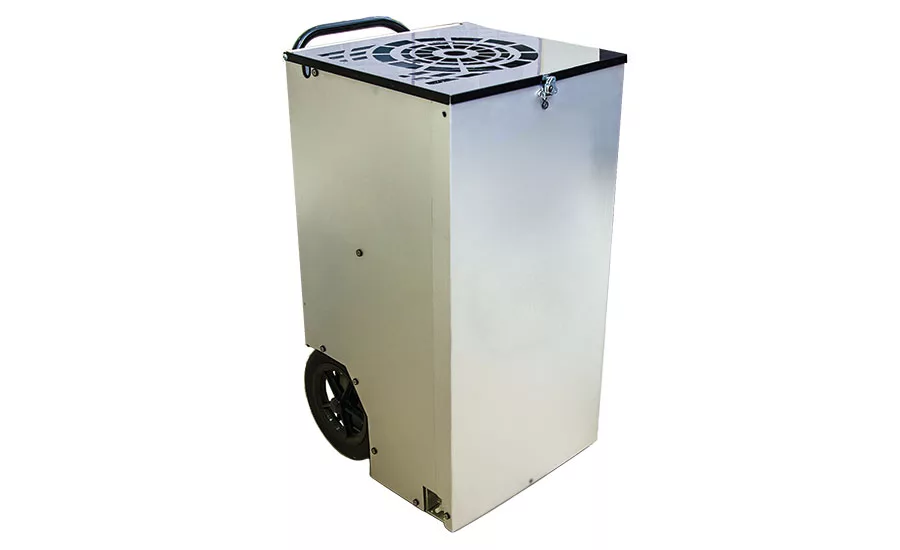
The truth is, most of the equipment that is available for the restoration contractor is pretty good stuff. But unfortunately, some cheap knock-off units have flooded the market in recent years, so you still should do your homework. That said, it ain’t rocket science. The following are four main features you’ll want to look for the next time you’re in the market for restoration equipment. Although we’re limiting this discussion to air movers and dehumidifiers because of limited space, most of these aspects will apply to other equipment as well:
1.Power– in air movers, this is usually stated in terms of high CFM (Cubic Feet per Minute) or FPM (Feet per Minute). There are arguments about the importance of one over the other and some say a balance of both is important. But in advertising, the greater of the two numbers is usually highlighted. For dehumidifiers, high CFM is important because moisture can only be extracted from the amount of air that can be moved through the dehumidifier. So you also want to look for a high PPD @ AHAM (Association of Home Appliance Manufacturers) number to assure the water removal capacity and energy factor claimed for that dehumidifier are accurate.
2.Low amps – simply, the more equipment you can plug in, the faster the job is done. Having enough low amp equipment may even save you the expense of renting a generator for more power.
3.Durability– there used to be a commercial for American Tourister luggage that showed a gorilla abusing their suitcase (see it on You Tube) to show how their luggage takes the punishment they often receive. Unfortunately, your restoration equipment often receives like treatment. One of the best ways to ensure you’re buying a durable unit is to ask other contractors who own them how theirs have held up. If purchasing units with plastic housing, be sure that it’s made by rotation molding and not injection molded. Rotomolding gives a product uniform thickness, double wall construction and virtually stress-free corners. Also, different parts that were once made by assembling assorted pieces can now be molded as a single part. It’s more efficient and makes a stronger product. You can tell when a unit is injection molded because it’s usually easy to push the housing in and it cracks more easily, especially in cold temperatures.
Looking for quick answers on restoration, remediation and cleaning topics?
Try Ask R&R, our new smart AI search tool.
Ask R&R →
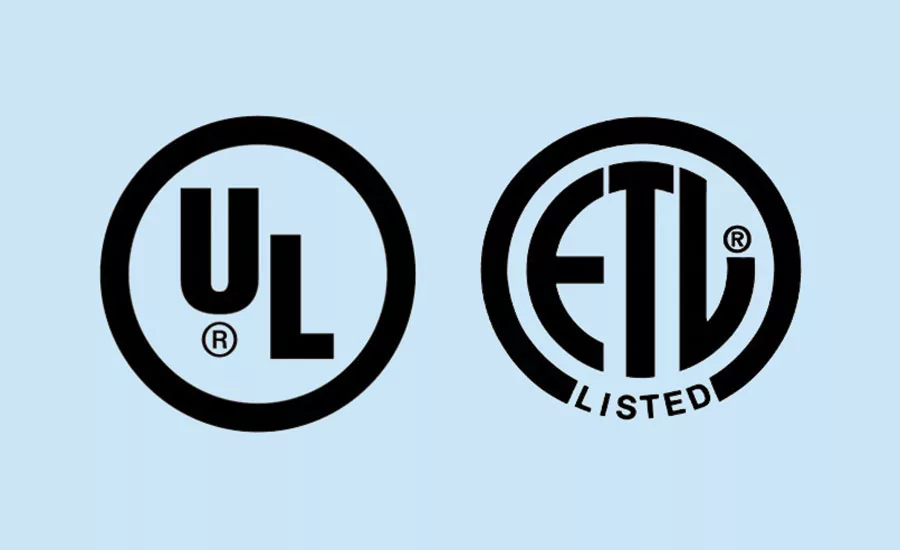
4.Safety - Most of us are used to looking for the UL (Underwriter’s Laboratory) mark to make sure our purchase doesn’t blow up in our face. In reality, there are other testers that are equally recognized and accepted — prominent among them, the ETL Listed Mark issued by the ETL SEMKO division of Intertek. Like the UL Mark, the ETL Listed Mark shows that a product has been independently tested by a Nationally Recognized Testing Laboratory (NRTL), that it has met the minimum requirements of commonly accepted product safety standards and that the manufacturer has agreed to periodic follow-up assessments to confirm its continued compliance. So look for a safety mark before purchasing. After all, having a piece of your equipment burn down a customer’s house can really ruin your day.
Don’t consider price the be-all and end-all. The old saying that you get what you pay for has a lot of truth behind it. Some units may incorporate a lot of bells and whistles, from high tech control boards to longer electrical cords. Some are more important that others, depending on your needs and wants. After all, everyone loves a choice, just like buying a car. But when there get to be too many options along with questionable statistics, your head can start to spin. So make it easy on yourself and concentrate on the four main features discussed in this article when shopping for equipment. You may not come away with the fanciest unit, but it’ll probably do a great job for you and last a long time.
Looking for a reprint of this article?
From high-res PDFs to custom plaques, order your copy today!