The Hidden Cost of the Wrong Dehumidifier Filter
Using the wrong filter for dehumidifiers can compromise drying performance, ruin equipment, and increase costs
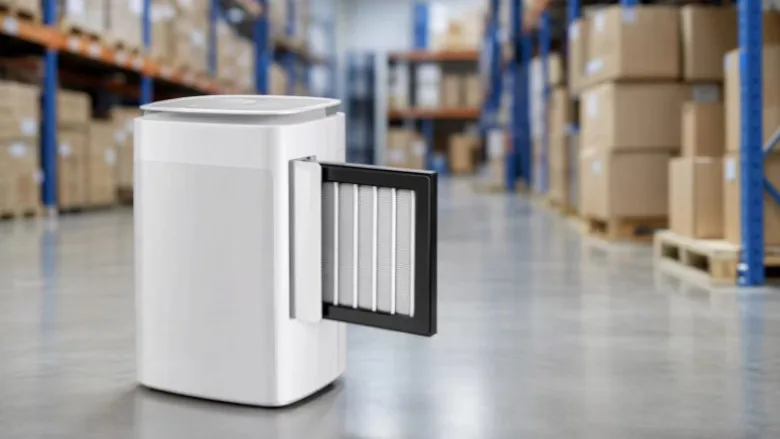
It starts with a water loss that should be straightforward. A Category 2 flood in a 2,500-square-foot commercial cold storage facility. Six LGR dehumidifiers running, target humidity 40 percent per ANSI/IICRC S500 protocol. By day four, the humidity readings are stuck at 55 percent. The project manager suspects underperforming equipment and orders two additional units. The job runs three days over schedule. The adjuster questions the equipment configuration and reduces the equipment line item by 15 percent. Total loss: over $15,000.
The root cause: maintenance staff replaced the filters after the previous job using spare MERV-11 filters from the facility’s HVAC system. The outer dimensions matched. The media looked similar. Pressure drop was 2.5 times higher than specified High Air Flow (HAF) filters. Cost of the correct filters: $90 for six units.
Why HAF Filters Are Not Interchangeable
Professional low-grain refrigerant (LGR) dehumidifiers move 300 to 400 cubic feet of air per minute through refrigerant circuits. The evaporator coil is extremely sensitive to airflow restriction. Even a modest pressure drop increases the difference between a proper HAF filter and a standard pleated filter can cause the coil to drop below its designed operating temperature.
Unlike standard dehumidifiers that simply pass air over cold coils, LGR machines are thermodynamically complex. They rely on maintaining a precise balance between CFM, the volume of air moving through the machine, and static pressure. When you install a standard pleated or fiberglass filter, you introduce unnecessary mechanical resistance into this balanced system. Two immediate consequences follow: coil freezing and motor strain.
- Coil Freezing: Reduced airflow prevents the evaporator coils from exchanging heat properly. The coils drop below freezing, ice builds up, and the unit enters a defrost cycle, which stops pulling moisture from the air entirely. Every hour in defrost is a wasted hour on your drying timeline.
- Motor Strain: Increased static pressure forces the blower motor to work significantly harder. This leads to overheating, higher energy consumption, and premature motor failure, a repair that dwarfs the cost of any filter.
HAF filters are engineered specifically for this environment: low-density electrostatically charged synthetic media, deep pleating for maximum surface area, and rigid frames that hold shape under high suction. Standard MERV-8 filters are built for comfort HVAC systems moving 100 to 150 CFM per ton, not restoration machines running at full industrial capacity in mold-risk environments.
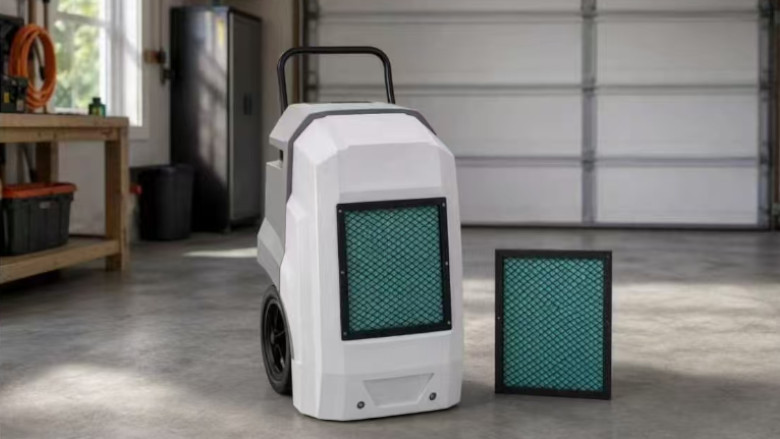 Image courtesy of Nantong Deli Purification Equipment Co., Ltd.(AI-generated)
The key distinction is filtration philosophy. Standard filters rely on mechanical filtration, creating physical barriers that trap particulates through density. HAF filters operate on a more sophisticated principle: electrostatic attraction. Constructed from an open-channel, micro-structured media, they allow air to pass with remarkably low initial resistance while an electrostatic charge actively attracts and holds airborne particulates like fine drywall dust, soot, silica, and mold spores on the walls of their channels. The result: up to twice the dust-holding capacity of a standard filter before airflow begins to drop.
The filters often look nearly identical. Same white media, similar dimensions, close enough in weight. This is precisely why substitution happens so frequently on busy job sites, under time pressure, technicians grab what is available rather than what is specified.
Looking for quick answers on restoration, remediation and cleaning topics?
Try Ask R&R, our new smart AI search tool.
Ask R&R →
The Real Cost: Profitability, Compliance, and Liability
Consider the actual cost differential across a twelve-month operating cycle for a fleet of ten LGR units:
Scenario A — Correct HAF filters:
- Annual filter cost: $600
- Compressor failure rate: less than 5%
- Annual compressor replacement cost: less than $500
- Average equipment lifespan: 8–10 years
Scenario B — Generic MERV-8 substitutes:
- Annual filter cost: $300 (appears to save 50%)
- Compressor failure rate: 15–20% (icing cycles)
- Annual compressor replacement cost: $3,000–$4,500
- Average equipment lifespan: 5–6 years
Net difference: Scenario B costs $2,700 to $3,900 more annually, excluding customer satisfaction and reputation impacts.
Fixing it at the Operations Level
The solution requires making filter specification a standard operating procedure rather than a purchasing afterthought.
Build a filter matrix for your fleet: a simple spreadsheet or laminated reference card mapping each dehumidifier model to its verified HAF part number, with dimensions and supplier source. Post it in equipment storage and attach copies to each unit. This eliminates guesswork during emergency mobilization when speed is highest and attention to detail is lowest.
Move filter replacement to the post-job checklist. Replacing at job end rather than job start means every unit returns to inventory clean and ready. Discovering a wrong filter during pre-job setup costs time you do not have on an emergency call.
Never wash HAF filters. The electrostatic charge in the media is permanent but fragile, water destroys it. A washed HAF filter looks clean but has significantly higher pressure drop and reduced particle capture efficiency.
For fleets running in heavy-particulate environments, demolition, fire damage, active mold remediation shorten replacement intervals. Standard residential water damage: replace every 250 to 300 operating hours. High-particulate jobs: inspect every 100 hours and replace on any sign of visible loading.
Restoration is a margin business. Jobs that run on schedule, dry to spec, and close without adjuster friction are profitable ones. A correct HAF filter that is specified right, replaced on schedule, never washed is one of the lowest-cost inputs that directly protects drying performance, equipment longevity, and the bottom line. Contractors who treat filter specification as a maintenance standard rather than a supply room convenience are the ones whose equipment works when it needs to.
Looking for a reprint of this article?
From high-res PDFs to custom plaques, order your copy today!