The Mental Toll of Working “in” Restoration Too Long
Chronic stress and hurricane response pressure can quietly impact your team’s decision making
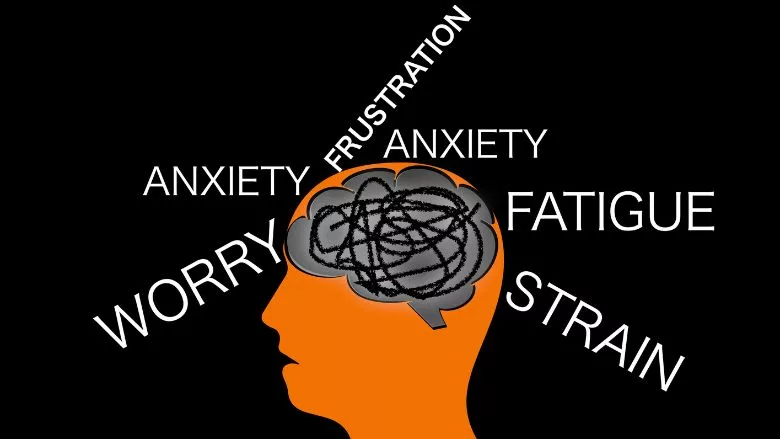
A call comes in late.
Nothing unusual. It is part of the job. Especially during this time of year.
Hurricane Month
Prepare before the storm with specially-curated articles during the month of May. Learn more!
But your first reaction is not problem solving. It is irritation.
You catch yourself. Handle the call. Get it done.
That reaction stays with you longer than it should.
You remember a time, a few years ago, maybe more, when a late call felt like momentum. You picked it up, moved on, didn't think twice. There was still something in the tank at the end of the day.
Before seasons stacked back-to-back. Before the off switch became harder to find.
Looking for quick answers on restoration, remediation and cleaning topics?
Try Ask R&R, our new smart AI search tool.
Ask R&R →
The workload was the same. It just landed differently.
That gap is what this is really about.
Nothing Is Wrong. But Something Has Shifted.
The business is running. Jobs are getting done. Revenue is coming in.
There is no obvious problem.
But internally, small things have changed. Patience runs shorter. Conversations get wrapped up before they are actually finished. Your focus has drifted, less toward thinking things through, more toward closing them out.
It is subtle enough to rationalize away. It is there regardless.
In the restoration industry, pressure is no longer seasonal. Hurricane season just concentrates it. The calendar somehow seems to shorten, patience narrows, and our decisions begin to have compressed timelines.
And it does not stay subtle forever. Chronic workplace stress does not announce itself; it works gradually, eroding the mental sharpness and emotional steadiness that good decision-making depends on. The behavioral shifts come first: shorter fuse, worse sleep, a growing preference for fast over careful. Most owners notice the symptoms without connecting them to the source.
How It Changes the Way You Work
You start replying faster than you think.
Slowing down feels like something you can no longer afford, so you stop doing it. You stop asking the extra questions. You assume the answer and move forward. Most of the time, it works.
But this is where the gaps begin.
Here is a version that plays out constantly in this industry. A job estimate gets approved quickly because it felt familiar — same loss type, same scope, similar structure to a hundred jobs before it. A subcontractor detail gets skimmed because you already know how this goes. Then something comes back. Wrong scope. Misaligned expectations. Rework that eats the margin and two days you do not have.
During hurricane work, this pattern accelerates. Loss types repeat themselves faster, scopes start to blend together, and your internal radar that says “slow down” is overridden by the sheer volume of work. You aren’t careless; you’re simply overloaded.
A slower look would have caught it. You know that. That is the part that lingers.
You start calling this efficiency. Optimizing for speed, trusting your gut, keeping things moving. And for a while, it holds up. The problem is that a mind running under sustained pressure makes more errors than it registers. The research on this is consistent, and the numbers are not small. Compliance errors alone increase dramatically under chronic stress, and the costs compound quietly in the background even when revenue metrics look steady.
The drift is not dramatic. That is exactly what makes it dangerous.
How It Moves from You to Your Team
This does not stay personal.
It starts showing up in how you lead. Conversations get shorter. There is less room for back and forth. The expectation becomes that your team should just get it, without much more explanation than that.
From your side, that feels like running a tight operation.
From their side, it feels like sustained pressure with no clear floor. And over time, they adapt. They stop thinking ahead and start waiting for direction. They become more dependent on you, less capable of filling gaps on their own, and the environment you created is largely what shaped that in them.
During hurricane response, teams are in urgent mode. Your tone, speed, and how fast you make decisions either make or break your jobs. When everything feels like an emergency, thinking ahead can become a liability instead of an expectation.
The pressure travels through tone. Through a conversation that ends before it is finished. Through the pace you set without meaning to.
None of that shows up in a report. All of it shapes how your operation runs.
The Work That Never Fully Leaves
The day ends. Your mind does not.
You are home, still running jobs in the background. Sitting across from someone you care about, but a thread of your attention is on a crew member who said something off, a scope detail that does not sit right, a job three days out with a decision still hanging over it.
On slower days, it still does not reset.
Hurricane season used to end, but lately, it seems to just morph into the next event cycle.
This is not just a feeling. Prolonged exposure to high job demands and chronic pressure carries real health consequences, raising the odds of serious illness and long-term health deterioration in ways that most people do not connect to their work until much later. The body keeps a more accurate account than most owners want to acknowledge.
After enough time, this becomes your baseline. You stop noticing it because it just feels like how things are now. Not a problem. Just the cost of running a business at this level.
That is the part worth questioning.
Why This Is Easy to Miss
Because nothing breaks during the storm.
The breaks show up months later, when things have slowed down and you’re back to “standard operating” procedures.
The business still runs. Revenue still comes in. In restoration, operating under pressure is just the baseline; everyone around you is doing the same thing. So, the shift does not stand out. It blends in until it becomes your default way of working.
The owners who catch this early are not working less. They are just paying attention to something most people are not tracking.
The Cost That Does Not Show Up on Profit and Loss
More reactive decisions. More time fixing than preventing.
A team that grows more dependent, and over time less capable of operating without you standing close. Callbacks that could have been avoided if the job had been scoped more carefully, which it would have been, twelve months ago, before the margin for careful thinking got squeezed out.
The costs here are not abstract. Stressed employees take significantly more sick days, produce more errors, and carry a measurable drag on productivity that does not appear on any single line item but accumulates steadily across a year. Multiply that across a team, across multiple job cycles, and the number becomes hard to ignore, even before you account for the decisions made at the top that set the tone for all of it.
Most owners track revenue, callbacks, and close rates. Almost no one tracks the slow drift in how they make decisions, until the cost shows up somewhere harder to ignore.
The accumulation is quiet. The business looks fine. And then one day a job goes sideways in a way that feels avoidable; a good employee quits without much explanation, or you find yourself dreading a week that used to feel like normal. Not a crisis. Just a weight that was not there before.
That is the drift. That is what this costs.
You Are Allowed to Be Human Too
If any part of this felt familiar, that is worth sitting with for a minute.
Running a restoration business takes a particular kind of person. Someone who shows up when things go wrong for other people. Who absorbs pressure without showing it. Who keeps the operation moving no matter what is happening internally.
That is not a small thing. And it takes a real toll over time.
Feeling the weight of it does not mean something is wrong with you. It means you have been carrying a heavy load for a long time, and your mind and body are registering that honestly.
Preparing for hurricane season is not just about the equipment, staffing, and cash flow; it’s also about protecting your decision-makers from becoming a point of failure.
You do not need a complete overhaul. A few things genuinely help, and they are simpler than most people expect.
- Protect one part of your day where the phone goes down and work does not follow. Not two hours. Even twenty minutes of genuine mental separation; no calls, no job list running in the background, is one of the strongest predictors of next-day focus and sustained energy. Occupational health research is clear on this: psychologically detaching from work during off hours, even briefly, meaningfully reduces stress and restores the capacity to lead well the next day. Most owners know this and treat it as optional. It is not optional.
- When a decision feels urgent, pause long enough to ask whether it actually is. Decision quality drops as mental load builds across the day. This is well established, and the effect is larger than most people expect. A brief pause before responding resets enough clarity to produce meaningfully better outcomes. Most things that feel like they need an answer right now can wait another hour. That hour usually produces a better decision and a less expensive one.
- Check in on yourself the way you check in on your jobs. Not a formal process. Just a regular, honest look at how you are actually functioning, not how you are managing, but how you are doing. The owners who sustain their performance over the long run are not the ones who are toughest. They are the ones who see themselves clearly enough to course correct before something forces the issue.
The business needs you to perform well over the long run.
That only happens if you are still in good shape when it keeps growing. You built something real. Do not let the cost of building it quietly undermine the person running it.
As the season ramps up again, we can’t thank you enough for all the work you do.
Until next time.
Sources:
732e3810287d79713119b9a75664054aa1e1.pdf, Semantic Scholar
2023 Work in America Survey: Workplaces as engines of psychological health and well,being, American Psychological Association
Employee Stress Is a Business Risk,Not an HR Problem, Harvard Business Impact
What Self-Awareness Really Is (and How to Cultivate It) - HBR
Psychological Detachment From Work During Leisure Time - Sabine Sonnentag, 2012- SAGE JOURNAL
Looking for a reprint of this article?
From high-res PDFs to custom plaques, order your copy today!