Restoration logo
search
cart
facebook twitter linkedin youtube
  • Sign In
  • Create Account
  • Sign Out
  • My Account
Restoration logo
  • NEWS
  • PRODUCTS
    • New Products & Technologies
    • Submit Your Product
    • Interactive Product Spotlights
  • CATASTROPHE
  • TOPICS
    • Architecture
    • Cleaning & Sanitation
    • Contamination
    • Contractor Safety
    • Contents
    • Fire & Smoke
    • Mold
    • Odor
    • Water
  • EDUCATION
    • Training & Education
    • Business Management
    • Insurance/Legal Matters
    • KnowHow.
    • Podcasts
    • Webinars
    • Whitepapers
    • Industry Events
  • VIDEOS
    • Ask the Expert
    • Ask Annissa
    • Marketing Monday
    • Tech Tip Tuesday
  • BUYER'S GUIDE
  • THE EXPERIENCE
    • Convention & Trade Show
  • ABOUT
    • Contact
    • Advertise
  • SIGN UP
Water Damage RestorationMold RemediationAsk the Expert

Ask the Expert

Winter Mold Risks: What Restoration Professionals Should Know

LeeAnn Case of Blue Kangaroo Packoutz shares her insights on moisture, contents damage, and prevention
By Kayla McGowan
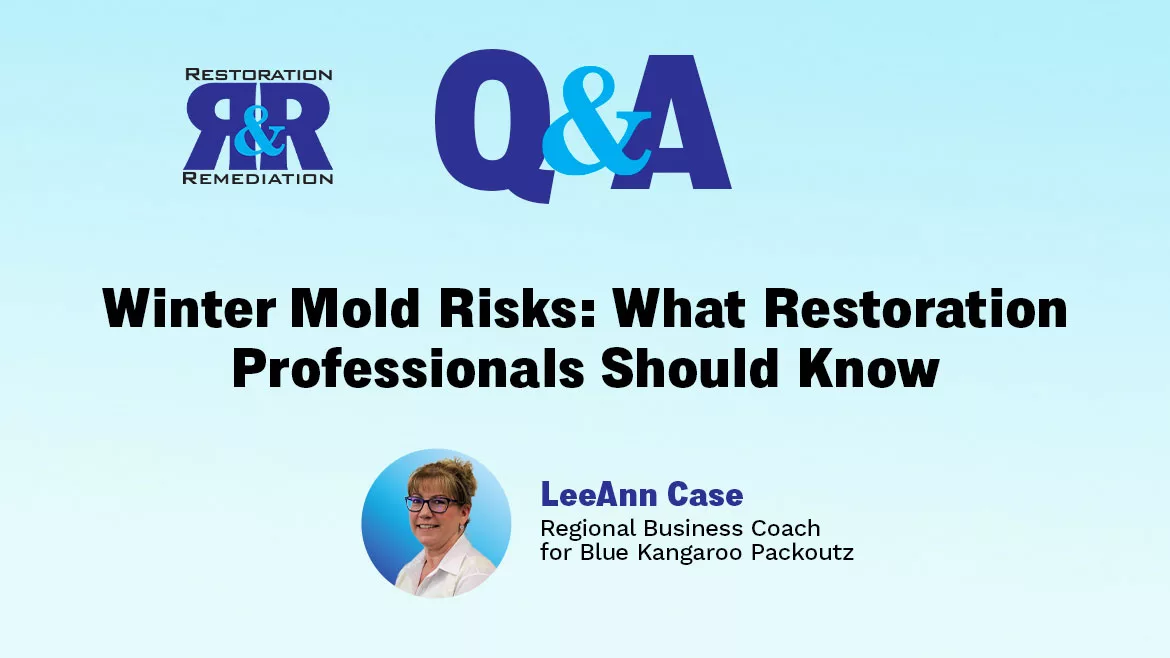
Ask the Expert Q&A: Winter Mold Risks: What Restoration Professionals Should Know
Photo courtesy Blue Kangaroo Packoutz; image design by R&R Art Dept.
March 20, 2026
Welcome back to another Ask The Expert Q&A, we’re joined by LeeAnn Case, Regional Business Coach for Blue Kangaroo Packoutz. With winter showing no signs of slowing down, we wanted to share insights on mold risks during the winter, moisture issues, and the importance of collaborating with additional specialty restoration service providers. 


1. What are some of the common mold risks that tend to appear in homes during the winter months, and why does the colder season create these conditions?

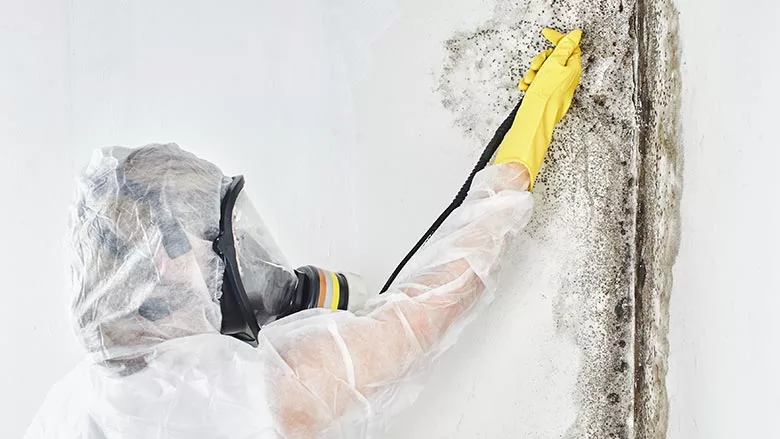
During winter months, mold problems in homes are common, even though it feels counterintuitive because the air is colder and often drier outdoors. The issue is that these conditions trap moisture inside the home, creating the perfect environment for mold growth. These issues often develop due to trapped moisture inside rather than outdoor humidity. Cold temperatures cause condensation when warm, moist indoor air meets the cold surface such as windows, exterior walls, attics, and basements. Tightly sealed homes, reduced ventilation, humidifier use, snow melt, and hidden leaks elevate indoor humidity, creating ideal conditions for mold growth in areas that remain cool and poorly ventilated.


2. Which household items are most vulnerable to winter moisture builds up, and how can contractors identify early signs that the homeowner’s contents may already be affected?

The contents most at risk during moisture buildup include upholstered furniture that may have been stored in their basement or along exterior walls. Fabric and padding absorb moisture and dry slowly; clothing in closets where there is limited airflow and are often stored against cold exterior walls encouraging condensation; books and other paper materials because of their hygroscopic nature are at risk when humidity levels increase; wood furniture can have negative effects from elevated indoor moisture; electronics are vulnerable to condensation when they are stored in cold areas such as garages or basements; and items stored in cardboard can absorb moisture quickly and often hide mold growth.

Homeowners can detect the early signs of possible mold growth by musty odors, damp or clammy textures, warping, discoloration, and corrosion. Contractors can check for elevated moisture levels and often identify affected contents by recognizing patterns near exterior walls, low-airflow spaces, and cold surfaces before visible mold appears.


3. When a homeowner calls about a musty odor or visible mold, what should a restoration professional advise them to do prior to their team arriving?

When a homeowner notices musty odors or visible mold, you should advise them to avoid disturbing the area, limit access, and reduce moisture without attempting cleanup. Homeowners should turn off their humidifiers, address obvious leaks, improve gentle ventilation by running bathroom or kitchen exhaust fans, and document conditions with photos and notes. DIY cleaning, scrubbing, or spraying chemicals should be avoided, as these actions often spread contamination and complicate remediation.


4. How can collaboration between mitigation teams and contents teams prevent small winter moisture issues from turning into large-scale item losses?

Close coordination between mitigation teams and contents teams allows moisture issues to be identified and stabilized early, reducing exposure time and improving outcomes. Joint assessments share environmental controls, strategic handling of at-risk items, and clear documentation prevents cross-contamination and unnecessary packouts. Early detection allows the contents to be stabilized or relocated before mold colonization or irreversible damage occurs. This collaborative approach turns small moisture problems into manageable conditions rather than large-scale contents loss.


5. What mistakes do homeowners often make when they try to clean mold themselves, and how can this complicate the restoration process for contractors or adjusters?

Homeowners frequently attempt to clean mold using bleach, household cleaners, fans, heaters, or paint, all of which can make contamination worse, cause cross contamination to other items or areas, or hide active growth. Scrubbing and sanding release spores, while discarding items without documentation removes critical evidence. These actions increase the remediation scope, obscure cause-and-origin timelines, and complicate insurance coverage determinations for contractors and adjusters.


6. What type of belongings can typically be recovered after mold exposure, and when is it more cost effective to rely on contents professionals for specialized cleaning or climate-controlled storage?

After mold exposure, many belongings can be successfully recovered, but outcomes depend on material type, exposure duration, moisture level, and how quickly the professionals intervene. Many mold-exposed items, such as hard goods, finished wood, electronics, textiles, and documents, can often be recovered if addressed quickly using professional cleaning, drying, and deodorization methods. Items like pressboard furniture, heavily contaminated soft goods, and cardboards are often not cost-effective to restore. Contents professionals are most valuable when dealing with porous materials, high-value or sentimental items, persistent odors, unstable site conditions, or claims requiring detailed documentation and a chain of custody.


7. What steps should restoration professionals take to educate homeowners about preventing mold growth during cold snaps or extended indoor humidity spikes?

You can reduce repeat mold events by educating your homeowners on managing indoor humidity, recognizing condensation, maintaining ventilation, and monitoring winter-specific moisture sources. Clear guidance on humidity targets, airflow habits, inspection routines, and “do and don’t” mold practices that empower homeowners to act early and avoid DIY mistakes. Consistent education builds trust, protects indoor air quality, and minimizes future losses during cold snaps and extended indoor humidity.

KEYWORDS: catastrophe response disaster preparedness water mitigation water remediation

Share This Story

Looking for a reprint of this article?
From high-res PDFs to custom plaques, order your copy today!


Kayla mcgowan author

Kayla McGowan is the Editor-in-Chief of R&R Magazine, with 10 years of experience in marketing and communications in the restoration and cleaning industry. She leads the editorial strategy for R&R and The Experience Events, creating content that informs and connects industry professionals. 

Kayla holds a B.S. in Criminal Science and M.S. in Public Safety and Emergency Management from Grand Canyon University. She serves as Co-Chair on the RIA’s Marketing Committee.

Kayla is a Microbial Warrior®, a Certified Forensic Operator® and a High Risk/ High Level Decontamination Specialist™. Kayla is passionate about elevating the industry, is a food lover, enjoys spending time with her family, and embracing the outdoors.

Recommended Content

JOIN TODAY
To unlock your recommendations.

Already have an account? Sign In

  • Business team analyzing financial data on digital tablets during a meeting

    7 Trends Influencing the Restoration Industry in 2026

    With market uncertainty, workforce transitions, new...
    Columns
    By: Oscar Collins
  • mold remediation

    Fighting Mold and Bacteria Damage

    Successful mold remediation can be multidisciplinary,...
    Contamination Restoration & Remediation​
    By: Josh Woolen
  • certifications and licenses for restoration professionals

    Certifications and Licenses Every Restoration Company Needs

    Restoration companies need to make sure they have the...
    Restoration Training/Education
    By: Sharon Elzarat
You must login or register in order to post a comment.

Report Abusive Comment

Manage My Account
  • Newsletters
  • Online Registration
  • Subscription Customer Service
  • Manage My Preferences

More Videos

Popular Stories

Photos from homes damaged by WUI Smoke entering stucco walls and hidden building cavities

How Wildland-Urban Interface (WUI) Smoke Enters Stucco Walls and Hidden Building Cavities

Reconstruction and renovation of an old half-timbered house

Restoration & Preservation of Historical Buildings: Understanding the Foundations – Part 1

books of standards and regulations

Why Reading, Regulation, Learning Theory, and Citation Matter in Restoration

Submit Your New Product/Technology to R&R!

Would you like to promote a new restoration, remediation or cleaning product/technology with Restoration & Remediation? Fill out the question below to start your submission:

Events

April 27, 2026

RIA Convention & Expo

This event empowers professionals through world-class education, powerful networking, and access to cutting-edge tools and services.

September 9, 2026

The Experience Convention and Trade Show

The Experience Convention & Trade Show logoThe Experience Convention and Trade Show unites the cleaning, restoration, inspection, indoor air quality, and HVAC industries through hands-on education, live demonstrations, and high-impact networking. Attendees gain practical skills, business insight, and connections that elevate industry standards and drive growth.

View All Submit An Event

Poll

Relevance of TPAs

Are TPAs becoming more or less relevant in your pipeline?
View Results Poll Archive

Products

The Cleaning, Restoration, Inspection, and Safety Glossary

The Cleaning, Restoration, Inspection, and Safety Glossary

The Cleaning, Restoration, Inspection, and Safety Glossary.

See More Products
Prepare for CATASTROPHE with R&R!

Related Articles

  • R&R Q&A - Unlocking the Power of Data: How You Can Transforms Insight into Impact

    Unlocking the Power of Data: How You Can Transform Insight into Impact

    See More
  • Ask the Expert: What Restoration Professionals Need to Know About HVAC Systems and Indoor Air Quality

    What Restoration Professionals Need to Know About HVAC Systems and Indoor Air Quality

    See More
  • IICRC Standards: What Every Restoration Contractor Should Know

    IICRC Standards: What Every Restoration Contractor Should Know

    See More

Related Products

See More Products
  • Water in Buildings: An Architect's Guide to Moisture and Mold

  • fires out.jpg

    Fire’s Out, Now What? Vol. I & II

See More Products

Events

View AllSubmit An Event
  • May 8, 2025

    Top Legal Tools Every Restoration Contractor Should Understand

    On Demand Explore the most effective legal tools available to restoration contractors. Discover how these resources can enhance credibility with customers, provide strategic options for addressing delayed invoices, and help determine when to seek legal counsel.
View AllSubmit An Event
×

Stay ahead of the curve with our newsletters.

Get the latest industry updates tailored your way.

JOIN TODAY!
  • RESOURCES
    • Advertise
    • Contact Us
    • Directories
    • Store
    • Want More
    • Submit a Press Release
  • SIGN UP TODAY
    • Create Account
    • Newsletters
    • Customer Service
    • Manage Preferences
  • SERVICES
    • Reprints
    • Marketing Services
    • Market Research
    • List Rental
    • Survey/Respondent Access
  • STAY CONNECTED
    • LinkedIn
    • Facebook
    • Instagram
    • YouTube
    • X (Twitter)
  • PRIVACY
    • PRIVACY POLICY
    • TERMS & CONDITIONS
    • DO NOT SELL MY PERSONAL INFORMATION
    • PRIVACY REQUEST
    • ACCESSIBILITY

Copyright ©2026. All Rights Reserved BNP Media, Inc. and BNP Media II, LLC.

Design, CMS, Hosting & Web Development :: ePublishing