Marketing Monday
What Restoration Companies Should Post on Social Media and Why It Works
Job site content is educational content that builds trust and stronger marketing for restoration companies
This article explains what restoration companies should actually post on social media, and how educational, trust-building content can turn everyday job site moments into powerful marketing.
What Restoration Companies Should Actually Post on Social Media
Once you’ve defined your customer avatar, clarified your Value Proposition, and set your SMART marketing goals, the next step is execution.
For many water and fire restoration business owners, that raises an important question:
“What should we actually post?”
The good news is that effective social media content doesn’t necessarily require expensive production equipment or elaborate marketing campaigns. In fact, most restoration companies are already surrounded by their best content every day, on the job site.
The key isn’t creating flashy content. The key is creating valuable content.
Why Educational Content Builds Trust Faster Than Sales Content
Many restoration companies treat social media like a digital billboard. They post updates like:
Looking for quick answers on restoration, remediation and cleaning topics?
Try Ask R&R, our new smart AI search tool.
Ask R&R →
- “Another water job completed today.”
- “Wrapping up a fire damage restoration.”
- “Busy day on the trucks.”
While these posts demonstrate activity, they don’t necessarily build trust.
Today’s consumers want more than proof that a company is busy. They want confidence that the company is competent.
Research from Edelman’s Trust Barometer shows that 81% of consumers say trust is a deciding factor when they choose a service provider. Education is one of the fastest ways to build that trust.
When your content helps people understand what you do and why it matters, you move from being “another contractor” to being the expert.
Your Job Sites Are a Goldmine of Content
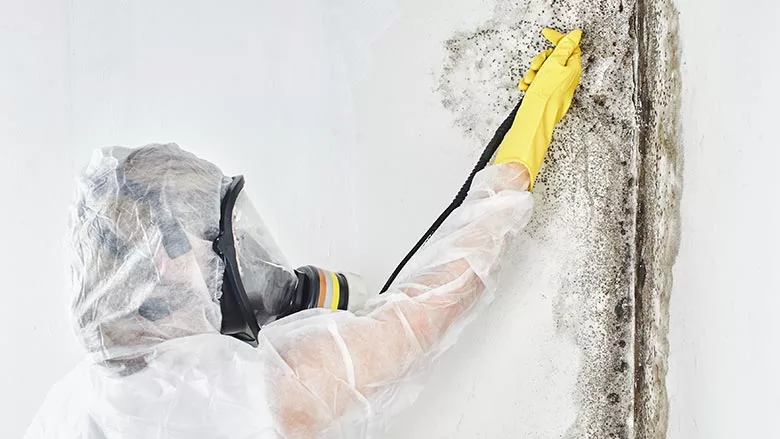
Restoration work is inherently visual and educational. Every water loss, mold remediation, or fire cleanup contains dozens of teachable moments.
Instead of simply documenting the job, the goal should be to explain the job.
For example:
| Typical Post | Improved Educational Post |
|---|---|
| “Water damage job today.” | “Here’s why water trapped under flooring can cause hidden mold growth.” |
| “Another fire restoration complete.” | “Smoke damage spreads further than you think. Here’s why.” |
| “Drying equipment set up.” | “This equipment removes moisture trapped inside drywall.” |
Adding explanation transforms ordinary job updates into valuable insights.
The Three Content Buckets That Work Best for Restoration Marketing
To keep your content organized and consistent, it helps if you think of three primary categories.
These buckets ensure your content remains balanced and useful.
1. Educational Content
Disasters are confusing and stressful for homeowners and property managers. Most people don’t know what to do when water or fire damage occurs.
Educational content fills that gap.
Examples include:
- What to do in the first hour after a flood
- Why standing water under flooring is dangerous
- How smoke particles travel through HVAC systems
- Why mold can develop within 24–48 hours
According to Google, 86% of consumers use online content to learn about services before hiring a company. Educational posts position your company as the trusted source of that information.
A simple educational video filmed on a phone can outperform a highly produced commercial because it feels authentic and helpful.
2. Proof of Work
Before hiring a restoration company, people want reassurance that you can handle the job professionally.
This is where before-and-after content and job walkthroughs become powerful.
But the most effective proof includes context.
Instead of simply showing equipment or finished results, explain what viewers are seeing.
For example:
- Show a moisture meter reading and explain what the numbers mean.
- Walk through your drying setup and why equipment placement matters.
- Explain how containment protects unaffected areas of the home.
According to BrightLocal research, 98% of consumers read online reviews or research local services before choosing a contractor. Demonstrating professionalism visually helps reinforce the credibility customers are already searching for.
3. People and Process
Restoration work isn’t just about equipment and technical expertise. It’s also about trusting the people entering your home during a stressful situation.
Content that highlights your team and processes helps humanize your brand.
Examples include:
- Introducing technicians and explaining their certifications
- Showing how inspections and moisture mapping work
- Demonstrating how belongings are protected during mitigation
- Explaining the step-by-step restoration process
According to Sprout Social, 70% of consumers feel more connected to brands whose leadership and employees are visible online.
Showing the people behind the work builds familiarity, and familiarity builds trust.
How Consistent Content Builds Long-Term Trust
When restoration companies consistently share educational, transparent content, something important happens.
They stop feeling like advertisers.
They start feeling like trusted advisors.
Marketing research from the Ehrenberg-Bass Institute shows that brand familiarity influences purchasing decisions, especially in high-stress scenarios like disaster restoration.
This means that when disaster strikes, customers often don’t compare multiple providers. They choose the company they already recognize and trust.
Consistent, helpful content ensures that your company becomes that familiar name.
From Marketing to Authority
Over time, educational content shifts your position in the market.
Instead of competing on price or availability, you are known for expertise and professionalism.
This transformation doesn’t happen overnight. But when restoration companies consistently document and explain their work, they create a powerful competitive advantage.
Your social media stops being a promotional channel and becomes something far more valuable:
A library of expertise that builds trust before a disaster ever happens.
Next: How Often Should Restoration Companies Post?
Now that you know what kind of content to create, the next challenge is consistency.
In the next article, we’ll explore how often restoration companies should post, and how you can build a sustainable content routine without overwhelming your team or burning out.
Because when marketing becomes simple and consistent, it stops feeling like a chore and starts becoming one of the strongest growth engines in your business.
Looking for a reprint of this article?
From high-res PDFs to custom plaques, order your copy today!