RIA Advocacy Wins Deliver Real Impact for Restorers in 2025
Legislative wins, pricing transparency, and data tools help strengthen restoration businesses
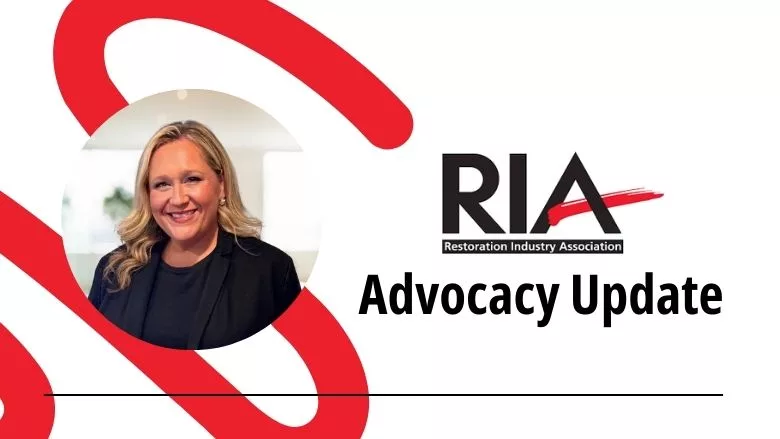
In 2025, the Restoration Industry Association (RIA) doubled down on its advocacy work to protect the interests of restorers. At a time when restorers face mounting regulatory pressures, evolving insurance practices, workforce challenges, and financial strain, the RIA’s advocacy work in 2025 delivered meaningful, tangible results that directly supported restoration businesses.
From influencing legislation at the state and national level, to strengthening contractor rights, and providing data-driven tools that empower smarter decision-making, RIA’s advocacy efforts in 2025 addressed the most critical issues facing restorers today. These wins were not theoretical—they protected emergency services, preserved fair compensation, improved transparency, and elevated the restoration profession.
Building a Stronger Advocacy Foundation
Recognizing the need for a more coordinated and proactive advocacy strategy, the RIA expanded its lobbying and grassroots efforts in 2025. The association worked alongside professional lobbyists and restoration advocates in Georgia, Texas, Connecticut, New Jersey, Delaware, and South Carolina, engaging directly on legislation that impacts contractors’ ability to operate, respond to emergencies, and get paid fairly.
A major milestone was the launch of RIA’s VoterVoice platform to create our member Advocacy Action Hub, empowering members to directly engage with lawmakers. This grassroots advocacy tool ensures restorers’ voices are heard when legislation threatens their businesses or when opportunities arise to support policies that strengthen the industry. By pairing professional lobbying with member-driven advocacy, RIA significantly amplified the industry’s influence.
Protecting Emergency Restoration Services Through Smart Legislation
One of RIA’s most impactful advocacy victories came in New Jersey, where proposed legislation threatened to unintentionally disrupt emergency restoration work. Through direct engagement, RIA successfully amended NJ A551 to include critical language allowing consumers to waive the right to cancel contracts for emergency services.
This change ensures that restorers can respond immediately to fires, floods, and other emergencies without fear of retroactive contract cancellations. For restoration businesses, this win protects cash flow, reduces legal risk, and ensures they can continue prioritizing property preservation when disaster strikes.
In Texas, the RIA played a key role in addressing HB 4169, legislation that could have had harmful consequences for contractors. In addition to shutting the bill down, the RIA worked collaboratively with bill sponsor Representative Campos to raise concerns and educate on how restoration works to ensure future bill language protects consumers while allowing restorers to provide their services. This proactive approach helped shut down problematic language while preserving constructive dialogue, demonstrating RIA’s credibility as a solutions-oriented industry leader.
Looking for quick answers on restoration, remediation and cleaning topics?
Try Ask R&R, our new smart AI search tool.
Ask R&R →
Shaping “Fire Chasing” Model Legislation to Protect Restorers
The RIA’s advocacy extended beyond individual states to national policy discussions. In 2025, RIA attended the National Council of Insurance Legislators (NCOIL) meetings, working closely with Georgia Senator Larry Walker and other stakeholders to reshape model legislation addressing “fire chasing.”
The RIA’s involvement ensured that emergency restoration services were protected and that contractors’ right to fair compensation for work performed remained intact. This outcome was critical in preventing overly broad regulations that could have restricted legitimate emergency response efforts and undermined restorers’ ability to serve communities during disasters.
Driving Pricing Data Transparency
In 2025, the RIA made significant strides in advocating for transparency with pricing data software providers.
The RIA successfully worked with Cotality to update End User License Agreement (EULA) language, reinforcing that pricing data is only a starting point for estimates. The updated language clearly affirms that restoration professionals may adjust estimates based on real-world conditions, job complexity, and actual costs—supporting professional judgment and reducing disputes.
Similarly, the RIA’s advocacy with Verisk delivered meaningful improvements, including:
- Clearer EULA language supporting a balanced use of pricing data
- Transparent disclaimers explaining when and how pricing data is updated
- New educational resources and internal training for Verisk team members
- Removal of “new construction” as the default setting for Hover ESX imports
These changes directly benefit restorers by reducing misapplication of pricing data, improving estimate accuracy, and reinforcing the legitimacy of professional expertise.
Strengthening Industry Relationships and Ethics
To address ongoing friction between restorers and carriers, the RIA launched a Carrier Representative Task Force in 2025. This initiative brought together high-level insurance executives and restoration leaders to discuss shared challenges, improve communication, and identify opportunities for collaboration.
The task force also informed updates to RIA’s Code of Ethics and requirements, reinforcing professionalism, accountability, and trust across the industry. By facilitating these conversations at the executive level, the RIA positioned itself as a voice for restorers with insurance carriers—working toward solutions rather than conflict.
Data-Driven Advocacy That Empowers Businesses
The RIA continued to lead with data by launching the second Cost of Doing Business Report, providing restorers with critical insights into:
- True overhead realities
- Financial benchmarks
- The impact of independent, custom price lists
This report equips restoration business owners with credible data to benchmark performance, justify pricing, and make informed strategic decisions.
The RIA also released the third TPA Scorecard, which has already driven meaningful conversations with Third-Party Administrators about how they can improve their practices and become better partners to restorers. The scorecard empowers contractors to make smarter business decisions while encouraging accountability across the ecosystem.
Advancing Recognition of the Restoration Profession
A landmark advocacy effort in 2025 was RIA’s submission of an application for a dedicated NAICS code for emergency restoration services. This initiative seeks to formally recognize restoration as a distinct industry, improving data accuracy, benchmarking, workforce analysis, and policy development.
The RIA also expanded its advocacy footprint into Canada, launching the first-ever RIA AGA Canadian Position Statement on Prompt Pay legislation. This effort supports faster, fairer payment practices and underscores RIA’s commitment to advocating for restorers across borders.
Protecting Restoration in Disaster Policy and Public Resources
The RIA partnered with IICRC, AIHA, and CIRI to develop guideline recommendations for the California Department of Insurance Wildfire Task Force, ensuring that restoration services were protected amid evolving wildfire policies.
In addition, RIA launched a suite of new member tools and public-facing resources, including:
- Tips for Homeowners After a Disaster
- Assignment of Benefits (AOB) FAQs
- Guidance on avoiding accidental adjusting
- Restoration vs. construction FAQs
- AGA position statements in Spanish and French Canadian
These tools strengthen consumer understanding, reduce risk for restorers, and reinforce the professionalism of the industry.
A Critical Advocate for the Restoration Industry
The RIA’s 2025 advocacy wins demonstrate more than activity; they reflect impact. Each initiative addressed real-world challenges restorers face every day, from emergency response and payment delays to pricing disputes and regulatory uncertainty.
Through strategic lobbying, grassroots engagement, data-driven insights, and collaborative leadership, the RIA continues to play a critical role in protecting, advancing, and elevating the restoration industry. As the industry evolves, the RIA’s advocacy ensures restorers are not only heard—but respected, protected, and positioned for long-term success.
To strengthen our industry’s power and influence in 2026, all restorers must join this movement by becoming members of the RIA. Learn more and join today to ensure your business is protected.
Looking for a reprint of this article?
From high-res PDFs to custom plaques, order your copy today!