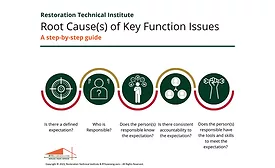
Nearly everything our technicians do on the job has a WHY and SO WHAT associated with it. Anyone can train a water damage restoration technician to use a hygrometer and moisture meter, but do they all understand WHY we take atmospheric and moisture content readings, and the SO WHAT of each reading? It makes a difference.
One of the challenges in making predictions is being blindsided by items you could never have seen coming. Before last year, imagine someone telling you the country would be shut down for months, you could not go to a restaurant or church service for months, college basketball would stop the week before March Madness, and most schools would be closed for months (or in some cases, a year).
When will things return to normal? Leading experts in infectious disease, public health, public policy, and contamination control will debate this question and more!
When I picked up a pack of strawberries at the grocery store, I stood there for a moment and smelled their fresh aromas and examined how beautifully red they were. I could almost taste how juicy and sweet they would be.
Panel of restorers and cleaning experts will discuss what they learned during this pandemic, and how they’ll harness those lessons in their companies moving into our new “normal”.
In each edition of ANSI/IICRC’s S500 Standard and Reference Guide for Professional Water Damage Restoration, dating back to 1994, the mitigation contractor’s stated first priority on a loss site has remained clear: “Eliminate safety hazards”. I am certain that SARS-CoV-2 (the virus) or COVID-19 (the disease) are not what the authors of the standard had in mind.