Hurricane Insurance Readiness for Restorers Starts Now!
Key coverages, documentation, and strategies for restorers to stay protected before, during, and after hurricane season
For restoration contractors, hurricane season can be good for business. It can also expose weaknesses just as fast.
When a major storm hits, demand does not build gradually. It hits all at once. Phones light up, crews get stretched, trucks are constantly moving and equipment barely makes it back to the shop before it is needed somewhere else. Everyone is working faster, making more decisions, and trying to keep jobs moving under pressure.
Hurricane Month
Prepare before the storm with specially-curated articles during the month of May. Learn more!
That is exactly why insurance deserves a hard look before the season starts.
In restoration, most owners already understand risk. They deal with damaged properties, unpredictable job sites, and urgent timelines every day. The issue is not whether they know risk exists. The issue is that during storm season, even a small insurance problem can turn into a major business problem. A missing certificate can hold up a job. An outdated policy can create headaches when a vehicle is involved in an accident. Equipment that is central to the business can suddenly become a costly gap if it is damaged, stolen, or not covered the way the owner assumed.
And the worst time to discover any of that is when the phones are ringing off the hook.
Insurance readiness matters before the rush
Storm work moves too quickly for last-minute scrambling.
Once hurricane activity picks up, restoration companies do not have much room to pause and sort out paperwork, revisit policy limits, or realize the business has outgrown the coverage it bought years ago. By then, the focus is on getting crews out the door, answering customer calls, and keeping up with demand.
Looking for quick answers on restoration, remediation and cleaning topics?
Try Ask R&R, our new smart AI search tool.
Ask R&R →
That is why insurance review should happen before the season gets busy, not in the middle of it.
A lot can change in a year. Maybe the company added trucks. Maybe it bought more drying equipment. Maybe it expanded its service area or hired more people. Maybe it is taking on bigger jobs than it used to. But many businesses renew coverage almost on autopilot, assuming the policy still fits because it fit last year.
That assumption can get expensive.
Preparation is what gives restoration companies speed. And in this industry, speed is not just about who gets there first. It is also about who is ready to start work without administrative delays.
A certificate of insurance can help win work faster
No one is going to frame a certificate of insurance and hang it on the wall. It is not the glamorous part of the business. But when storm demand surges, it matters.
A current certificate of insurance helps restoration companies move quickly when an opportunity opens up. It shows that the business is organized and ready to go. It can also help remove friction when a property manager, partner, or customer wants proof of coverage before authorizing work.
That matters even more when the customer’s insurer is involved. In those situations, the back-and-forth can move fast, and contractors that can provide documentation quickly often have an easier time getting through the door.
It is one of those small operational details that can have a real business impact. In a busy season, the companies that are easiest to hire often have an advantage over the companies that are still chasing paperwork.
Review the coverages that matter most
Restoration companies have a lot of moving parts, which means their insurance needs are rarely simple.
Before hurricane season starts, it is worth stepping back and asking a practical question: does our coverage reflect the business we are actually running today?
General liability is a given, but it still deserves review. Restoration work happens in places where conditions are unstable, visibility is limited, and the chance of property damage or injury is not theoretical.
Commercial auto is another major one. Trucks, vans, and service vehicles are essential to this business, and they usually work harder during storm season than at any other time of year. More travel, more stops, more urgency, more exposure.
Then there is the equipment. Restoration companies depend on specialized tools to do the work, and those tools do not stay in one place. They are transported, unloaded, set up, moved, stored, and used again somewhere else. Inland marine or equipment coverage is worth reviewing because these assets are expensive, heavily used, and critical to keeping jobs on track.
Property coverage matters too, especially for warehouses, offices, and storage locations. It is easy to focus on the buildings your customers are worried about and overlook your own.
Workers’ compensation is another area to revisit before business picks up. If the company is adding crews, taking on more field work, or operating under more demanding conditions, that should be reflected in its coverage planning.
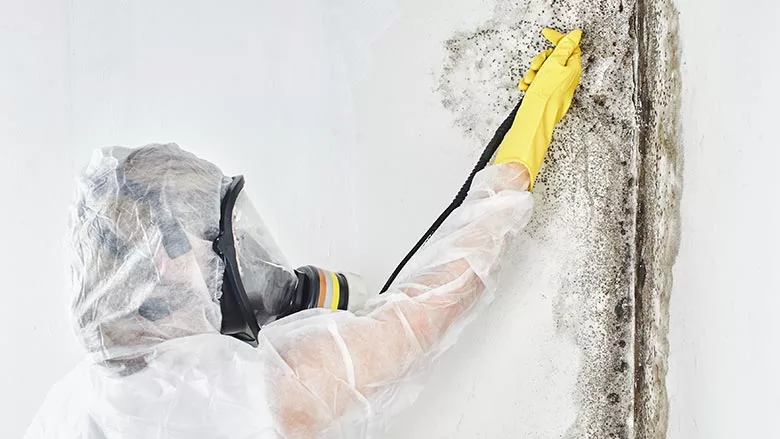
And for restoration and remediation companies, pollution coverage deserves real attention. Water damage, mold, smoke, contaminants, and environmental issues are not edge cases in this line of work. They are part of the reality of many jobs. Owners should not assume those exposures are automatically covered just because the work is routine to them.
None of this has to become an academic exercise in policy language. The point is much simpler than that: make sure the insurance matches the way the business actually functions.
Do not sleep on vehicles and mobile equipment
If there is one area where restoration businesses can get tripped up, it is mobility.
This is a business built around movement. Trucks are on the road. Equipment is in transit. Tools are stored in one place, used in another, and left temporarily somewhere else in between. During hurricane season, all of that speeds up.
That is why owners should take a close look at whether vehicles, tools, and mobile equipment are covered where they actually live in the real world, not just where the policy assumes they live.
A dehumidifier does not only exist in a warehouse. An air scrubber does not only exist on an inventory sheet. These are working assets that move constantly and make revenue possible. If a restoration company has invested heavily in equipment but has not reviewed how it is insured, that is a weak spot worth fixing before the season begins.
The same goes for vehicles. If the business has grown, changed routes, added drivers, or expanded its response territory, the insurance should keep up with that reality.
Insurance gaps do not just create risk. They can slow growth.
It is easy to think about insurance only in terms of worst-case scenarios. But for restoration companies, insurance also affects how much business they can confidently take on.
A company can have strong crews, solid demand, and a full pipeline of work, then still find itself slowed down by missing paperwork, outdated limits, or coverage that no longer fits the size of the operation. That is frustrating in any season. During hurricane season, it is a serious missed opportunity.
The companies that are ready to grow during busy periods usually do not treat insurance as an afterthought. They treat it as part of being ready to operate at full speed.
That mindset matters. Insurance is not only there to protect the downside. In many cases, it also supports credibility, responsiveness, and the ability to say yes to more work.
Keeping costs under control still matters
Reviewing insurance does not automatically mean spending more. Sometimes it means stopping the slow leak of bad decisions.
A lot of business owners renew the same coverage year after year without really looking at it. Sometimes that means they are underinsured. Sometimes it means they are paying for protection that no longer makes sense for the business they run now.
It is smart to shop around instead of automatically renewing. It is smart to revisit coverage every year as the company adds people, equipment, vehicles, or services. And it is smart to look closely at the real cost of financing premiums over time, because monthly payments can feel manageable while quietly costing more than owners realize.
The goal is not to buy the cheapest policy on the market. It is to make informed decisions. Cheap insurance that does not fit the business is not really cheap.
Most insurance mistakes are preventable
The most common mistakes restoration businesses make are not especially dramatic. They are usually basic things that were easy to put off.
Waiting until storm season is already here. Not keeping a current certificate of insurance ready. Underestimating the value of tools, equipment, or vehicles. Assuming an old policy still fits a business that has grown. Focusing only on the premium without looking at financing costs, exclusions, or gaps.
These are ordinary mistakes. But when demand spikes, ordinary mistakes get expensive fast.
The companies that are easiest to hire are usually the most prepared
When hurricane season ramps up, restoration companies need more than trucks, tools, and manpower. They need to be ready to prove they can get to work.
That means having the right insurance in place. It means having the documentation ready. It means making sure the business is covered not as it used to be, but as it operates today.
The companies that stand out during storm season are not always just the ones that answer the phone first. Often, they are the ones that can say yes with confidence because they handled the details before the season ever started.
That is what insurance readiness really is. Not paperwork for the sake of paperwork. Preparation that helps a restoration business move faster when it matters most.
Looking for a reprint of this article?
From high-res PDFs to custom plaques, order your copy today!