To Dry or Not to Dry? - The Applied Structural Drying Paradigm
Understanding Ever-Evolving Customer Expectations and Drying Practices
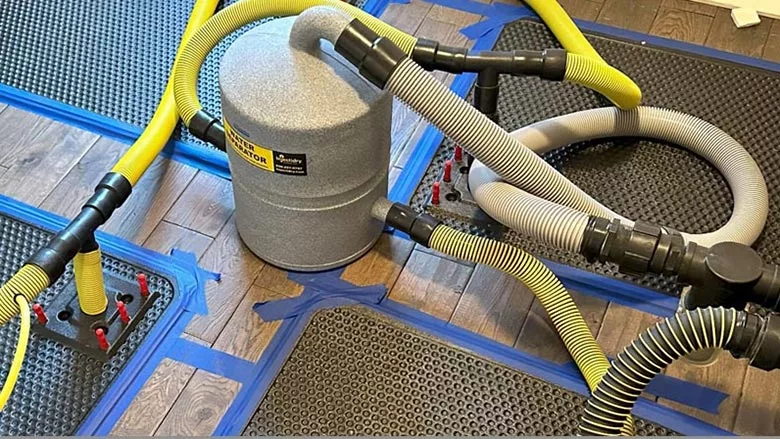
All photos courtesy of Center for Disaster Recovery
The industry is forever changing, growing and becoming more integrated with technology. One of the biggest shifts in this post-pandemic market is the evolution of customer expectations. These expectations include immediacy, anticipation, consistency and personalization.
We continue to struggle with who the customer is, and to date I am unsure why this remains confusing. As a contractor the person who signs your work authorization or contract is in fact your customer; you work for them. If this loss is claimed as part of an insurance claim, and the insured signs your work authorization, you still work for them. But, in this industry we have a secondary relationship, and that is often with the insurance company that you may or may not be a preferred contractor with. Many have preferred programs in place to offer customer service, certainty and cost control for the customer that have had a loss. This is yours and the insurers mutual customer, whether or not you have a relationship or preferred status with them.
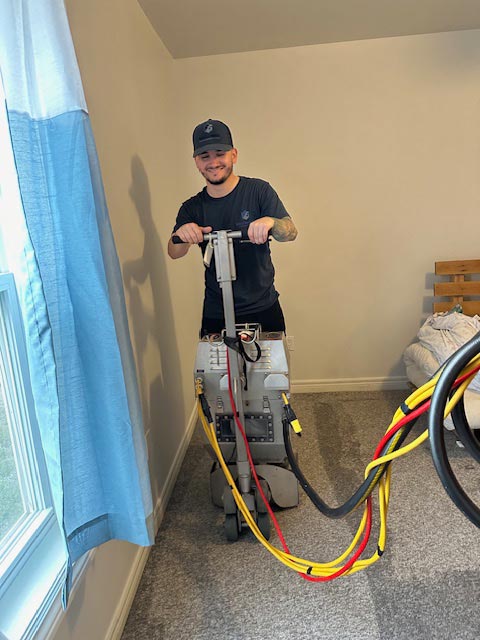 As contractors, there are expectations of customers and adjusters having complete understanding of the insurance claims process and the timing and overall mitigation completion strategies. What hasn’t changed in the industry is the ability for the contractor to dry materials in place and mitigate the loss where possible. This further supports the industry’s sustainability expectation.
The terms “applied structural drying” and “in place drying” were integrated over 20 years ago and remain common language in our industry today. These drying concepts are rooted in our in-person hands-on education to reduce building material removal where possible, focusing our efforts on the emergency portion of the loss to save and dry materials in place.
Drying in place, where possible, supports:
- Speed of the overall emergency process
- Less time with long tail repairs
- Lower loss ratios for the insurer
- Increased profitability for the contractor
- Removal of fewer materials, therefore less landfill waste
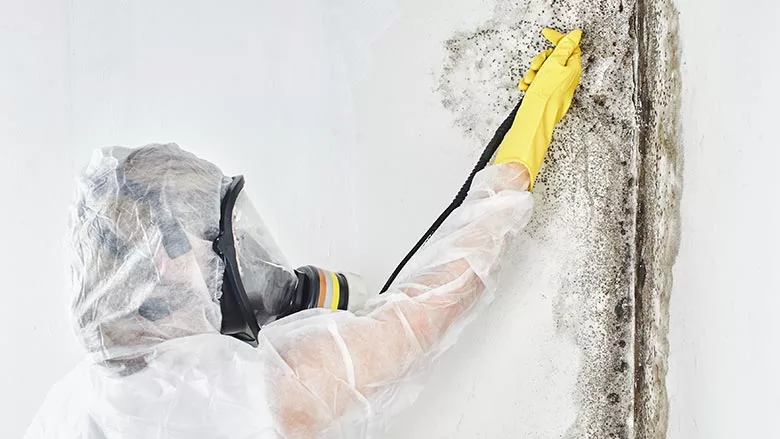
One issue faced with drying of materials is the customer believing the mold has already started to grow within a few minutes of the building material becoming wet. Mold does not grow on dry building materials, but that is just the start of many drying myths. Drying myths include but are not limited to microbial growth commencing the same day of the water intrusion, building materials being compromised and no longer able to remain, and of course the ongoing claim of buildings being dried within three days.
As an IICRC instructor of the ASD Applied Structural Drying course for over 20 years, I can assure you that this three-day drying expectation is unfounded. Three-day drying results are not stated, emphasized, guaranteed or claimed anywhere as part of our training or course curriculum. It is certainly not implied or included in any exam content and is stated nowhere — absolutely nowhere — in any of our published industry standards.
Looking for quick answers on restoration, remediation and cleaning topics?
Try Ask R&R, our new smart AI search tool.
Ask R&R →
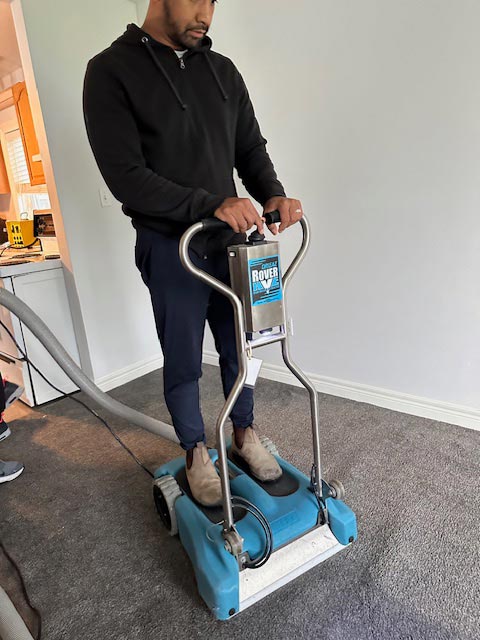 Our standards support the criteria and methodology to do what is required to bring the property back to pre-loss condition. It lends us the tools to do what is necessary with an approach to how the materials dry to ensure safety and opportunity to do so. It is not the restoration technicians’ fault that the insurance company insured a risk that took 4, 5, or 6 days to dry. Competent, responsible, qualified contractors that dry structures properly in integrity, that report four or more days to dry a structure may have and demonstrate more credibility than the one who claims to dry everything in three days or less. Are they really drying in three days or less, or just charging for three days? Competent, qualified technicians and project managers can prove their application, techniques and ultimately can prove their drying results.
A true competent restoration professional trained to perform services regularly applies these learned and trained skills to obtain their drying results. Demonstrating competence is not someone who attends a course and passes an exam. These demonstrated skills and results come with knowing how to dry structures applying a scientific approach with justified documentation. A professional restorer who presents clear, concise documentation backed by science for a job would be providing details to make their bill easy to pay by including the following:
- What materials are wet and how wet are they
- What drying equipment was used and why it was necessary
- How they determined equipment count with supported calculations
- What the drying goals are and the materials current dry standards
- What the monitoring readings were daily, and a moisture map is provided
- What meters were used
- Who took the readings
- What changes to the drying chamber were made and why
- What are the completion criteria or expectation of “dry”
Drying records should be provided consistently and regularly on each and every project. As a professional contractor you should not have to be asked to do your job and help the customer present their mitigation efforts; rather just do it and be the company that is easy to work with that can prove their results.
ALERT, ALERT! If any professional restoration company or restorer makes such a claim of three day drying for site completion, be prepared. Be prepared for tear out of materials followed by equipping with drying equipment OR be prepared for potential issues that arise later (such as microbial growth or secondary damages) as this three-day drying claim is unfounded and is not based on any science whatsoever.
Commit to be the change needed to denounce sub-standard drying practices to break the mold that continues to shadow our industry. Let’s increase our abilities to be better and even more effective. Let’s serve our customers to a higher standard and demonstrate what is possible by applying the science and not settle for “good enough.”
Looking for a reprint of this article?
From high-res PDFs to custom plaques, order your copy today!