Green Cleaning is NOT Risk-Free

As the green cleaning trend ramps up, I’m sure many of you are considering implementing this as a service offered by your company. It seems like a no-brainer. Provide something people want and do good for the planet at the same by using more environmentally-friendly products and procedures. But these aren’t the only environmental products you need to purchase for your business to properly and safely operate as a green restoration, remediation, and cleaning professional. You also need to buy an environmental insurance product called Contractor’s Environmental Liability insurance.
What is Contractor’s Environmental Liability (CEL) insurance and why do you need it? CEL insurance, commonly referred to as Contractor’s Pollution Liability (CPL) insurance coverage, is a special type of liability coverage, similar to your Commercial General Liability (GL) coverage but also quite different. CEL coverage responds to claims or lawsuits against your company for bodily injury, property damage, or clean-up costs resulting from a pollution condition arising out of your work. It will also provide coverage for defense costs incurred for defending your business in court in the event of a claim or lawsuit against you. Essentially, it provides protection for you and your business if a customer or another third party comes after you for damages that were caused by a contaminant that they claim arose out of the work you did.
You might be thinking that there’s no way this applies to your company. Your operations aren’t overtly dangerous and causing pollution. Therefore, you don’t need this insurance coverage. You aren’t alone in your thinking. Unfortunately, this is not the case. Every contractor and professional that performs operations in the built environment faces some environmental or contamination loss exposure. The reason for this lies in the effects of pollution exclusions in standard liability policies such as a GL policy.
The standard Commercial General Liability (GL) policy has Exclusion f. Pollution that eliminates coverage for “bodily injury or property damage arising out of the actual, alleged or threatened discharge, dispersal, seepage, migration, release or escape of pollutants.” Pollutants are commonly defined as “any solid, liquid, gaseous or thermal irritant or contaminant, including smoke, vapor, soot, fumes, acids, alkalis, chemicals and waste. In terms of green cleaning and cleaning services in general, this exclusion could be triggered by the term chemicals. Irritant and contaminant are significant terms within the definition as well, because almost anything can become an irritant or contaminant in the right environment or situation. What is considered a pollutant is also determined via case law in each state. What may be considered a pollutant in one state may not be in another state. For example, asbestos is considered an irritant in most states and lead has been ruled a contaminant in many.
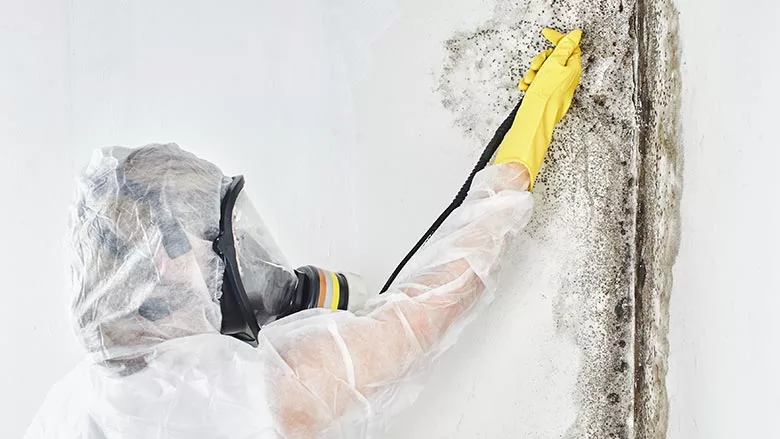
To add insult to injury, many insurance companies tacked on exclusions for specific materials or substances. For example, Fungi or Bacteria exclusions became quite popular during the toxic mold scares in the mid-2000s. These exclusions were basically pollution exclusions specifically targeting fungi (mold) and all strains of bacteria; they eliminated coverage for any claims arising out of or even involving fungi, mold, or bacteria. That spelled bad news for restoration and remediation contractors performing mold remediation jobs and Category 3 water clean-up – suddenly they had no coverage under their GL policies for what they did for living. Similar exclusions for asbestos and lead-based paint exist and cause the same kind of issues for asbestos and lead abatement contractors as well as any artisan contractor and professional tradesperson.
The short of it is contractors and professional cleaners cannot rely on a standard GL policy to provide adequate coverage for their environmental and pollution loss exposures. The expansion of pollution exclusions and the introduction of similar exclusions for specific contaminants has created significant gaps in insurance coverage for loss exposures they face on a daily basis. Are you still on the fence about how this applies to professional cleaners? I know, it sounds a bit far-fetched.
However, you would be surprised at the environmental loss exposures that the professional cleaners face everyday. Because of their work in the built-environment using liquid cleaning solutions, they have mold exposure. The use of the cleaning solutions can increase the moisture levels in a room or structure and excessive moisture can lead to mold growth in the right conditions. In addition, if they are providing service after any kind of flooding or drain backup, they have bacteria exposure, because of Category 3 water.
Looking for quick answers on restoration, remediation and cleaning topics?
Try Ask R&R, our new smart AI search tool.
Ask R&R →
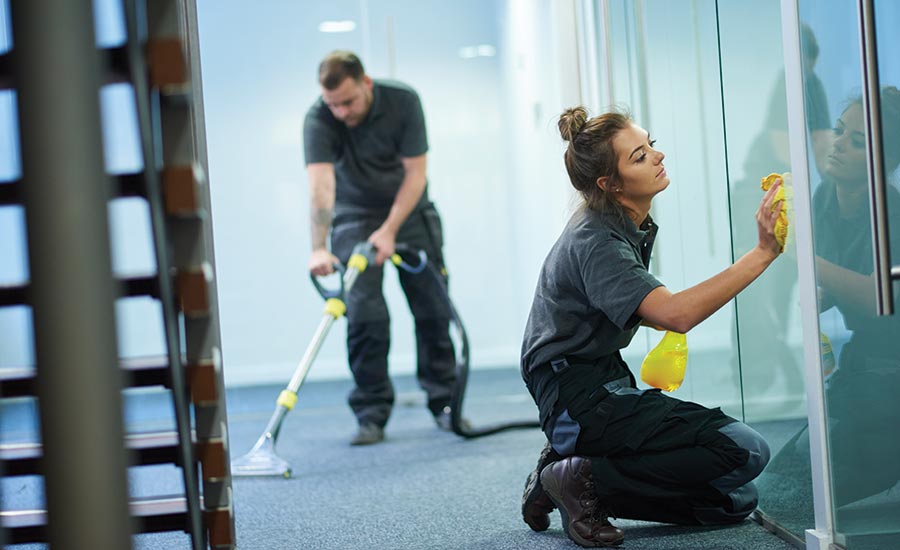
They also experience environmental claims unrelated to the development of harmful organisms. For example, a carpet cleaner cleaning the corporate headquarters for a large amusement park received a claim against them because of an overly potent scent from their citrus cleaning solution. They had used the cleaning solution in the past, but in this particular situation, the scent would not dissipate. They tried multiple times to rectify the situation to no avail. Eventually employees in the building began to complain, claiming they could not come to work because of the overpowering odor and that they were developing asthma. The claim triggered the pollution exclusion on the carpet cleaners GL policy, which denied the loss. Fortunately, the cleaner had purchased a CEL policy, which picked up the $150,000 in damages brought against them from the amusement park.
So, professional cleaning is not exempt from environmental and pollution loss exposures and green cleaning is no exception. These risks are very real and can be quite costly as the above example depicts.
They are almost always excluded under standard types of liability insurance policies. Fortunately, there are cost-effective insurance product solutions for both cleaners and restorers.
The original design of a Contractors Environmental Insurance policy was never intended for indoor use. As a result, about one of three CEL policies sold to firms in the cleaning and restoration business contain significant coverage deficiencies. No two CEL policies are alike. Insurance agents also receive no training in environmental insurance policies either in the licensing exams or in Continuing Education classes. Local insurance agents can sell CEL policies, but it is a good idea for local insurance agents to seek out qualified specialists in this complex type of business liability insurance.
Looking for a reprint of this article?
From high-res PDFs to custom plaques, order your copy today!