Advanced Planning Ensures Experienced Partner Before Disaster Strikes
Thousands of commercial and industrial buildings each year are damaged by unforeseen disaster, ranging from fire or smoke and soot to water that infiltrates walls, floors, and equipment through events such as a burst water pipe, seepage, fire sprinkler flooding or leaks from a rainstorm.

Thousands of commercial and industrial buildings each year are damaged by unforeseen disaster, ranging from fire or smoke and soot to water that infiltrates walls, floors, and equipment through events such as a burst water pipe, seepage, fire sprinkler flooding or leaks from a rainstorm.
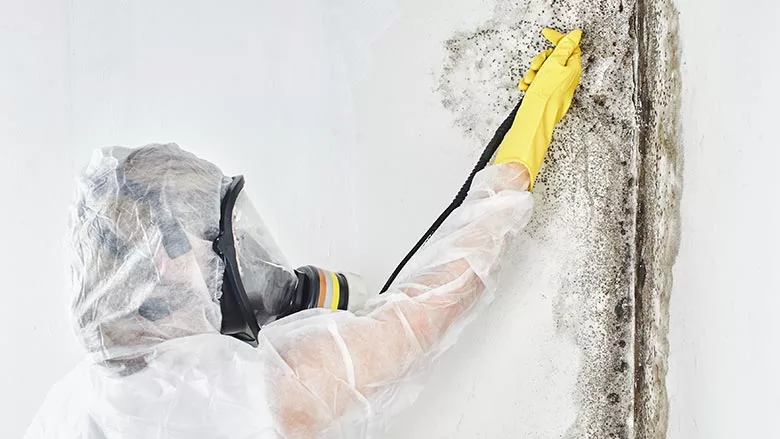
Wherever such an event occurs, the results can be operationally and financially disastrous. Potential risks include destruction of interior structural materials, equipment and files; disruption of operations; further damage from humidity; and, if water is not abated quickly, microbial damage -- the growth of mold, which is a potential health hazard.
When damage occurs, it is essential to take immediate action to stabilize the loss and mitigate damage. Doing so will maximize recovery of all contents such as inventory, machinery, furniture, carpeting, electronic media, documents and files, will minimize replacement costs, preserve good indoor air quality, and control mold risks.
Advance Planning
The best “insurance” in a recovery situation is to plan in advance of an occurrence by creating a Disaster Recovery Plan (DRP). The DRP defines and prioritizes the recovery and restoration of areas within a facility and details immediate next steps. It also designates the professional disaster restoration services provider to be summoned immediately when an incident occurs.Pre-selecting a full service restoration provider that provides priority emergency services assures that building owners and managers will have a “partner” in the reclamation process. There will be no learning curve during an emergency because the firm already will be familiar with the structure and the plan. It then can move rapidly to begin recovery work within the first 24 hours – a critical parameter to minimize the effects of water.
Select a restoration provider that offers guaranteed priority emergency services. In the event of a fire, weather related or other water-damage disaster to a building or facility, owners or managers of properties registered in these programs will receive immediate priority for emergency drying and restoration services.
Expectations
Following is a list of services you should expect of the restoration company you contract:- Consulting. The project scope should be provided at the front end. The firm quantifies the damage, determines what can be saved, recommends the equipment and process and expected results.
- Project Management. The company has the ability to quickly assemble a cohesive work team, provide rapid emergency response time, provide a turnkey operation for recovery and restoration and guaranteed results.
- Stabilization: The provider takes the necessary steps to stabilize the environment and assists with relocation efforts to an unaffected area or off-site, if necessary.
- Dehumidification and Drying. Through removal of standing water and excess moisture, the firm has the ability to reduce material loss, limit indoor air quality problems and speed return to occupancy and operation of the affected business.
- Cleaning and Disinfecting. By cleaning, sanitizing and disinfecting interior surfaces, the provider eliminates contamination from molds, bacteria, mildew and potential biological hazards.
- Odor Control: Thermo fog, wet spray, ozone or dry vapor methods should be properly employed to control odor.
- Electronic Equipment Restoration. In many cases, it is possible to clean and restore hi-tech components following exposure to fire or water damage.
- Preservation of Large-Scale Production Equipment. Contamination removal preserves production-operating equipment.
- Document and Media Restoration. Cleaning, sanitizing, deodorizing and drying restores paper records and electronic and digital media storage. This process is most effective if the firm dry cleans by vacuum and has refrigerated transport storage capabilities to minimize deterioration of materials.
- HVAC and Mechanical Systems Cleaning. Cleaning and deodorizing the supply and return duct system as well as the metal housing that encloses coils, heat exchangers and filter banks assures that clean air again passes through the system into the structure.
- Smoke and Water Decontamination. Residue from damage sources such as fire, flood and storms is removed.
- Corrosion Control. Metal surfaces are cleaned and treated to prevent further damage from corrosion.
- Controlled
Demolition and Disposal. Surfaces that will not respond to restoration efforts
in a cost-effective way are removed to expose hidden cavities and to expedite
the recovery process or to remove sources of odor.
Selecting the Right Firm
It is important to have properly trained cleaning and restoration technicians overseeing your recovery project. A list of providers can be obtained from organizations like the Property Loss Research Bureau (PLRB). You also may want to do the obvious: review Web sites; read the case histories on the site; contact company representatives.
While it may sound as a cliché, the assessment process begins with reviewing experience, reputation and references. Plan to do more in-depth research before making a commitment.
Looking for a reprint of this article?
From high-res PDFs to custom plaques, order your copy today!