Contractors Take Aim with Dry Ice Blast Cleaning
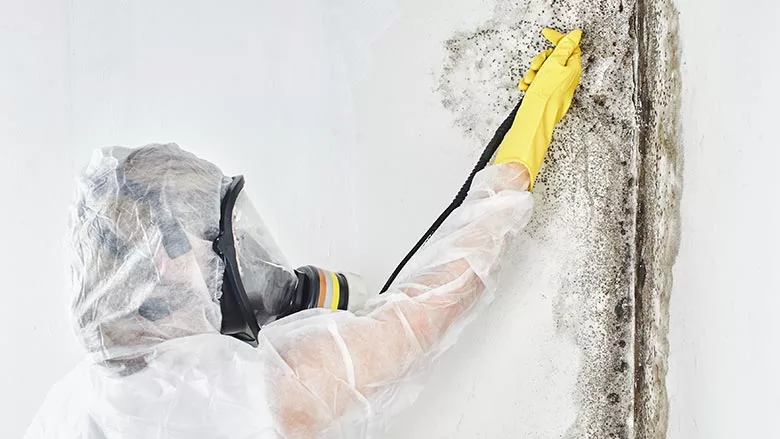
Restoring buildings or landmarks damaged by fire, flood, mold or even nature can be a difficult and time-consuming process. While there are many methods employed to return historical treasures or vital community buildings back to original glamour, only a few are safe or effective enough to use for restoring often fragile or aged surfaces or remediating mold from buildings without causing damage to the underlying architecture.

Restoring buildings or landmarks damaged by fire, flood, mold or even nature can be a difficult and time-consuming process. While there are many methods employed to return historical treasures or vital community buildings back to original glamour, only a few are safe or effective enough to use for restoring often fragile or aged surfaces or remediating mold from buildings without causing damage to the underlying architecture.
Many contractors around the world are discovering the efficiency, power and cost saving benefits of dry ice blast cleaning, a cleaning process that uses dry ice media accelerated at supersonic speed to remove dirt and other contaminants. Once dry ice pellets hit the surface being cleaned, they create mini explosions and sublimate, or return to a gaseous state. The combination of the kinetic and thermal shock affects of dry ice blasting breaks the bond between the surface and the residue. Because dry ice blast cleaning is a dry process, there is no secondary waste, and the only thing left to clean up is the original contaminants.
While dry ice blast cleaning can be used for a variety of applications in a host of industries, it is particularly helpful in the restoration and remediation industry. The non-abrasive and environmentally friendly cleaning process has proven effective in a variety of restoration projects, from restoring a fire damaged turn of the century home and an historic church to removing paint and primer from the Utah State Capitol Building and cleaning an aging marble statue outside of the Puerto Rican capitol building. The process is powerful enough to clean the largest tire molds, yet delicate enough to clean electronic components and microchip manufacturing equipment.

Split Rock Lighthouse
By 1939, the Split Rock Lighthouse, one of Minnesota’s best-known landmarks, was considered the most visited lighthouse in the United States. Since the 98-year-old lighthouse ceased operating in 1969, it has seen thousands of visitors attracted by its scenic view and surrounding 2,200 acres.Built on a 130-foot cliff on the North Shore of Lake Superior, Split Rock is constantly exposed to heavy winds and rain, as well as the rough Minnesota winters, which over time have damaged the sand-colored sentinel. More than 16 years ago, maintenance crews used soda blasting to remove old paint from the structure. The soda blasting process uses high-pressure water or air to blast a bicarbonate soda on the surface being cleaned. However, the process can be messy, leaving residue on the cast iron as well as the insides of the lighthouse and inner workings of the rare and expensive Fresnel lens components. As a result, maintenance crews were cleaning remnants of the soda blasting from the lighthouse for several years after the original restoration.
As a result, the lighthouse needed some cosmetic work and restoration to prevent infiltrating moisture from causing any serious structural damage. The Minnesota Historical Society hired Collaborative Design Group (CDG), a Minneapolis-based architectural firm, to assess the restoration possibilities and manage the project.
“We evaluated a number of cleaning methods, and we found that sand and other forms of media blasting were quite destructive in the restoration of historical property,” said Paul Waugh, Collaborative Design Group, LEED AP, and project manager for the Split Rock Lighthouse Restoration Project. “Finding a solution that would meet all of our restoration needs was quite a challenge for the project.”

Veit used dry ice blast cleaning systems to clean the exterior and interior of the lighthouse, remove the paint from the cast iron parts, and remove old titanium putty, which was used to fill pits in the cast iron dome. With the old putty completely removed by the blasting process, MHS was able to put fresh putty in the pits and prevent future leaks in the dome.
CDG and Veit were able to clean the lighthouse faster without worrying about damaging the aging surfaces. While the dry ice blast cleaning process was only a small part of the overall project, it ultimately helped prepare the lighthouse for the remainder of the restoration efforts, which helped to reverse the effects of more than 100 years of exposure to nature.
Looking for a reprint of this article?
From high-res PDFs to custom plaques, order your copy today!